

Uzbekistan and Kazakhstan to lift trade barriers for a number of goods from August 10
Uzbekistan and Kazakhstan have agreed to lift tariff and non-tariff restrictions on 19 commodity groups, including fruits and vegetables, grain products, textiles, construction materials, equipment, and furniture, starting August 10. Davron Vakhobov, chairman of the CCI, called the decision a response to long-standing business appeals.
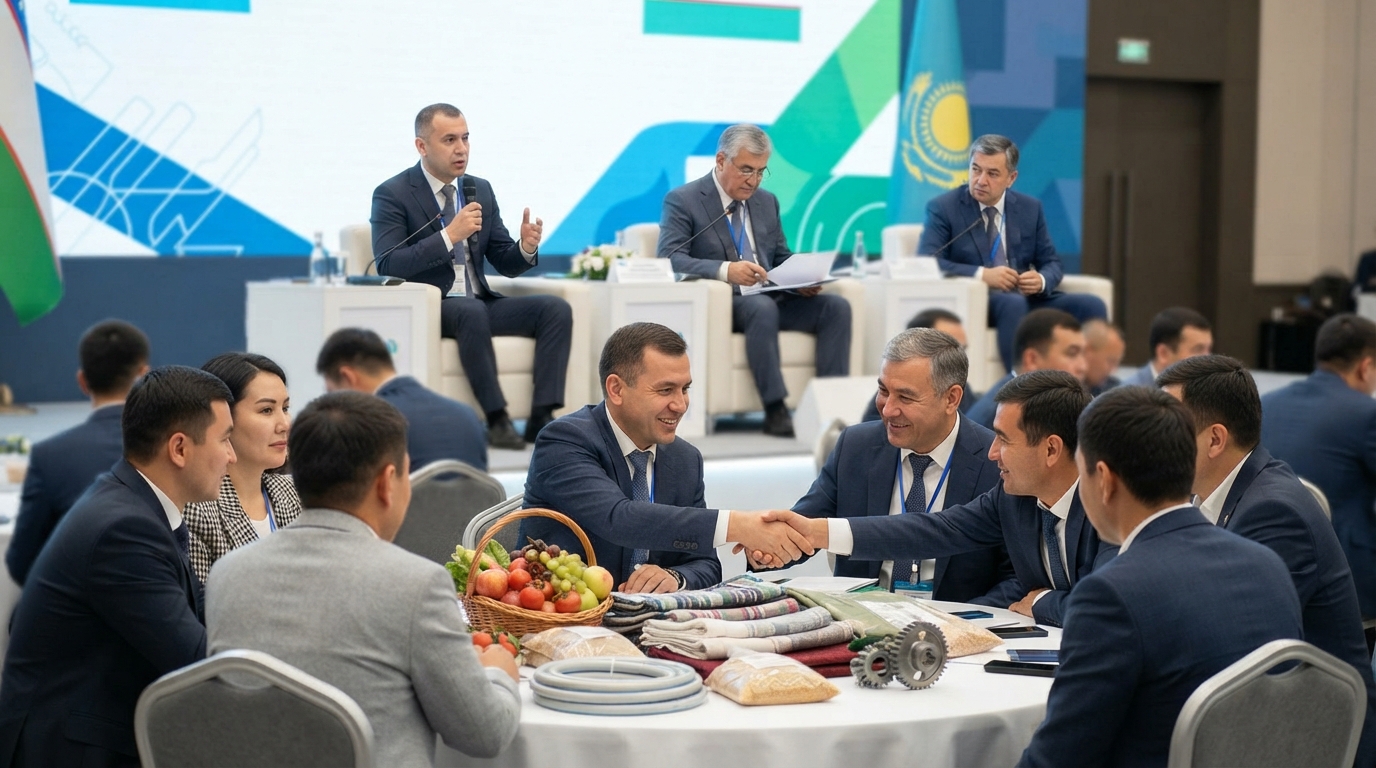
Uzbekistan and Kazakhstan will lift trade restrictions on a number of products starting August 10. This was announced at the Uzbekistan-Kazakhstan business forum held in Tashkent on August 5.
The Chamber of Commerce and Industry of Uzbekistan told Gazeta that this decision covers agricultural and food products, textiles, construction materials, machinery, electrical products, furniture and other goods.
The forum noted that trade restrictions were discussed at a recent meeting of the Uzbek-Kazakhstan intergovernmental commission in Aktau with the participation of the prime ministers of the two countries. As a result of the negotiations, the parties adopted decisions on the obstacles previously raised by the business community.
According to Davron Vakhobov, Chairman of the Chamber of Commerce and Industry, "Business has been talking about this for a long time - this was a problem... A week ago, it was announced that all tariff and non-tariff barriers will be lifted from August 10. We believe that this will be a great impetus for entrepreneurs of both countries."
According to Yerlan Turgumbayev, the Ambassador of Kazakhstan to Uzbekistan, the decisions taken concern about 20 types of products. He noted that "Today, our relations are developing at a very high pace. Of course, this is due to the trusting, fraternal relations between the leaders of our countries... Barriers have been removed for about 20 types of goods in a week. I think such quick decisions have never been made before."
According to the ambassador, Kazakhstan also has the potential to increase supplies to Uzbekistan for 261 commodity positions.
According to the Chamber of Commerce and Industry, restrictions will be lifted for the following commodity groups:
* 07: Fresh and chilled vegetables
* 08: Fruits, berries and melon products
* 10: Certain types of cereals
* 11: Grain processing products
* 17: Sugar and confectionery products
* 19: Grain products
* 20: Processed vegetables and fruits
* 22: Soft drinks
* 39: Plastic products
* 52: Cotton and cotton fiber
* 54−63: Textile products, fabrics, clothing and knitwear
* 68: Construction materials
* 69: Ceramic products
* 70: Glass and glassware
* 73: Metal structures and products made of ferrous metals
* 84: Machinery and equipment
* 85: Electrical products
* 87: Certain types of auto components
* 94: Furniture
The Chamber of Commerce and Industry did not specify what restrictions were in force for each group of goods and whether they would be lifted by both countries at the same time.
Chairman of the Presidium of the Atameken National Chamber of Entrepreneurs of Kazakhstan Kanat Sharlapayev stressed the need to make work on eliminating barriers to mutual trade a permanent format. According to him, "There are areas where conflicts in logistics need to be resolved. There are also problems at the border, as you know - we do not deny this, they need to be resolved. This is the beginning of long-term cooperation."
According to the results of 2025, the volume of mutual trade between Uzbekistan and Kazakhstan increased by 11 percent and reached almost $ 5 billion. The presidents of the two countries set the task of bringing the volume of trade to $ 10 billion.
According to Kanat Sharlapayev, "the $10 billion figure is formed from a $5 million contract, a $1 million contract, and daily work. We need to achieve $10 billion in trade turnover not through political statements, but through daily work between our countries."
We will recall that in January 2024, Uzbekistan and Kazakhstan agreed to create a working group to eliminate barriers to bilateral trade.