

Uzbekistan among three Central Asian countries failing U.S. fiscal transparency standards
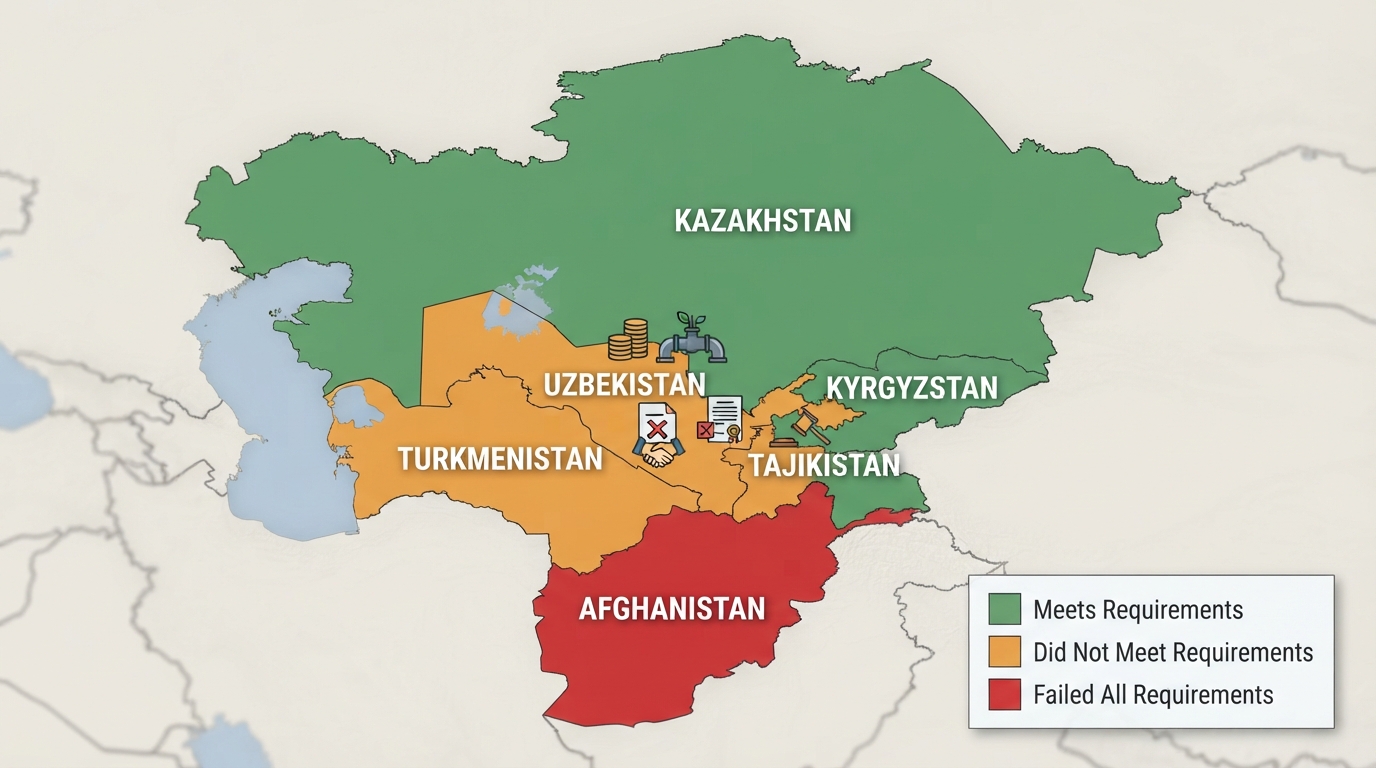
Uzbekistan is one of three Central Asian nations that did not meet the U.S. Department of State's fiscal transparency benchmarks in its 2026 evaluation. The report highlighted deficiencies in the disclosure of public debt, revenues from natural resources, conditions of sovereign loans, and details regarding public procurement.
These findings were released on August 11 in the U.S. Department of State’s yearly Fiscal Transparency Report 2026, which evaluated fiscal transparency during the period of January 1 to December 31, 2025.
The department assessed 139 governments and the Palestinian Authority against fundamental criteria concerning the public availability, completeness, and dependability of budget data, as well as transparency in natural resource contracts and public procurement. A total of 73 governments fulfilled the basic requirements, while 67 did not. Among those that fell short, 14 demonstrated substantial progress toward meeting the requirements. Uzbekistan was not categorized as having made significant progress.
**U.S. Concerns Regarding Uzbekistan**
The report indicated that Uzbekistan had made several crucial budget documents publicly accessible within the stipulated timeframe. The government published its executive budget proposal, enacted budget, and end-of-year report, with these documents offering a sufficiently comprehensive overview of projected revenues and expenditures, including spending itemized by ministry.
The report also noted that Uzbekistan had disclosed significant off-budget accounts, and that military and intelligence budgets were subject to parliamentary or civilian oversight. Uzbekistan’s supreme audit institution was deemed to meet international independence standards and to publish substantive findings. The country also had legal frameworks governing natural resource extraction licenses and contracts, with fundamental information on such awards publicly available.
However, the U.S. identified several areas where Uzbekistan did not meet its minimum requirements. The government did not fully disclose public-sector debt obligations, including the debt of major state-owned enterprises. It also failed to publish the terms and conditions of sovereign loans extended to foreign borrowers—a new criterion introduced in the 2026 assessment.
The report further noted insufficient disclosure of government revenues from natural resource extraction and stated that basic information on public procurement contracts was not publicly available.
The U.S. recommended that Uzbekistan include information on transfers to state-owned enterprises in budget documents, fully disclose public-sector debt obligations, publish the terms of sovereign loans to foreign borrowers, and make information on public procurement contracts publicly accessible.
**Central Asia's Performance Comparison**
The assessment yielded varied outcomes across Central Asia. Kazakhstan and Kyrgyzstan satisfied the U.S. minimum fiscal transparency requirements, while Tajikistan and Turkmenistan, similar to Uzbekistan, did not.
In Tajikistan, the U.S. acknowledged that the government made its executive budget proposal, enacted budget, and end-of-year report publicly available, including online. Nevertheless, the budget did not provide a substantially complete picture of major government revenues and was not prepared in accordance with internationally accepted principles.
Tajikistan also exhibited gaps in debt disclosure, off-budget accounts, sovereign loan terms, audit independence, and transparency surrounding natural resource awards.
Turkmenistan received a more critical evaluation. The government did not publish budget documents or information on public-sector debt, while publicly available budget information did not include natural resource revenues or debt obligations. The country’s supreme audit institution did not meet international independence standards or publish its reports.
The report also identified gaps in Turkmenistan’s disclosure of natural resource awards, public procurement contracts, and information on its sovereign wealth fund.
In Afghanistan, ministries and other public-sector institutions failed to meet any of the minimum fiscal transparency requirements during the review period. No entity published an executive budget proposal or end-of-year report within a reasonable timeframe, and timely information on public-sector debt was also unavailable. The Taliban did not make public the budgets of its military and intelligence services, and the entity referring to itself as the “Supreme Audit Office” did not publish audits or their findings.
**Significance of the Assessment**
The Fiscal Transparency Report is not a ranking of corruption. The U.S. Department of State utilizes it to ascertain whether governments provide sufficient reliable and accessible information for citizens and institutions to comprehend how public funds are collected, allocated, and expended.
This assessment is mandated by the U.S. Congress and is also intended to help safeguard U.S. taxpayer-funded foreign assistance. The State Department asserts that fiscal transparency can bolster public financial management, enhance market confidence, and mitigate risks associated with corruption, financial crime, and opaque government borrowing.
A government's failure to meet the minimum requirements does not automatically result in a reduction of U.S. assistance, but the assessment can be considered in decisions regarding foreign assistance and can influence how investors and international financial institutions evaluate the transparency of a country's public finances.