

US sanctions Rwanda's defence ministry over DR Congo conflict
Congo accuses Rwanda of backing M23 rebels and plundering minerals in its conflict hit East
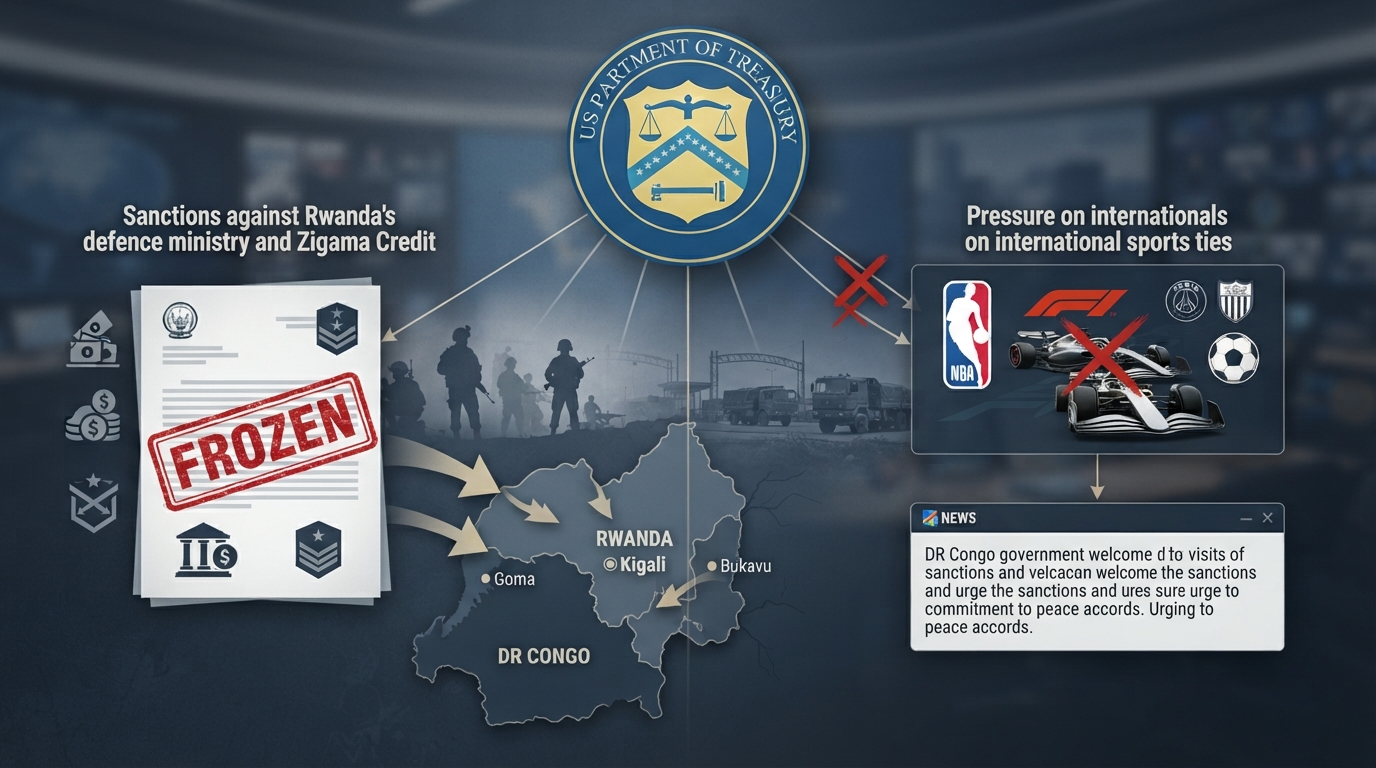
US sanctions Rwanda's defence ministry over DR Congo conflict
Eastern DR Congo has been gripped by conflict, with M23 retaking Goma and Bukavu in January 2025
The United States has placed sanctions on Rwanda's defence ministry over its alleged backing of the M23 rebel group in eastern Democratic Republic of Congo (DR Congo), stepping up pressure on Kigali to pull out its troops and stop supporting the rebels.
"Rwanda must halt its support for M23 and withdraw its troops from eastern DRC," US Treasury Secretary Scott Bessent.
The sanctions were announced months after Rwanda and DR Congo signed a US-brokered peace deal intended to end the conflict.
Fighting has persisted in eastern DR Congo since January 2025, when M23 captured the cities of Goma and Bukavu. Rwanda denies supporting M23.
The US Treasury says Rwanda's defence ministry sent thousands of troops to fight alongside M23 in eastern DR Congo, supplying weapons, equipment, logistics and training.
M23 has taken control of mineral-rich parts of North and South Kivu, including gold-mining areas in South Kivu and Rubaya, a major coltan-producing zone. Washington says minerals from rebel-held territory are entering Rwanda's supply chains, and alleges that Rwanda exports more minerals than it produces.
The sanctions are meant to bolster the Washington Accords, signed by the Congolese and Rwandan presidents in December 2025 under US mediation. The agreement was designed to end the conflict and widen regional trade and investment, but the fighting has continued.
On 24 October, before the sanctions were announced, DR Congo President Félix Tshisekedi called on the international community to step up pressure on Rwanda.
"We must firmly demand that the international community impose concrete sanctions against Rwanda and exert increased pressure, so that we may finally secure a lasting peace in our country," he said.
In a statement to Reuters, DR Congo's foreign ministry welcomed the sanctions and urged Rwanda to honour its commitments under the Washington Accords, respect the UN Charter and withdraw its troops from Congolese territory.
"The Washington Accords contain clear commitments regarding Rwanda's security, specifically the neutralization of the DR Congo-sponsored FDLR genocidal militia, which are wholly unmet, and with no accountability," Rwandan government spokesperson Yolande Makolo told the BBC.
The FDLR is a militia linked to those responsible for Rwanda's 1994 genocide. Kigali views it as a security threat and points to its presence in eastern DR Congo to justify its military stance.
"Rwanda remains ready to fully implement the Washington Accords, concurrently with the willingness of the DRC to fulfill those commitments, and with the mediator holding all parties accountable," she said.
The US also sanctioned Zigama Credit and Savings Society, a financial institution that serves Rwanda's security services.
Washington says it facilitated tens of millions of dollars in transactions for M23 and its political wing, the Congo River Alliance, helped finance military equipment for Rwandan forces from China and enabled gold to be moved from rebel-held areas to Kigali.
The sanctions freeze the assets of the designated entities under US jurisdiction and generally bar US individuals and businesses from dealing with them unless authorised or exempt. Breaches can lead to penalties for US and foreign parties.
The measures come after earlier US sanctions on Rwanda's army and four senior military commanders in March 2026. The US also imposed additional sanctions on Gasabo gold refinery and three mining companies accused of smuggling conflict minerals in June 2026.
Pressure is also growing over Rwanda's international sports ties. Two US senators have called on the National Basketball Association (NBA) to rethink its commercial relationship with Kigali, questioning whether it matches the league's stated commitment to human rights.
In a letter sent to NBA commissioner Adam Silver on 23 October, senators Jeff Merkley and Marsha Blackburn raised concerns about the league's continued partnership with Rwanda amid allegations of human rights abuses.
The NBA has not yet issued a substantive response to the letter.
Rwanda has used high-profile sports sponsorships to boost its international profile. Earlier this month, it secured a 10-year deal to host Formula 1's African Grand Prix in the early 2030s.
The country's sponsorship of Arsenal ended in 2026, while Bayern Munich has also ended its commercial partnership with Visit Rwanda.