

US sanctions more Cuban companies and officials
An international socialist institute and Cuba's construction ministry are subject to the latest US sanctions, Marco Rubio announces.
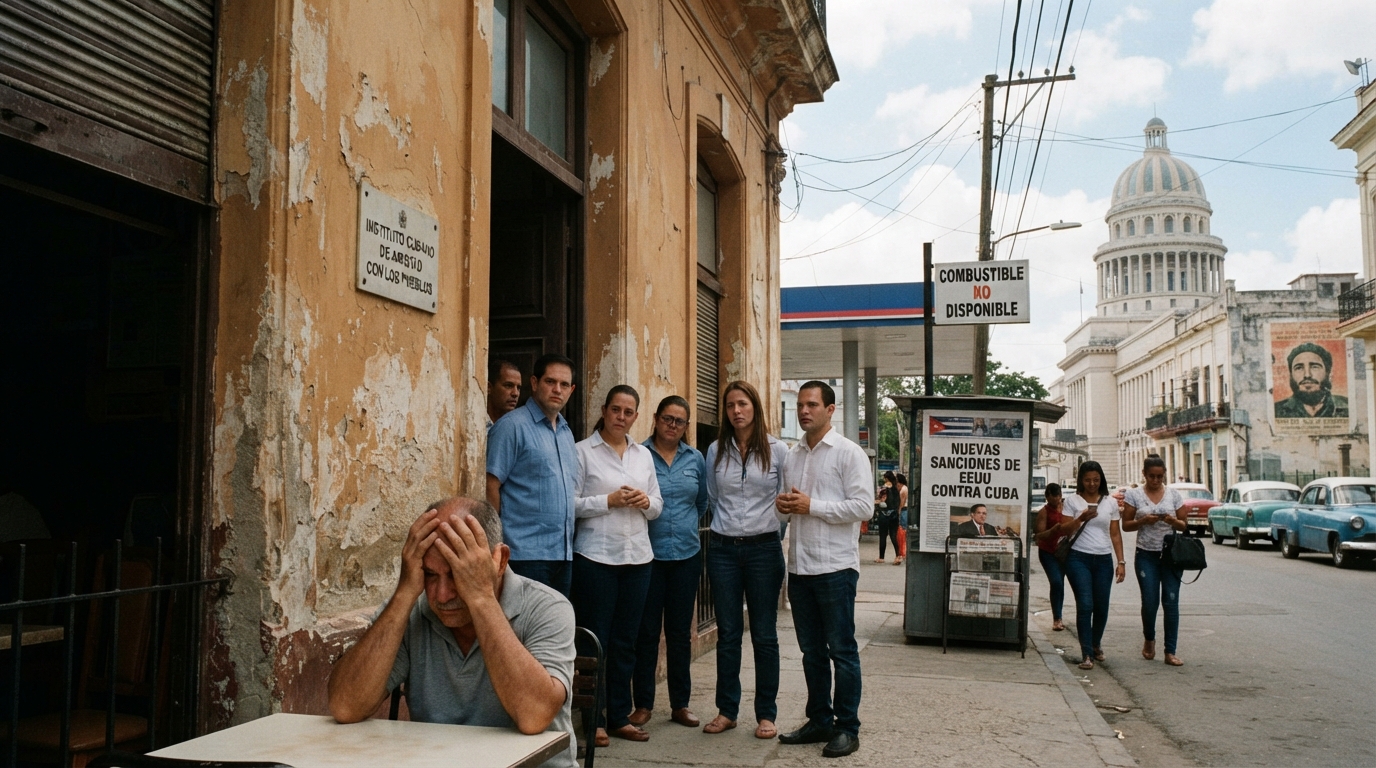
The United States has enacted a new series of sanctions against Cuban entities and government officials, as announced by Secretary of State Marco Rubio.
Rubio stated that nine state-owned enterprises involved in mining, metals, and construction, along with the Ministry of Construction and individuals linked to a Cuba-based international institute, are included in this latest set of economic penalties.
In a press release, Rubio accused several of the sanctioned individuals of engaging in "subversive anti-American activities." He specifically charged them with "ferrying a new brigade of international sympathizers to Havana to network with regime officials," an event he noted coincided with the 100th birthday of the late former leader Fidel Castro.
Cuba has consistently denounced all sanctions imposed by the Trump administration.
Rubio asserted that those targeted by the sanctions are "part of the regime's raison d'être of exporting Marxism, racial resentment, and Communist violence across the world." He further declared, "Today's designations make clear that the Trump Administration will not tolerate the Cuban regime's efforts to fund its repression or continue its decades-long campaign of subversive anti-American activities."
The leadership of the Cuban Institute of Friendship with the Peoples (ICAP) was among those hit by the latest US sanctions. Founded by Castro in 1960, ICAP has historically served as a tool for the Cuban government to cultivate relationships with like-minded organizations globally, hosting visiting activist groups who, in turn, promote pro-Cuban government campaigns in their home countries. However, Rubio accused the group of "misleading and corrupting American citizens with lies, spy tradecraft and malfeasance."
Among the individuals sanctioned is ICAP's president, Fernando Gonzalez Llort, who was a member of the "Cuban 5" spy ring. Llort was part of a prisoner exchange that occurred during the Obama administration's period of improved relations with Havana.
Senior figures in Havana's energy, financial, and defense sectors are already subject to US sanctions. The country's tourism industry, a vital source of revenue for the struggling government, has also experienced a significant decline.
Cuban Foreign Minister Bruno Rodríguez condemned Rubio's announcement, posting on X that Rubio was attempting to "punish" Cuban companies and further "harm" the economy. Rodríguez added that these actions would prevent the government "from guaranteeing basic services to the population, which are already in a critical situation as a result of the blockade."
Since the beginning of the year, the US has implemented an effective oil blockade on Cuba. Given the island's aging electricity infrastructure's heavy reliance on fuel imports, hospitals have been forced to use emergency generators. The resulting lengthy and frequent power cuts have led to rare protests in Cuba, where public dissent is typically met with severe prison sentences.