

Unique documents on the history of Uzbekistan found in secret archives in Berlin
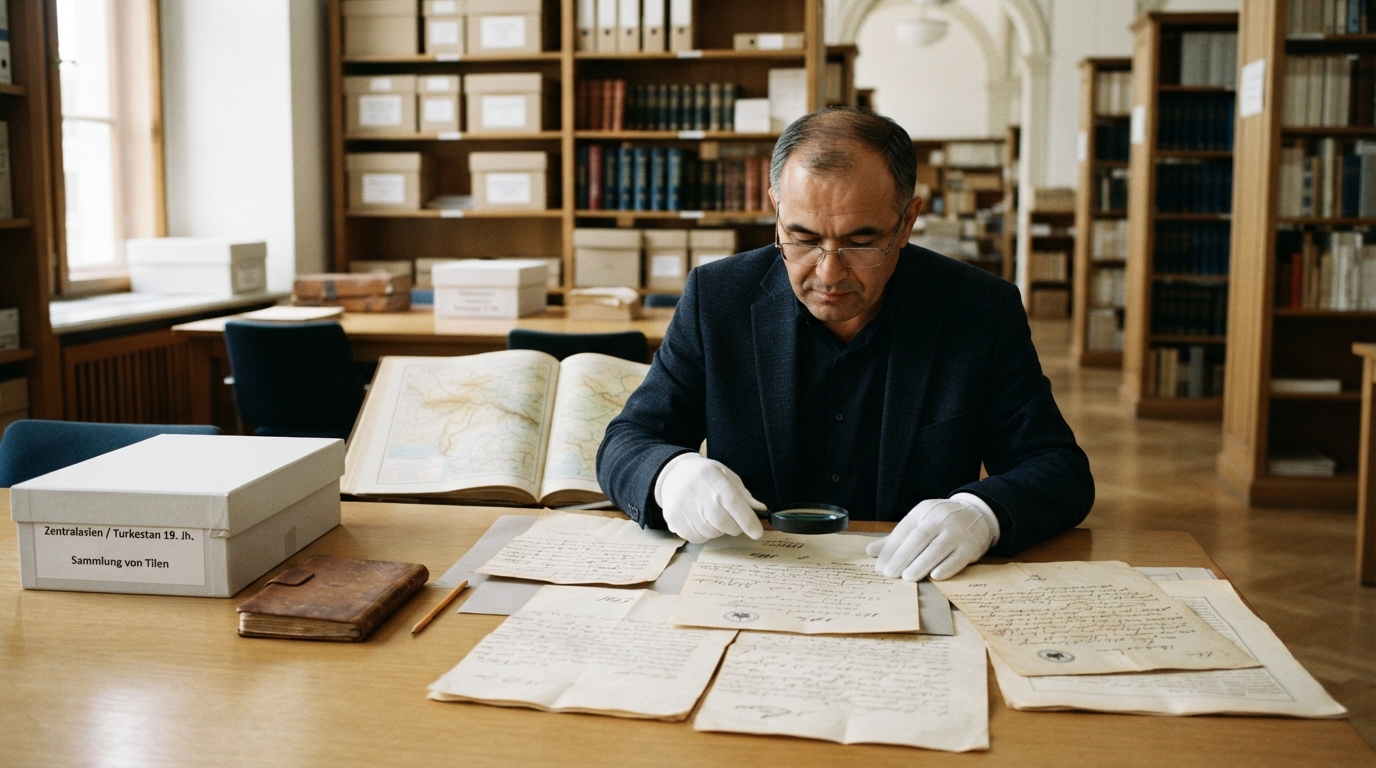
Unique documents on the history of Uzbekistan were found in a secret archive in Berlin.
It turned out that the secret state archive of the Prussian Cultural Heritage (GStA PK) in Berlin stores unique historical documents from Central Asia, in particular Uzbekistan, from the 19th-20th centuries. This was reported by the Uzbekistan News Agency.
It is noted that this large archive, founded in 1598, stores historical documents in the volume of about 35 thousand square meters (approximately 1.5 to 2 million volumes or 300-350 million sheets). Although the main language of the documents is German, there are also sources in the Arabic alphabet in Ottoman Turkish, Russian and Persian.
As a result of the research, important correspondence and official reports of the State Secretary of the Ministry of Foreign Affairs of the Kingdom of Prussia, diplomat Karl Hermann von Thiele, related to political processes and diplomatic relations that took place in Turkestan in 1865, were found.
The archive also contains special reports written by Georg Kleinov, a secret adviser to the Weimar Republic, during his trip to Uzbekistan in 1928–1929. They provide an in-depth analysis of the geopolitical significance of the construction of the Turksib Railway, the settlement of the pastoral population, national-territorial demarcation, and land and water reforms.
Another valuable source in the archive is the letters about the fate of Vali Kayumkhan, a student from Tashkent who was sent to study in Germany in 1922. Documents kept in the personal fund of Karl Heinrich Becker, the Minister of Culture of the Weimar Republic, in particular, a letter written by Dr. Walter Becker in 1933, describe Vali Kayumkhan's difficult financial situation after the Nazis came to power and ask for help.
It is noted that this letter is an important primary source showing that German academic circles were not indifferent to the fate of Turkestan students.
Earlier, a 2 million-year-old cave, as well as wall paintings and inscriptions, were discovered in the Sokh district of the Fergana region. In another case, the remains of an 8th-century palace of rulers were discovered in Samarkand.