

UNDP trained human rights defenders in Uzbekistan to use AI without compromising human rights.
UNDP and the Office of the Ombudsman of Uzbekistan conducted training on the responsible use of AI to protect human rights and assess associated risks.
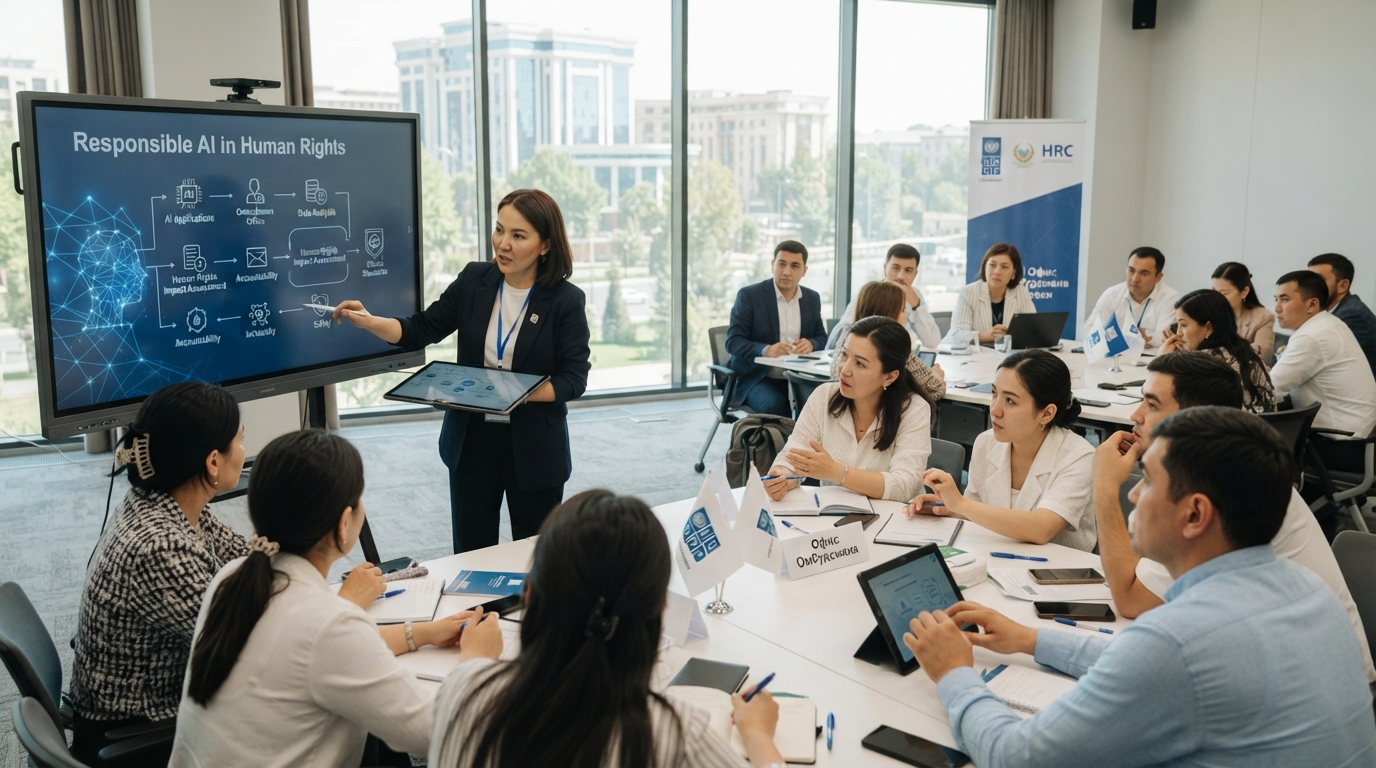
UNDP Conducted Training for Uzbek Human Rights Defenders on the Safe Use of AI
The United Nations Development Programme (UNDP) in Uzbekistan, together with the Office of the Ombudsman, organized a two-day training on the responsible and effective use of artificial intelligence (AI) in human rights protection. The event, held on August 24–25, 2026, brought together representatives of human rights organizations, civil society, and digital governance experts, according to UNDP in Uzbekistan.
The training focused on the potential of AI for the daily work of the Ombudsman's Office, as well as the legal and ethical aspects of its implementation. Participants learned about the basic principles of AI, rules for its responsible use, methods for effectively formulating requests, and international human rights standards.
A significant portion of the program was devoted to AI Human Rights Impact Assessments (HRIAs). Using practical examples, participants analyzed the potential impacts of AI on various population groups, including the risk of disproportionate impact on certain categories of citizens, as well as necessary protections and appeal mechanisms for decisions made using such technologies.
Ainura Bekkoenova, Rule of Law, Security, and Human Rights Policy Specialist at the UNDP Regional Center for Europe and Central Asia, noted: "Artificial intelligence offers significant opportunities to make human rights protection more effective, accessible, and responsive. However, its use requires robust safeguards to prevent discrimination, protect privacy, and ensure accountability."
The practical sessions focused on specific ways AI can be used in the work of human rights institutions. Participants explored the potential of using technology to process and classify citizen complaints, identify trends, summarize information on individual cases, and prepare responses.
The training addressed not only the benefits but also the risks associated with new technologies. Participants considered issues of data privacy and security, institutional readiness, and the ethical limitations and responsibilities associated with the use of AI in government and human rights processes.
AI tools for improving accessibility and inclusiveness in communications, legal education, and outreach were discussed separately. Potential target groups included women, youth, people with disabilities, and rural communities.
The program also included a discussion of broader aspects of digital transformation in Uzbekistan. Representatives of UNDP, the Ombudsman's Office, civil society, and the expert community exchanged views on opportunities for collaboration, data and security requirements, and institutional conditions for the responsible implementation of AI technologies.
The training concluded with an interactive workshop, during which participants identified possible practical steps for implementing AI in their institutions. These included developing ethical standards, ensuring security measures, and preparing potential pilot projects.
UNDP and the Ombudsman's Office view this program as part of a larger effort to strengthen the capacity of human rights institutions in the context of evolving digital technologies. Particular attention is paid to ensuring that the use of AI in Uzbekistan complies with the principles of human rights, inclusiveness, accountability, and responsible innovation.