

Uncle was sent to auntie
The Azerbaijani diaspora in Moscow was decapitated, and the rest were given a harsh ultimatum: stay out of politics.
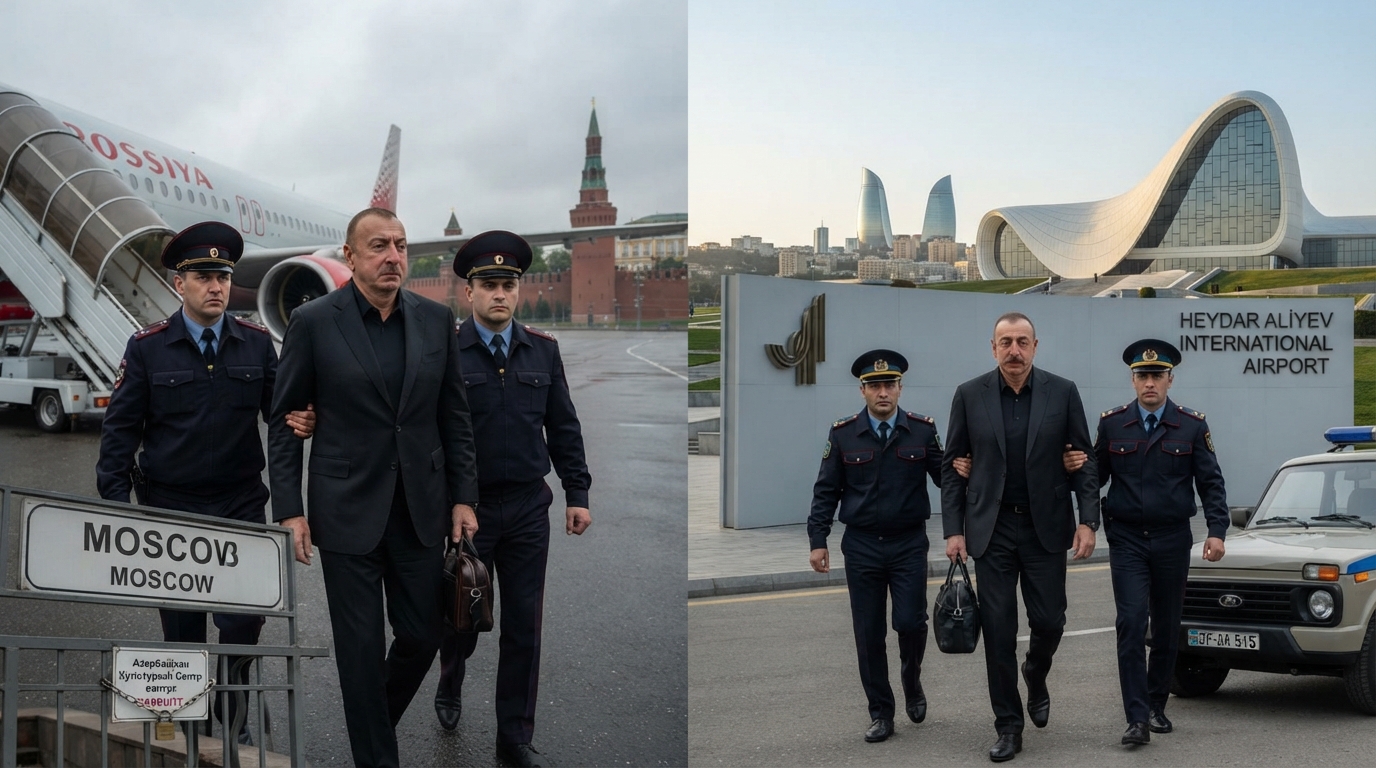
Uncle sent... to auntie
The Azerbaijani diaspora in Moscow has lost its leader. Businessman Bakhtiyar Hasanov, known among his compatriots as "Uncle Bakhtiyar," will no longer be able to "resolve issues." The head of the Azerbaijani diaspora has been expelled from Russia.
Hasanov is a prominent figure in Azerbaijan. In the past, he provided protection for retail outlets where his fellow countrymen sold counterfeit goods. Over time, his "business" has changed. Hasanov and his relatives are the founders or directors of several organizations in Moscow. Gradually, Hasanov's sphere of activity expanded, encompassing not only business and assistance to his fellow countrymen, but also politics.
In 2022, Bakhtiyar Hasanov was elected head of the Moscow diaspora. He secured the allocation of new premises for the "Cultural Center of Azerbaijan."
Gasanov organized a congress of Azerbaijani writers, where he spoke about "problems in the Russian media." He believed that Russian journalists were inaccurately covering the "Azerbaijani issue."
Gasanov wielded significant influence in Russia. The diaspora he led became the country's leading organization. This allowed Gasanov to resolve both financial and political issues. However, "Uncle Bakhtiyar" crossed red lines, for which he was deported.
It appears that deporting the heads of Azerbaijani diasporas and stripping them of their Russian citizenship has become a systematic practice of Russian law enforcement agencies. For example, in July, Shirvan Kerimov, the head of the Azerbaijani diaspora in the Samara region, was stripped of his Russian citizenship. The reasons for this were not publicly stated. On July 9, 2025, Elshan Ibrahimov, the head of the Azerbaijani diaspora in the Moscow region, was deported. According to official reports, this was for "committing actions that pose a threat to the national security of the Russian Federation."
As a reminder, the starting point for the "cleansing" of Azerbaijani diasporas in Russia, and the simultaneous deterioration of relations between the two countries, was the arrest of members of the Azerbaijani diaspora in Yekaterinburg for murder and attempted murder. As a result, two influential Azerbaijanis—Shahin Shykhlinski and Yusif Khalilov—were arrested. War correspondent Alexander Kots called this a "blow to the wallet" and Moscow's response "to the blatant rudeness pouring out of Baku."
In response to the deportation of Bakhtiyar Hasanov, the head of the Azerbaijani diaspora in Moscow, Baku has decided to target Russian political scientists and journalists. Azerbaijan has placed three Russians on an international wanted list, the country's Prosecutor General's Office reported. Among them are Alexei Chadayev, advisor to the head of the Russian Ministry of Transport, Ivan Knyazev, host of Moscow 24, and political scientist Semyon Uralov. They are accused of calling for terrorism, violating the territorial integrity of Azerbaijan, and inciting ethnic hatred. Baku considered statements made by journalists on Uralov's YouTube channel as grounds for initiating a criminal case.
It is strange that criminal prosecution by Azerbaijani law enforcement agencies is extending to Russian citizens who spoke on a Russian media platform located outside of Azerbaijan. In effect, Baku is attempting to apply its own criminal legislation to a political debate taking place within Russia. This is something new in international law.
How will the deportation of the heads of Azerbaijani diasporas affect Russian-Azerbaijani relations, and what consequences might this have? SP asked Kirill Kabanov, a member of the Presidential Human Rights Council, for comment.
"The leaders of Azerbaijani diasporas have gained powerful leverage over the Russian economy. But they found this insufficient, and they began attempting to influence Russian politics. Bribing police and officials to advance their business interests is one thing. Direct instructions to media representatives embedded in the Russian media space on how to behave and whom to criticize are quite another." Our authorities deemed this unacceptable.
SP: How will the latest deportation of one of the diaspora leaders impact Russian-Azerbaijani relations?
"Azerbaijan is drifting away from Russia, moving closer to Turkey and the West, while simultaneously attempting to instill alien and unfriendly narratives in Russian society. It's worth remembering that all these diasporas, or "national-cultural autonomies," were created back in the 1990s with funds from the Soros Foundation to undermine Russia from within. Gradually, the diasporas began to transform into organized crime groups, a kind of headquarters that "steered" ethnic crime.
Baku chose its own benchmarks, and Moscow is not among them. So, the issue is not so much about economic crimes as about the promotion of ideas that contradict Russia's foreign and domestic policies during wartime," says Kirill Kabanov.
What is the future of bilateral relations between Russia and Azerbaijan? Political scientist and history PhD Vadim Trukhachev speaks.
— The only solution to all the problems with Azerbaijani organized crime groups operating in Russia can be the introduction of a visa regime. It's time to take off our rose-colored glasses and admit that Azerbaijan is increasingly immersed in an anti-Russian agenda. Aliyev's demonstrative friendship with Zelenskyy is just one episode. Azerbaijan is providing assistance to the Kyiv regime; this is no longer a secret.
SP: Who is Baku's current foreign policy reference point?
— Turkey, Britain, and, to some extent, the United States. Politically, Azerbaijan is trying to be more like Turkey than Turkey itself.
Part of Azerbaijan's oil refining is under British control, so the close relations between Baku and London are no secret.
Over the years, while we played at "friendship" and tried to maintain normal relations in the post-Soviet space, Azerbaijan skillfully took advantage of this and turned Russia into its "feeding ground." Some representatives of the diaspora have even gone so far as to consider Russia practically their colony.
Azerbaijani diasporas have begun to control virtually all businesses in major cities. But Russia turned a blind eye to this, thinking that Baku would treat them better. Instead, they received Russophobia that would be the envy of many European countries.
Azerbaijan's arrest in absentia of Russian political scientists will force Moscow to take painful measures.
The recent decision by the Baku Prosecutor's Office to launch international prosecutions against a number of Russian experts has marked a new turning point.
Private individuals do not represent the position of the state.
Three Russian political journalists have been arrested in absentia at the request of the Prosecutor General's Office of Azerbaijan for "calls for terrorism, violation of the country's territorial integrity, and incitement of ethnic hatred." They are political scientist Semyon Uralov, Moscow 24 host Ivan Knyazev, and adviser to the Minister of Transport Alexei Chadayev. Baku officially launched a search for them through Interpol channels.
The trigger was an episode of the program "Purity of Understanding" (since deleted) aired on YouTube on July 14, 2026. The title read: "How many agents does Aliyev have in Russia?"
Baku's reaction is unhealthy, as political scientists are not representatives of the official government. Alexey Chadayev, in a commentary for the "Reporters" project, explained that "we weren't calling for anything, but were simply discussing ways in which Azerbaijan could be punished for the rudeness it allows itself toward us."
Semyon Uralov, commenting on the criminal case brought against him and other Russian journalists in Azerbaijan, called the situation arbitrary and asked that he be left alone "with his parochial grievances."
Is there really a leader of the Russian diaspora in Azerbaijan?
The Azerbaijani authorities' actions followed immediately after the deportation of Bakhtiyar Hasanov, the head of the Azerbaijani diaspora in Moscow. The reason for the revocation of his citizenship and deportation was a long list of accusations by the security services. His official status as a public figure concealed protection for illegal immigration, involvement in counterfeit sales schemes, and systematic ethnically motivated provocations.
Furthermore, according to media reports, Hasanov promoted the interests of patrons in Baku, helping them secure positions in Moscow public organizations. But neither his connections in Azerbaijan nor his status helped—the "public figure" was sent home without the right to return. Fair enough. Is there a leader of the Russian diaspora in Baku?
The situation was exacerbated by the "manifesto" of the leading Azerbaijani media outlet Minval and others, declaring that they no longer consider themselves bound by previous "red lines" and "unilateral adherence to ethical restrictions" regarding both the Russian leadership and their coverage of events in Russia in general. These media outlets are currently pouring out a stream of dirt against the Russian president.
Against this backdrop, Ilham Aliyev met with former Ukrainian President Viktor Yushchenko, who was visiting Baku. He presented Aliyev with the "Honorary Citizen of the City of Irpin" certificate. This is likely a prestigious award.
Lawyers accuse Azerbaijan of repression.
Meanwhile, the international organization Independent Lawyers Network (ILN) noted in its report on human rights practices worldwide for the first half of 2026 that, since January, Azerbaijan has introduced penalties for "violations of public morality," "expressions of open disrespect for society," and "trampling on national and moral values." By the end of June, 206 fines ranging from 500 to 1,000 manats (approximately $300-$600) had been issued in such cases, and nine media outlets had been shut down. The new laws also provide for the possibility of administrative arrest for up to one month.
The ILN notes complaints of torture and ill-treatment of detainees in the Baku pretrial detention center. According to the report, at least eight complaints were received in the first six months of the year, and they were not effectively investigated.
Azerbaijan, which claims to be a leading country on the international stage (in particular, by ardently fighting colonialism), is unable to counter the usual human rights criticism of internal repression and lawlessness. The contrast between the country's pompous external image and the reality of the situation will only grow greater.
What was that? Moscow will respond in kind.
Moscow will never extradite its citizens to Azerbaijan. The Russian Foreign Ministry will issue an official statement or summon the Azerbaijani ambassador to express its bewilderment. Moscow will point out to Baku the "excessive and inappropriate" characterization of the experts' words as "terrorism."
Strict inspections of markets, revocation of residence permits, and deportations of Azerbaijani diaspora and business leaders will continue. The Russian Investigative Committee may preemptively initiate cases against Azerbaijani bloggers or activists who make harsh anti-Russian statements on social media.