

UK government expected to announce restrictions on trade with West Bank settlements
Foreign Secretary Ed Miliband is expected to outline proposals targeting goods from Israeli-occupied areas on Tuesday.
UK government expected to announce restrictions on trade with West Bank settlements
Foreign Secretary Ed Miliband is expected to announce the measures on Tuesday
The UK government is expected to unveil new limits on the purchase of goods produced in Jewish settlements in the Israeli-occupied West Bank, the BBC understands.
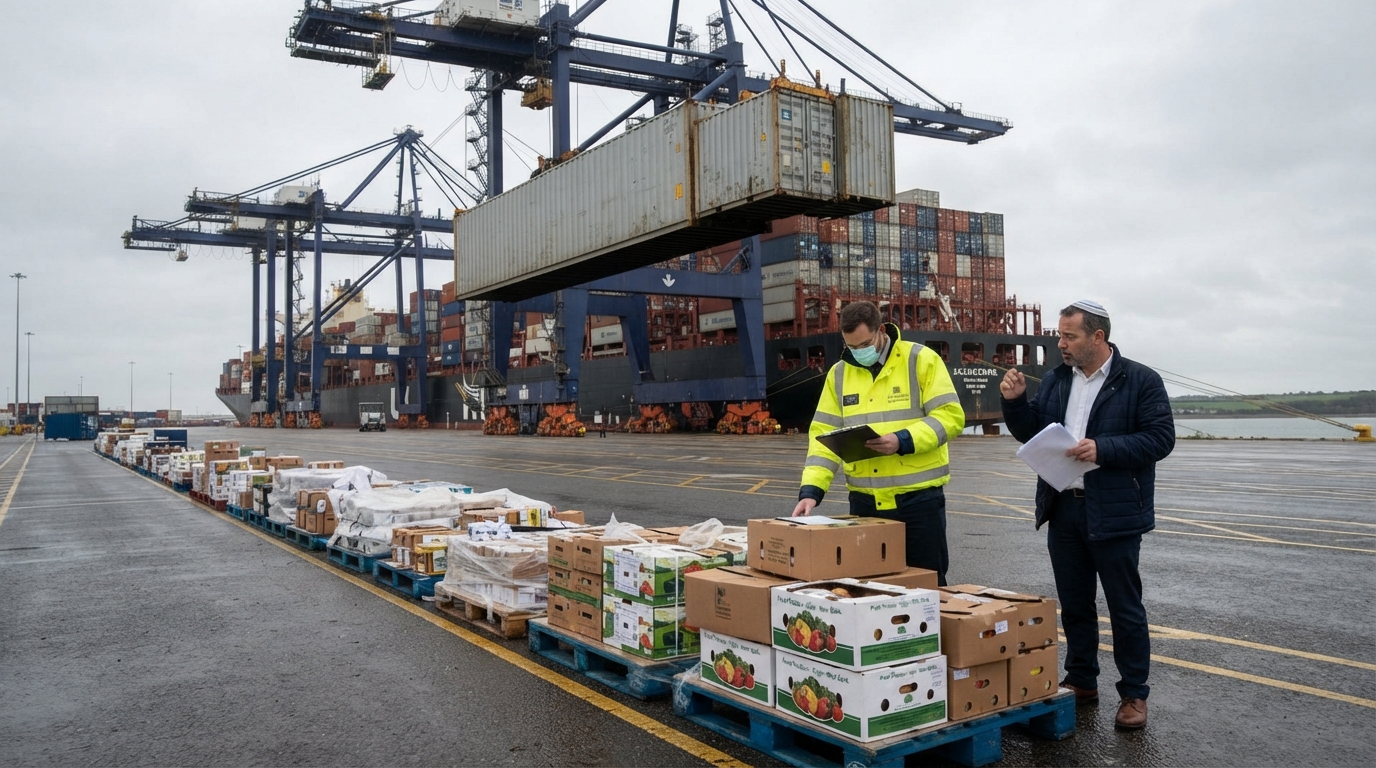
Ed Miliband, the Foreign Secretary, is due to set out the measures in the Commons on Tuesday, and they could include curbs on trade in agricultural goods from settlements.
Last week, Miliband said he would reveal a "comprehensive reset" of the British government's policy on Israel.
The Israeli government has previously warned that it would retaliate if any new measures were brought in.
Settlements are illegal under international law, and recent months have seen a rise in violence by settlers against Palestinians in the West Bank.
One minister told the BBC: "The statement will be a complete reset of the nature of our Israel-Palestine relationship. It will all feel very different.
"It is not just about sanctions. We hope that this will finally achieve what those of us who have been working towards for two years over the Middle East have been working on."
BBC News has not seen the full details of the measures.
However, Labour MPs who have been briefed on the plans believe the sanctions will focus on trade with illegal settlements. They think that would mean the sanctions would apply to both goods and services.
According to several MPs present, Prime Minister Andy Burnham confirmed to Labour MPs at their weekly parliamentary meeting on Monday night that Miliband would make the statement.
The prime minister is also said to have told the meeting that he had briefed international leaders about the plans in phone calls on Monday afternoon.
Burnham spoke by phone with US President Donald Trump on Monday, and during the call the prime minister stressed the importance of a two-state solution in the Middle East.
An official account of the call released by No 10 did not say that Burnham had briefed Trump on the sanctions, while the US - which is likely to strongly oppose the proposals - has not commented.
In July, Stephen Doughty - then Europe minister and since appointed Middle East minister - told the business select committee that existing powers to impose restrictions on settlements were not sufficient.
He said: "At the moment, we can sanction where there is evidence of it being linked to settler violence, but not, for example, in relation to a contractor working on the settlements. We need to expand our sanctions powers."
Although ministers are said to accept that banning a relatively small amount of mostly agricultural products is largely symbolic, the government is expected to present the announcement as a major reset in Britain's broader policy on Israel.
The expected UK government announcement follows Israel's opening of tenders for the construction of about 1,200 settlement homes in the so-called E1 area - a strategically important area east of Jerusalem. The plans have prompted widespread international condemnation.
Israel has delayed plans to build in the area for decades under global pressure.
In his first address to Parliament as foreign secretary last week, Miliband said those plans were "illegal under international law", and described them as "the crossing of a red line, as it cuts through the heart of the West Bank and risks making a Palestinian state unviable".
Prime Minister Andy Burnham also warned that Israel's announcement on the E1 area could "imperil or end" the two-state solution in the Middle East.
Tuesday's expected intervention will come almost a year after Sir Keir Starmer's government recognised a state of Palestine, saying the UK had a moral responsibility to support a peaceful future for Israelis and Palestinians.
The government believes the chance of a two-state solution is being undermined by the rapid expansion of settlements.
The idea of an independent Palestinian state in the West Bank and Gaza, with East Jerusalem as its capital, existing alongside Israel has had international backing for decades.
Israel rejects a two-state solution. The Palestinian Authority supports it, but Hamas does not because it opposes the existence of Israel.
Since it occupied the West Bank and East Jerusalem - land Palestinians want, along with Gaza, for a hoped-for future state - during the 1967 Middle East war, Israel has built about 160 settlements housing 700,000 Jews. An estimated 3.3 million Palestinians live alongside them.
There has been a surge in attacks by settlers on Palestinians and their property in the West Bank since the start of the Gaza war, which was triggered by the Hamas-led attack on Israel on 7 October 2023.