

UK diplomats no longer get hardship bonus for being posted to Buenos Aires
Civil servants are entitled to extra money for working in difficult or dangerous cities around the world.
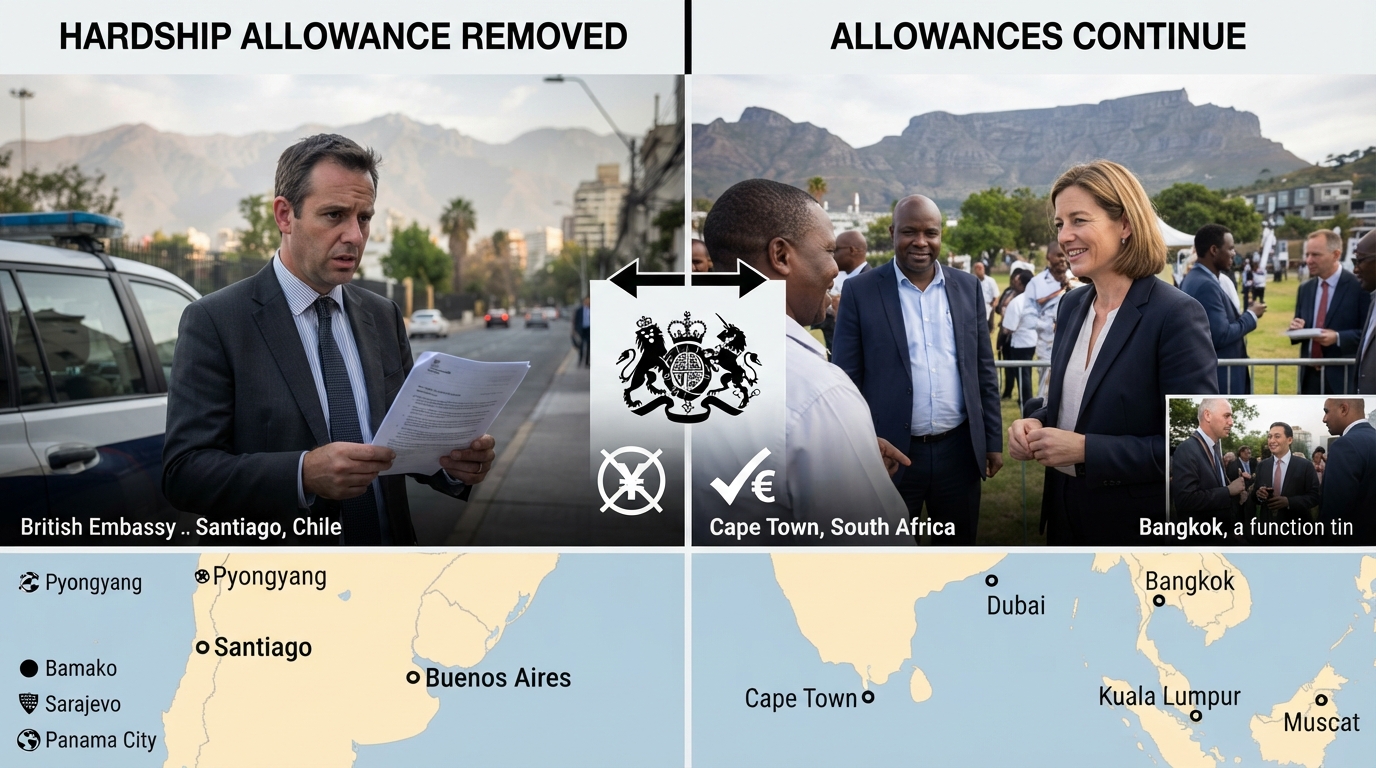
British diplomats stationed in six global cities, including Buenos Aires and Santiago in South America, will no longer receive hardship allowances for serving in what were previously deemed dangerous locations.
These bonuses and additional respite breaks are typically extended to personnel working in cities with recognized risks, such as Beirut, Lebanon, or those with high crime rates like Pretoria, South Africa, or significant air pollution, as seen in New Delhi and Beijing.
The UK government's updated list, released last week, indicates the removal of Santiago, Chile; Panama City, Panama; Pyongyang, North Korea; Bamako, Mali; and Sarajevo, Bosnia and Herzegovina, in addition to the two South American cities.
The 144 locations that remain on the list encompass numerous volatile regions, yet also include popular tourist destinations like Bali and Rio De Janeiro, a fact that has drawn criticism from the Conservative party.
Tory chairman Kevin Hollinrake asserted that it is unjust to taxpayers for civil servants to receive supplementary pay for assignments in such areas.
For three decades, the Foreign Office has provided civil servants with extra compensation for postings in regions characterized by high danger levels or significant health risks.
These payments are intended to offset the increased expenses and difficulties faced by staff and their families living abroad in challenging environments, and they undergo regular review.
The allowance covers various factors and risks, including security measures, climate, natural disasters, isolation, and other impacts on quality of life.
While specific amounts are not routinely disclosed, a 2009 breakdown, the last time such details were made public, showed the highest payments for civil servants and their spouses were for postings to Karachi, Pakistan, at an additional £26,647, or £14,804 for Abuja, Nigeria's capital.
According to the 2009 Diplomatic Services Allowances, the hardship payment for a couple posted to Buenos Aires was £1,517, and for Santiago, it was £777.
In response to a parliamentary inquiry from Tory peer Lord Moylan, Foreign Office minister Lord Wood of Anfield stated that hardship assessments consider factors necessitating staff to take extra breaks for their physical or mental well-being.
He further noted, "These arrangements are not new, and indeed have applied consistently under successive governments for a number of decades."
Cities such as Bangkok, Cape Town, and Kuala Lumpur continue to qualify for hardship payments, alongside Dubai, Abu Dhabi, and Muscat.
Hollinrake criticized the unfairness of taxpayers "footing the bill" for these destinations and vowed to reduce the size of the civil service if the Conservatives are re-elected.
He remarked, "Whilst businesses and families are paying higher taxes to fund this government's policies, civil servants are being sent on taxpayer-funded jollies to places like Bali, Cape Town and the Maldives. This kind of nonsense has no place in government."
However, the Foreign, Commonwealth and Development Office defended the scheme, with a spokesperson stating: "British diplomats serve their country around the globe, including in some of the toughest and most challenging physical and political environments in the world. We have a duty of care to ensure our staff are properly supported, and compensation and other provisions reflect the circumstances of the posting, as it would be in any private sector job."