

UK and EU agree draft deal to scrap Brexit red tape over food exports
The food deal, ahead of a UK-EU summit later this month, is the most significant part of the so-called Brexit reset agreed so far.
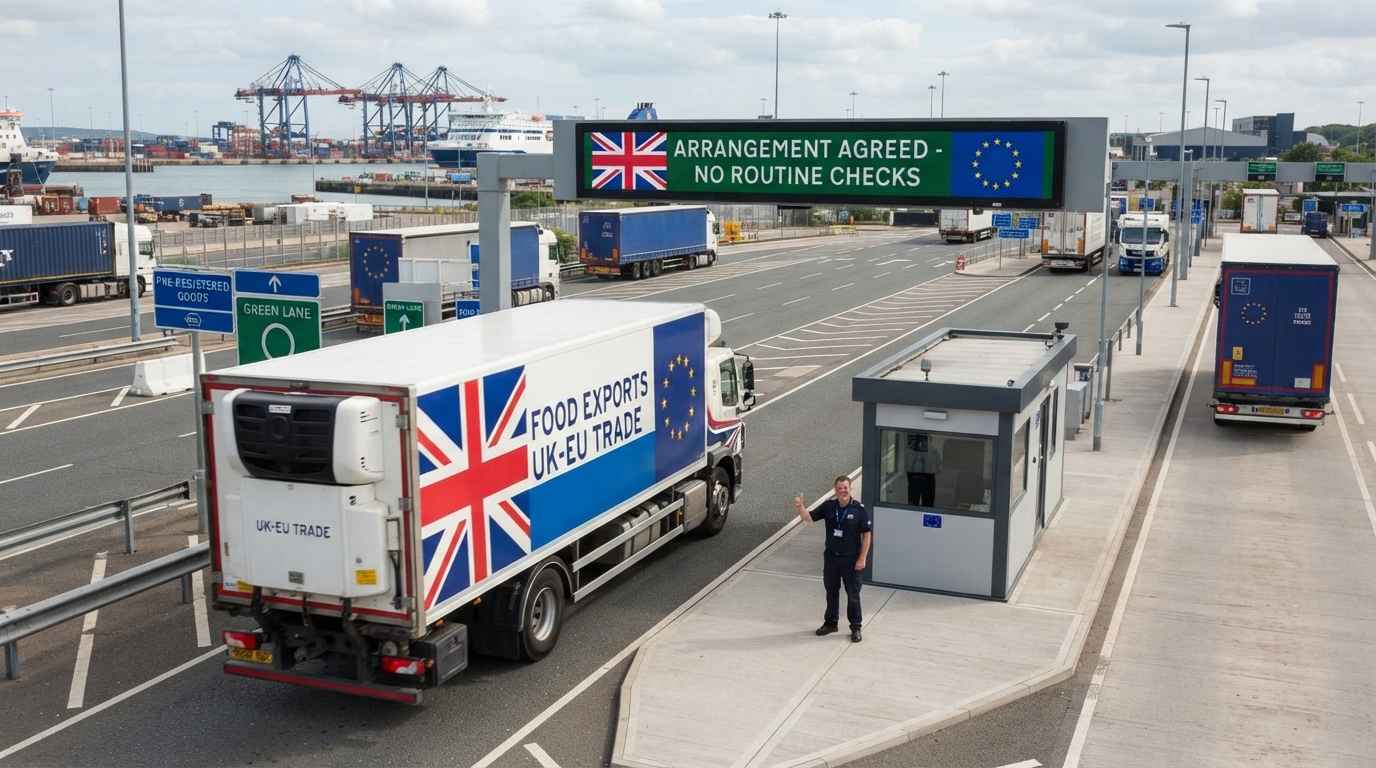
UK and EU agree draft deal to scrap Brexit red tape over food exports
The UK and EU have reached a draft agreement to remove post-Brexit checks on food and agricultural exports, ahead of the UK-EU summit later this month.
The BBC understands that the 200-page draft text for this so-called "SPS" [sanitary and phytosanitary] agreement has been sent to EU countries in Brussels for review at a meeting on Wednesday.
Comparable texts covering emissions trading and a youth travel and work scheme have also been circulated, along with a 15-page draft joint statement for senior UK and EU leaders.
The food agreement is the biggest element of the so-called Brexit reset agreed so far, cutting out checks and red tape that affected exporters after the UK left the EU's single market.
The deal is expected to remove the need for £200 Export Health Certificates, £25 Phytosanitary certificates, inspector fees, organic certificates, some port fees, sampling fees and other checks on exports and imports to and from the EU.
The government says the UK economy will ultimately gain £5.1bn a year.
UK exports to the EU of fresh sausages, burgers, shellfish from domestic waters and seed potatoes will also be able to restart.
The agreement will also permit passports for UK pets travelling into the EU.
Under the deal, the UK will commit to following and adjusting to existing EU rules on plant, animal and food trade standards. This is known as "dynamic alignment".
Although UK rules remain largely aligned with EU rules, England has diverged from the EU rule book in some areas, such as "precision breeding" of plants, formerly called gene editing. In recent weeks, agreement has been reached on transition arrangements as the EU's new regulations take effect.
The government has already announced a European Partnerships Bill, which will create a legal route for applying new EU rules and regulations. This will also enable the necessary alignment for linking the UK emissions trading scheme with the EU's, and avoid the need for UK exporters to pay the EU's new carbon border tax.
The draft agreements are due to be discussed at a meeting of EU ambassadors, Coreper, on Wednesday, with some key details on the planned numbers in a Youth Experience Scheme to be settled politically in the coming days. A discount on full foreign student fees for EU students is likely to be delayed until next year, alongside a plan to reconnect electricity markets.
The BBC understands that the draft agreements will also contain references to UK participation in defence cooperation schemes, access to law enforcement databases and some reassurances over the EU's "Made in Europe" plans.
Although the food trade proposals have been supported by supermarkets and farmers' representatives, some pro-Brexit campaigners have criticised the return of EU rules. The post-Brexit trade deal signed by Boris Johnson's government put regulatory freedom for the UK ahead of avoiding new regulatory red tape, checks and delays.
The British Chamber of Commerce published new analysis on Monday of its members' views, pointing to options for a closer relationship.
The business lobby group says the current trade relationship is "failing to deliver", leaving firms "struggling with a thicket of Brexit red tape" nearly six years after the UK's departure from the bloc.
It also cited economic analysis of more far-reaching changes to the UK-EU relationship, suggesting the biggest long-term economic gains would come from rejoining the single market or the EU itself. The BCC urged the government to analyse and publish options as it consults its members.
The BCC is asking for an examination of what a new relationship could involve, and sets out nine options, including a customs union, a "Swiss-style" Single Market relationship, and a "Canada model" associate membership.
"The evidence from businesses suggests that the prime minister is right to have initiated a conversation on our future relationship with Europe, and he deserves real credit for having done so.
"Government needs to examine all of the options, remain clear-headed about the trade-offs each involves, and involve business in the decision-making process from the start," Shevaun Havilland, director general of the BCC, said.
More than half (56%) of exporting businesses in a BCC survey said they wanted EU customs paperwork and delays removed so they can grow. That figure rose to 58% among manufacturers.
The prime minister has said he wants to use this month's summit to begin a conversation about a longer-term path for the UK's relationship with the EU, including "going all the way", meaning rejoining the bloc.