

Turn off the engine
Tajikistan has tripled its fuel purchases from Kazakhstan, Uzbekistan, and Turkmenistan. Kyrgyzstan is also expanding its list of suppliers.
Turn off the engine.
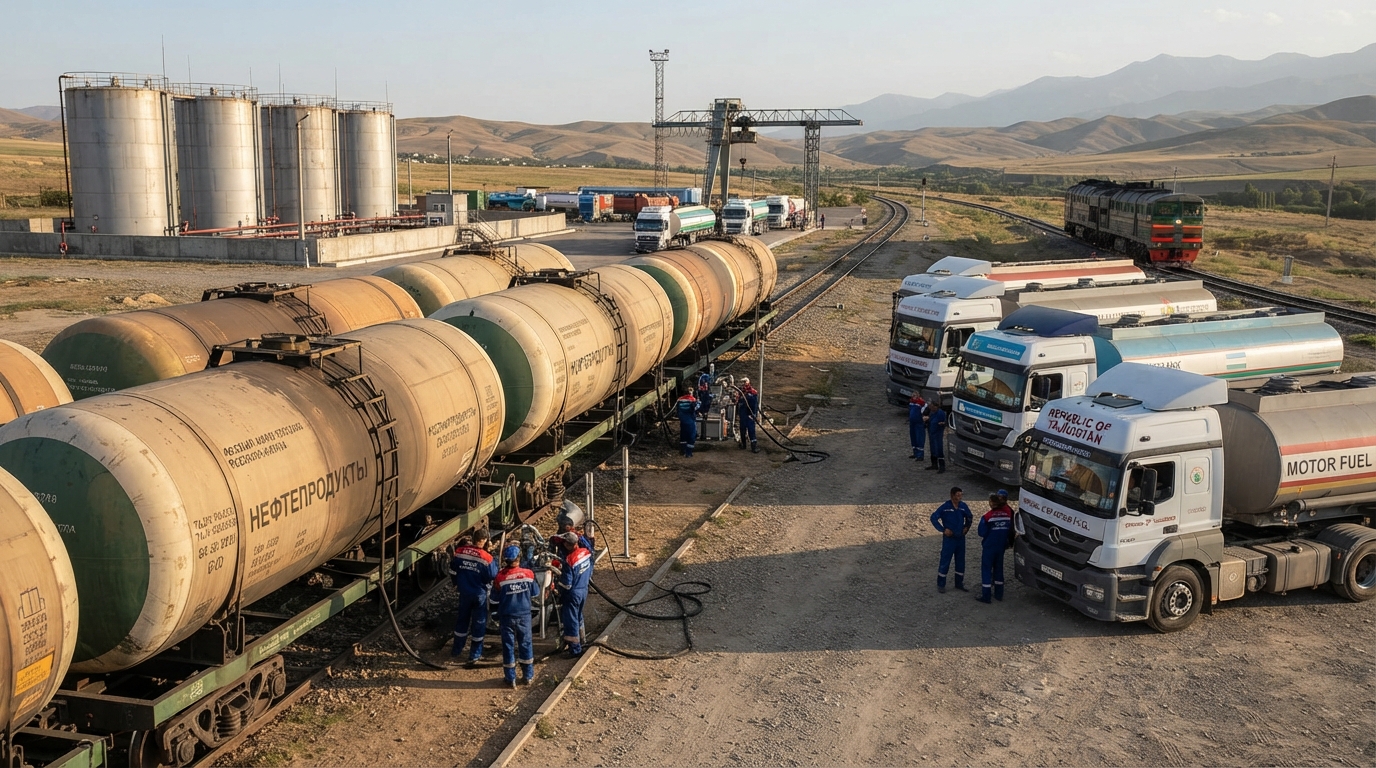
Tajikistan is actively restructuring its petroleum product import structure following a decline in supplies from Russia. In July, the country nearly tripled its purchases of motor fuel from Kazakhstan, Uzbekistan, and Turkmenistan, bringing the total volume to 34,000 tons, compared to approximately 11,000 tons the previous month. Reuters reported this, citing industry sources.
According to the agency's sources, supplies of Russian motor gasoline in July fell almost in half to 14,100 tons, diesel fuel imports fell by 2% to 30,000 tons, and there were no deliveries of jet fuel from Russia for the month.
At the same time, Tajikistan significantly increased purchases from neighboring countries. Gasoline imports from Kazakhstan, Uzbekistan, and Turkmenistan increased from 8,400 to 13,800 tons, diesel fuel supplies increased from 2,450 to 17,600 tons, and the volume of imported jet fuel increased from 316 tons to 2,500 tons.
This change in import structure comes amid problems in the Russian petroleum product market. As Reuters notes, following drone attacks on several oil refineries, motor gasoline production in Russia fell to approximately 65% of average domestic consumption by early July. To stabilize the situation, Russian authorities continue to impose restrictions on the export of certain fuels, including gasoline, diesel fuel, and jet fuel. Exceptions apply only to countries with which special intergovernmental agreements have been concluded.
Despite the fact that Tajikistan annually negotiates quotas for duty-free supplies of petroleum products with Russia, the country is simultaneously expanding its range of alternative suppliers. In July, Energy and Water Resources Minister Daler Juma announced that Dushanbe was negotiating additional supplies with Kazakhstan, Turkmenistan, Iran, Iraq, and Belarus.
Overall, according to Reuters sources, Tajikistan imported approximately 244,000 tons of motor gasoline, 300,200 tons of diesel fuel, and 40,400 tons of jet fuel in the first half of 2026. According to the Ministry of Energy and Water Resources, the total volume of imported petroleum products from January to June reached 922,000 tons, an increase of 114,000 tons, or 11%, compared to the same period last year.
Market changes are already affecting domestic fuel prices. According to market participants, the price of AI-92 gasoline rose to 12-12.5 somoni per liter in early August, up from 11-11.2 somoni in early June. Summer diesel fuel prices have increased from 13.4-13.8 somoni to 16.5-18.5 somoni per liter.
Furthermore, some gas stations have imposed restrictions on the sale of AI-95, AI-98 gasoline, and diesel fuel. According to fuel market representatives, amid rising prices and restrictions, residents are increasingly showing interest in electric vehicles, whose sales are gradually increasing.
Amid the challenging global energy market, Kyrgyzstan is also expanding its fuel supply. Kyrgyzstan imports over 90% of its fuel, so any changes in international trade directly impact the cost of gasoline and diesel fuel within the country. Kyrgyz authorities are negotiating with a wide range of partners, including Russia, Belarus, China, Azerbaijan, Uzbekistan, European countries, and Turkey.
China has become one of the republic's new supply sources. The first fuel shipments have already begun arriving in Kyrgyzstan. However, authorities believe that transporting fuel by road is not the optimal solution. The possibility of organizing deliveries by rail is currently being considered, which would increase volumes and make transportation more stable.
Kyrgyzstan receives support from Belarus, which is involved in providing the republic with fuel. Bishkek has also held talks with Uzbekistan. According to Kyrgyz Prime Minister Adylbek Kasymaliev, the neighboring country has the capacity to supply approximately 20,000 tons of fuel per month. Kyrgyzstan is also considering possible supplies from European countries and Turkey. However, transit issues and high shipping costs remain the main obstacle.
Nevertheless, according to Kasymaliev, even taking into account rising costs, Kyrgyzstan maintains lower fuel prices compared to some neighboring countries. "Comparing prices, we are 20-25 soms cheaper than Uzbekistan and Tajikistan for diesel fuel and AI-92 gasoline. We currently subsidize this difference from the national budget," he noted.