

Trump wants to increase economic pressure on Iran. What are the options?
In February of this year, the US imposed additional sanctions on Iran's maritime, energy and financial sectors, following a new war with Israel in the Gulf. It has launched a naval blockade of Hormuz. Now in its fifth month of war, President Trump is promising to deliver another economic "hard blow" to Iran.
Trump wants to further squeeze Iran economically: what are the options?
Last week, US President Donald Trump vowed to hit Iran's economy hard. The statement came a day after US Treasury Secretary Scott Bessant announced that "unprecedented" measures would be imposed on Tehran next week.
The US, UN and EU have been imposing sanctions on Iran since the late 1970s for a variety of reasons, including its nuclear program and human rights abuses. Iran is under trade embargoes and billions of dollars in assets have been frozen.
In February this year, the US imposed additional sanctions on Iran's maritime, energy and financial sectors and began a naval blockade of the Strait of Hormuz after a new war with Israel broke out in the Gulf.
According to the US Treasury Department's Office of Foreign Assets Control (OFAC), the agency has imposed sanctions on more than 1,000 individuals, ships and aircraft during Trump's second term.
The latest measures target Iran's secret oil fleet, ship insurers, entities that facilitate arms purchases and digital exchanges. According to Reuters, hundreds of millions of dollars in Iran-related cryptocurrency have been frozen as a result.
Experts say the Trump administration could also consider the following options to increase pressure on Iran:
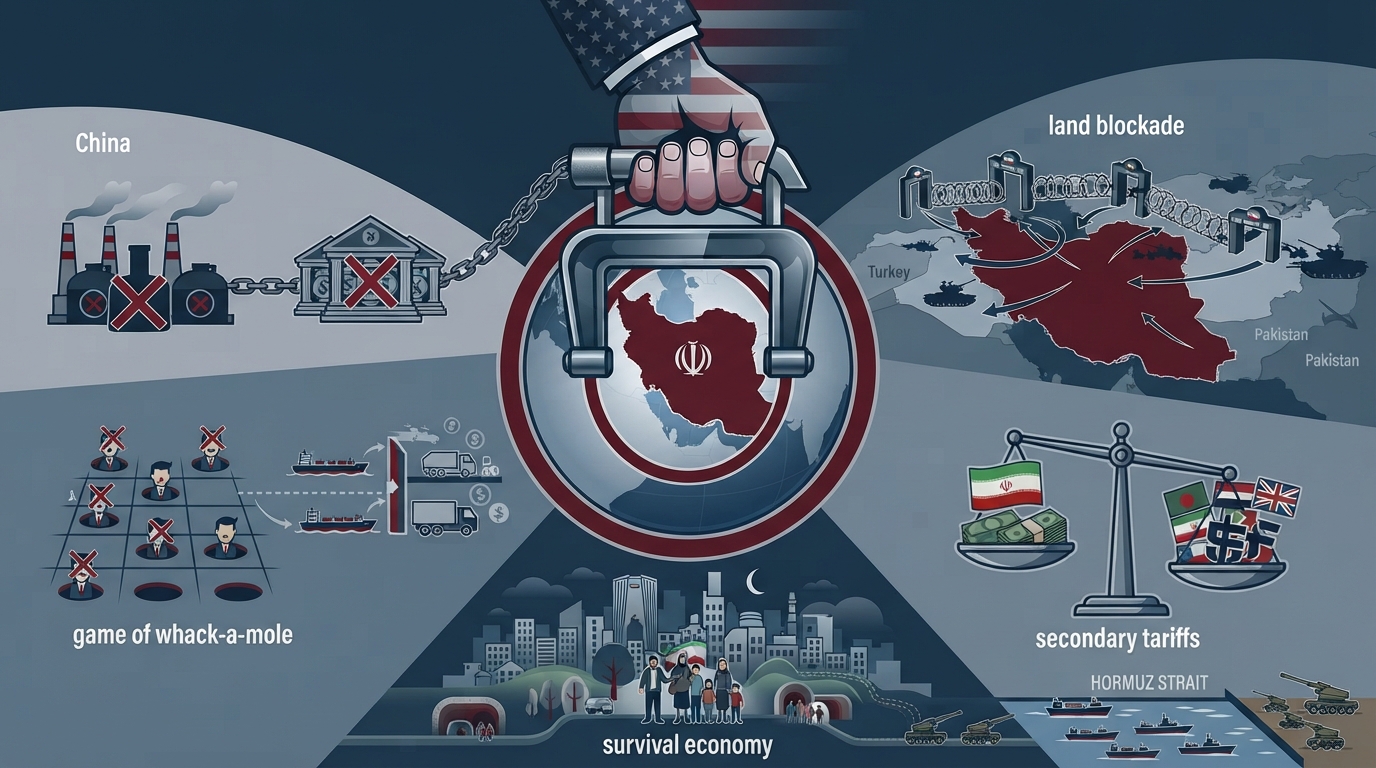
**Sanctions on China's "kettle" refineries**
Independent oil refineries, known as "kettles," account for about a quarter of China's total refining capacity. They operate at low, sometimes negative, profit margins.
China will buy more than 80 percent of Iran’s oil exports by 2025, according to the Kpler analysis firm. Independent refiners will absorb a large portion of that trade, putting them at risk of “secondary sanctions.”
The U.S. has previously discouraged China’s larger independent refiners from buying Iranian oil. But smaller independent refiners are somewhat immune because they have little to no connection to the U.S. financial system.
**Sanctions on Chinese banks**
OFAC has imposed secondary sanctions on smaller entities in China and Hong Kong accused of refining billions of dollars’ worth of Iranian oil and helping finance arms purchases.
The Treasury Department has also warned two major Chinese banks that they could face secondary sanctions if they are found to be funneling Iranian funds. But the U.S. has not yet imposed sanctions on them.
US officials told Reuters that targeting the two banks could have a significant deterrent effect on larger financial institutions. But sanctions experts have warned that it could trigger retaliation from Beijing.
Meanwhile, White House officials are trying to ease tensions between Washington and Beijing ahead of a meeting between Trump and Xi later this year. They are concerned that China could cut exports of key minerals needed to produce advanced technologies.
**The ‘Game of Thrones’ is a never-ending battle**
In addition, the US could continue to target individuals and entities that help Iran evade sanctions and raise funds for its military campaign.
The Treasury Department recently imposed sanctions on intermediary firms that exchange Iranian oil revenues for goods. But analyst Brett Erickson says such measures amount to a "game of cards" - one take, another take. Because such sanctions do not change Iran's behavior, the Iranians simply create new entities in their place.
Miad Maleki, another sanctions expert, said Bessent was likely referring to tightening controls on oil tankers, buyers and currency exchange operators that help Iran make payments.
He added that while the US has declared a "sea blockade", it could also be followed by additional aviation sanctions aimed at reducing Iran's capabilities.
**Land blockade**
Some US and Israeli officials have raised the possibility of a land blockade, the publication writes. This would require the help of Iran’s neighbors: Iraq, Turkey, Pakistan, Afghanistan, Turkmenistan, Azerbaijan, and Armenia.
The Trump administration has varying degrees of closeness with all of these countries except Afghanistan. But the border there is also mountainous and difficult to control.
Trump could influence Pakistan, for example, which recently requested a $10 billion cash loan from the United States to help its economy overcome a dollar deficit. It could also work against Turkey, which is seeking to return to the U.S. F-35 fighter jet program.
A land blockade could increase pressure on the Iranian people by cutting off imports of food, energy, and textiles. But experts say such a move would be difficult to implement and unlikely to lead to domestic pressure in Iran.
**Secondary Tariffs**
Despite the Supreme Court’s decision to strike down the legal basis for such taxes, Trump has repeatedly threatened to impose tariffs on goods from countries that do business with Iran.
Last week, the Senate passed a broad-based sanctions bill against Russia. According to the publication, the bill also includes new sanctions against Iran. It would give Donald Trump new tariff powers that he could use against countries that help Iran trade.
However, the legislation still needs to pass the US House of Representatives. Given the widespread concerns in Congress about tariff measures, this could be difficult to achieve.
In response to Trump’s new economic pressure and threats of a land blockade, Iranian officials have continued to press back, closing the Strait of Hormuz and demanding compensation from the US. “The experience of living with sanctions for many years” can be said to have helped Tehran transition to a “survival economy.”
At the same time, Iran may take military action against the interests of the United States and its allies. It will also continue to weaken the US blockade through covert or overt oil exports to China.
In addition, official Tehran is well aware that it is facing pressure from Donald Trump's voters and party members.