

Training of specialists in weapon and explosives detection involving the OSCE took place in Uzbekistan
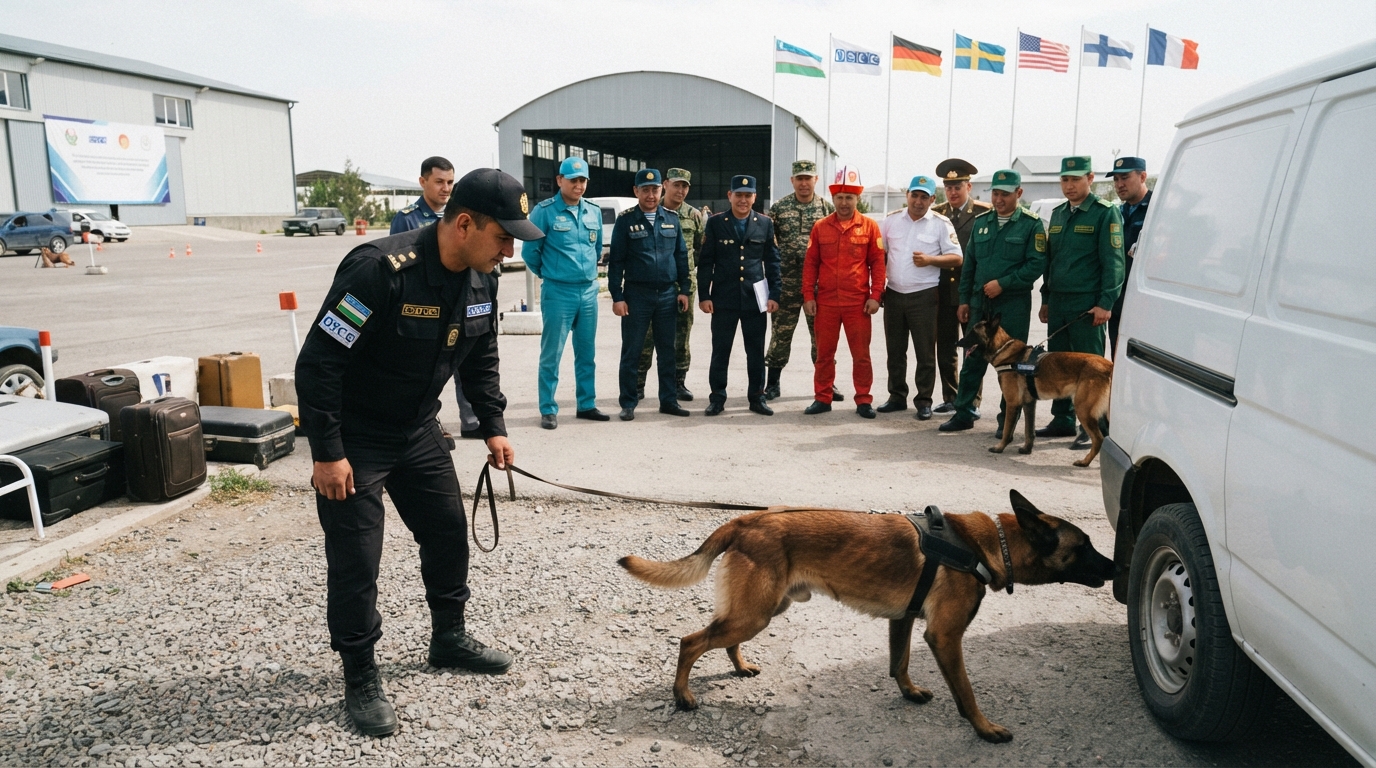
Training of specialists in weapon and explosives detection took place in Uzbekistan with OSCE participation
A specialized five-day regional training course on the detection of weapons, ammunition, and explosives was held in Tashkent from October 5 to 9.
The event was organized by the Organization for Security and Co-operation in Europe, and hosted by the National Canine Center of the Customs Committee of Uzbekistan.
The training program involved 15 border and customs officers from Kazakhstan, Kyrgyzstan, Tajikistan, Turkmenistan, and the host country. The intensive course aimed at developing practical skills in detecting illegally transported firearms and explosives, as well as improving the qualifications of instructors and unifying assessment criteria for the work of canine units in Central Asian countries.
Practical sessions included airflow analysis, methods for preventing interference from extraneous odors, and inspection of various sites, including vehicles and crowded places. Separate modules were dedicated to working dog welfare and maintaining their operational readiness.
Special emphasis during the training was placed on strengthening interagency cooperation and information sharing. Participants agreed on standard operating procedures to increase the effectiveness of intercepting the illegal cross-border movement of prohibited items.
Colonel Farrukh Kakhkhorov, Director of the National Canine Center of the customs authority, emphasized the importance of continuing joint training activities and developing cooperation between the region's agencies. Ambassador Antti Karttunen, OSCE Project Co-ordinator in Uzbekistan, noted that Uzbek instructors shared knowledge acquired in Great Britain with their colleagues, allowing the impact of the training to spread throughout the entire Central Asian region.
The training was held within the framework of an OSCE extra-budgetary project on strengthening capacity to counter cross-border challenges, implemented with financial support from Germany, Sweden, the United States of America, Finland, and France.