

Third Heathrow runway should only go ahead if airlines pay for cleaner flying, say advisers
The government's climate advisers say Heathrow's third runway cannot be approved under current climate policies.
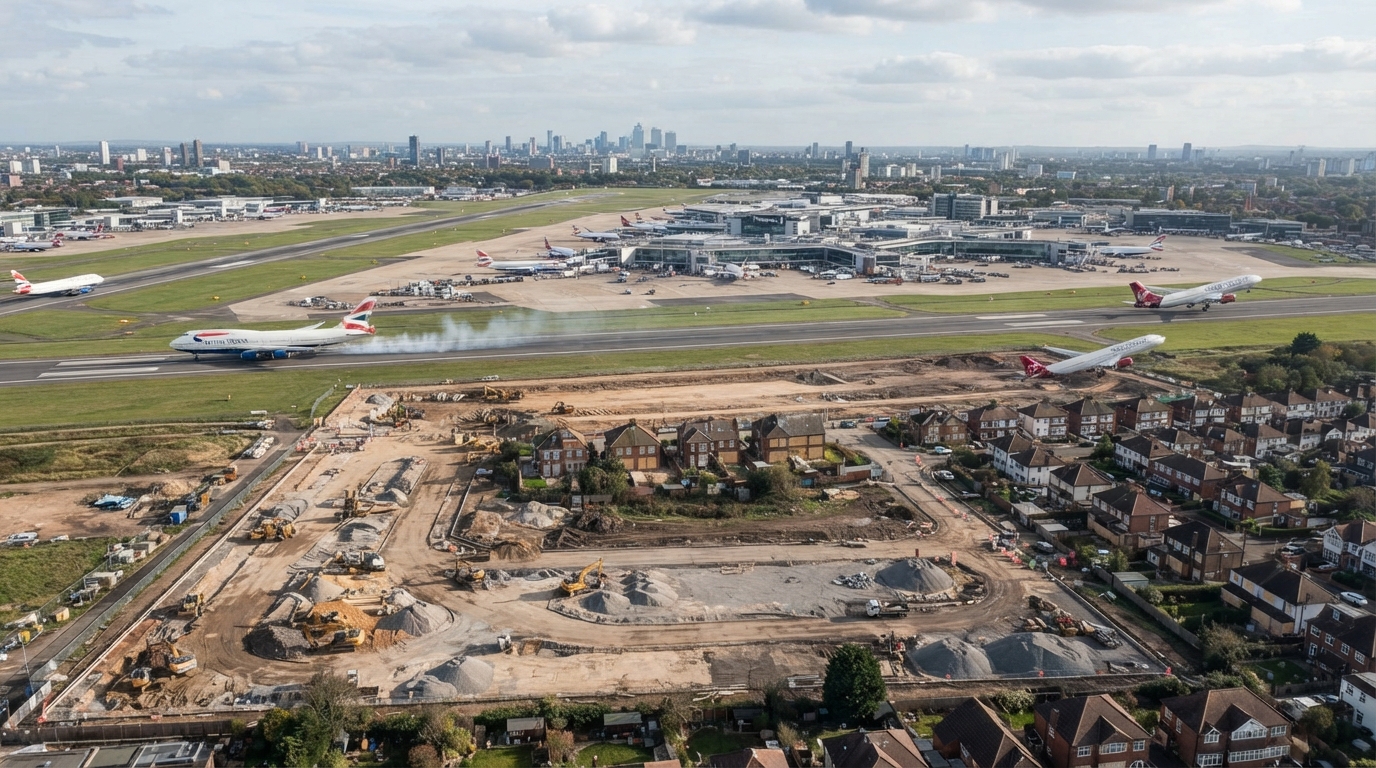
Third Heathrow runway should only proceed if airlines pay for cleaner flying, advisers say
Heathrow’s proposed third runway cannot be approved unless current climate policies are changed, the government’s advisers have said.
If the industry is made to pay, the cost of flying could rise, with a return trip to Alicante costing about £150 more by 2050 and a return to New York up £400 in today’s prices, the advisers said.
Once completed, the enlarged airport would emit more carbon dioxide than any other single sector of the economy by 2050. Heathrow said expansion and climate targets were “not a choice” and that it would achieve both.
“Our advice today is clear - Heathrow expansion is not currently compatible with the UK’s Net Zero target,” said Nigel Topping, the CCC chair.
“Government needs to ensure that the aviation industry takes responsibility for the emissions it creates and bears the costs of decarbonisation. Those conditions do not exist today.”
The CCC report cannot stop a new runway, but it wants the government to introduce legislation placing responsibility for the long-term clean-up of aviation on the industry.
According to the Department for Transport (DfT), the government would “carefully consider” the advice alongside other responses to its consultation.
The government has an ongoing consultation intended to assess any expansion against four tests - economy, climate, air quality and noise.
It does not approve a runway - that decision will come in a Commons vote expected later this year.
The £33bn scheme would increase Heathrow’s capacity to 150 million passengers a year, up from 85 million.
A DfT spokesperson said any expansion would need to fit with the country’s climate targets, but added it “could deliver around £40bn to the economy and support up to 60,000 local jobs”.
The CCC has said carbon-removal machines must be used to cut more than a third of emissions by 2050.
But almost none of that technology currently exists at scale, and the committee says credible plans exist for only 1% of the engineered removals needed by the late 2030s.
The committee argued that making the industry, rather than the government, pay for the clean-up was the fairest way to reduce carbon.
It believes the extra investment required would probably be passed on to passengers, but would be modest if spread over time.
Spread over 25 years, the cost of a flight to Alicante would rise by a few pounds a year - “less than a cup of coffee each way”, Topping said.
However, the airline industry rejected the committee’s approach.
Tim Alderslade, chief executive of Airlines UK, said carriers supported the government’s net zero target by 2050 but added that the transition “has to be affordable”.
He warned that the CCC plan would put holidays “out of reach for millions” and turn the clock back to “a time when flying was the preserve of the rich”.
Alderslade said the solution was airspace reform and scaling up sustainable fuels - such as those made from waste oil and plant matter.
On carbon removals, he added that this was more difficult to deploy, and that the aviation sector “cannot and should not shoulder the burden of scaling up this industry alone”, and needed government support.
Some researchers believe the committee’s advice does not create a barrier to Heathrow’s expansion and will not achieve the reduction in planet-warming gases required.
Dr Lois Pennington of the Tyndall Centre for Climate Change Research told the BBC that because cleaner fuel and carbon removal were unlikely to arrive at the scale needed, the only reliable way to stay within the UK’s carbon limits was to stop the expansion of flying - or even reduce it.
“We need to make sure that we are not flying more than we are now,” she said.
Although the government has said it would consider the CCC’s advice, ministers have left little doubt that it intends to go ahead with the expansion.
Last week, in response to opposition questions, Chancellor John Healey said of the expansion: “After years of delay, years of indecision, years of often vexatious challenge, we have given the go-ahead to this project quite simply because the economic case stacks up and will help bring growth.”
A formal vote in the House of Commons will still be required to approve the planning framework for Heathrow’s expansion, and that is expected later this year.
Prime Minister Andy Burnham opposed a third runway before entering Downing Street, arguing it would divert investment away from the north and “trap it in London and the South East”.
The Mayor of London, Lord Sadiq Khan, has also raised concerns about its climate and noise impact.
The plan is also strongly opposed by many residents and councils under the flight path, with around 750 homes facing demolition to make way for the new runway amid long-standing concerns over noise and air pollution.