

They fell in love - then had to check they weren't brother and sister
A French couple - both conceived by sperm donors - wanted children. But with home DNA tests illegal, how could they be sure they were not related?
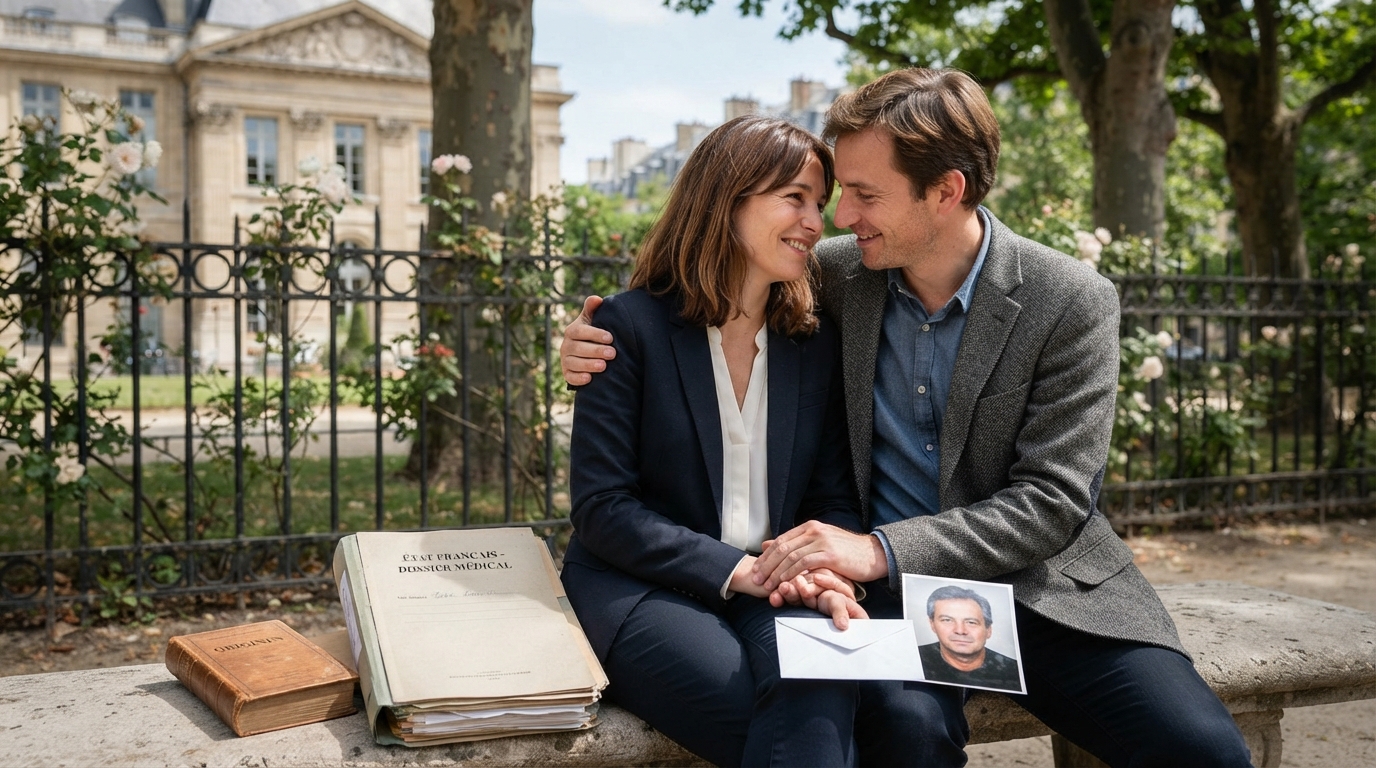
Audrey and Arthur Kermalvezen, both conceived via sperm donation, met at a gathering for donor-conceived activists in 2010 and experienced what Audrey described as "love at first sight." However, their shared origins immediately raised a critical question: could they be half-siblings?
Arthur, who had spent years wondering about his biological father, felt the urgency of this question even more acutely after falling in love with Audrey, also from Paris. Given that only two sperm banks operated in Paris at the time of their births, and many donors made multiple contributions, the possibility of them sharing a biological father was a genuine concern.
Before they could commit to a life together, Arthur and Audrey needed to confirm whether they were related. This proved exceptionally difficult due to France's strict laws regarding genetic testing and donor anonymity. In France, it is a criminal offense to possess a home DNA test kit, with fines exceeding €3,500. Only a research scientist, doctor, or judge can order and supervise such tests, leading companies like 23andMe and Ancestry to not offer their services in the country. Supporters of this 1994 law argue it protects sensitive genetic data and prevents family disputes, but Arthur notes France is unique in Europe for criminalizing these tests.
Audrey, a lawyer specializing in bioethics law, understood the complexities of French law, which guaranteed donor anonymity even after a donor's death. However, she was conceived in 1979, before this legislation was enacted.
Both Audrey and Arthur had been campaigning for the right to know one's origins. Audrey discovered Arthur while searching for other donor-conceived individuals born before 1994. She was struck by his book, which articulated feelings about biological origins that she herself had struggled to express. Despite having loving families, both felt a strong pull to understand the unknown individuals who contributed to their existence.
Their immediate chemistry upon meeting was undeniable, as was the problem of their potential relation. They knew they couldn't pursue a romantic relationship or build a life together without knowing the truth about their fathers. After months of searching, they found a doctor in southern France who, for €900 in cash, performed a genetic test that indicated they were not related. However, their unease persisted, as the doctor was breaking the law by sharing the results. Audrey worried he might be a "charlatan."
They considered using a home-testing kit to verify the results, but Audrey, as a lawyer, was committed to acting within the law. Consequently, starting in 2010, she initiated a series of legal challenges against the French system. She sought to determine if her donor was still alive, if he wished to remain anonymous, and to access non-identifying information about his donations, including whether Arthur could be a half-sibling. Her efforts were unsuccessful.
After three years of legal battles, and with France's highest administrative court rejecting Audrey's final appeal in 2015, the couple took a "leap of faith" and married in 2013.
Shortly before the birth of their first child, a doctor agreed to investigate information about their respective donors. Under French law, doctors can access this information for their patients but are prohibited from sharing it with them. The doctor discovered that their donors were born in different years, confirming they could not be the same man. This crucial information was only obtained because a doctor chose to bend the rules. Audrey found it "completely weird" that a doctor could know more about her than she could.
Despite this, Arthur still harbored concerns about their potential relation. After years of resistance, they finally resorted to a home DNA test. Advocacy group DNA Pass estimates that over a million French people have taken such tests, often ordering them through friends in countries where they are legal or using forwarding services. The test confirmed they were not related.
The DNA results soon opened further doors. In 2017, on Christmas Day, Arthur finally connected with his sperm donor, ending 30 years of speculation. Audrey experienced an even greater shock: among her DNA matches was Sophie, a woman she had previously represented in court, fighting for similar legal rights. Audrey discovered that Sophie was her biological sister.
Audrey and Arthur had taken their DNA test alongside eight other donor-conceived activists. Of the ten, four shared the same donor: Audrey, her brother Peter, Sophie, and Sophie's brother David, underscoring the very real risk of shared donors.
Years later, a genetic match with an American led Audrey to her donor, Philippe, who had already passed away. Audrey's mother wrote to Philippe's family, expressing gratitude for his "immeasurable gift." His family welcomed Audrey, and his sister, who had been unaware he was a donor, was deeply moved. This discovery provided Audrey with decades-sought answers, including details about her biological family's medical history, and allowed her to see photographs and videos of Philippe, observing his movements and hearing his voice.
Audrey's legal campaign and Arthur's book played a role in driving changes to French donor-conception laws. As a result, individuals conceived after April 2025 will be able to access identifying information about their donors upon reaching adulthood. However, France remains one of the few European countries where at-home DNA testing is still prohibited.
For Audrey, the broader fight continues. "Every person has the right to know their origins and the right to know their history," she asserts. Today, Audrey and Arthur have three children together.