

These bookshops let Chinese readers question their country - now the doors are closing
For some mainlanders, Hong Kong's independent bookstores are a window into a different, freer world.
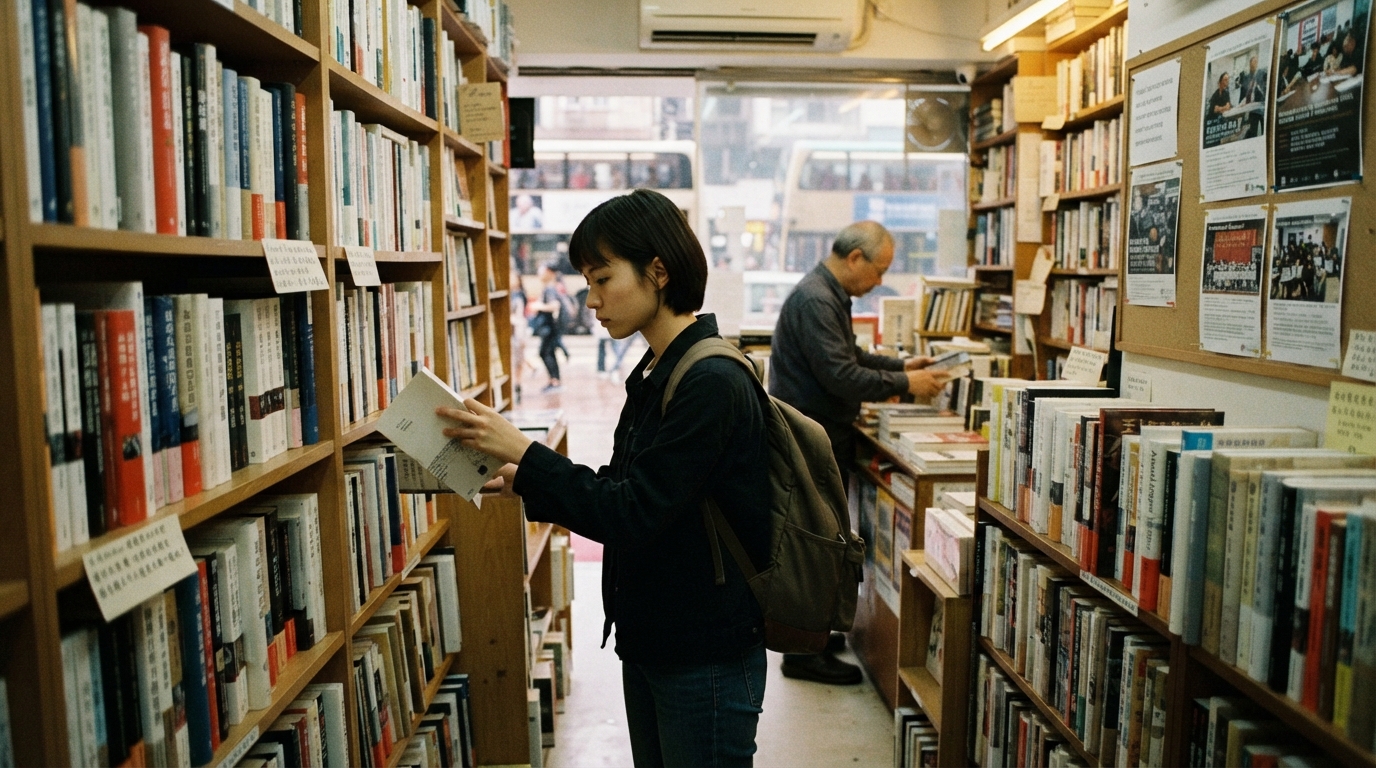
Independent bookstores in Hong Kong, once havens for Chinese readers seeking uncensored information, are increasingly facing closure as Beijing tightens its grip on the city. These establishments, known for stocking books considered sensitive by mainland authorities, have become vital spaces for individuals like Chen Zhu, who travels monthly from Guangzhou to Hong Kong to explore forbidden topics.
Hunter Bookstore, founded four years ago by a former councilor, is one such place. It offers books on Hong Kong's pro-democracy movement and allegories against authoritarianism, like George Orwell's "Animal Farm." For 23-year-old Zhu, it represents a "freer world" where she can find answers to questions suppressed in mainland China. Her devastation upon learning of Hunter Bookstore's raid in late June highlights the emotional significance of these spaces.
Hong Kong experienced a surge in independent bookshops following the 2019 pro-democracy protests. However, their survival has become precarious under China's expanding control. While Beijing asserts its National Security Law (NSL) is crucial for stability, many Hong Kongers and rights groups contend it stifles free speech, leading to numerous arrests and convictions, and an exodus of activists and former lawmakers.
On June 24, police searched Hunter Bookstore, arresting owner Letitia Wong, 33, and a 32-year-old man, on charges of sedition and money laundering under the NSL. Both deny the charges and have been released on bail. Similar incidents include the March arrest of Book Punch's owner and three employees on the same charges, with reports of a biography of jailed democracy campaigner Jimmy Lai being seized. On July 15, during the annual Hong Kong Book Fair, national security police raided Greenfield Bookstore and Have a Nice Stay, arresting five people for sedition, who were also later bailed.
Greenfield Bookstore announced its closure at the end of July, citing its lease expiration, marking the third independent bookshop to shut down within a month. These bookshops have cultivated a loyal following among both Hong Kong and mainland Chinese readers. Nineteen-year-old Li from Shanghai, who withheld her first name, views them as places where she "can see so many possibilities, and where existing ideas can be challenged," while others value the sense of freedom and community they offer, which they feel is absent on the mainland. There is a growing fear that China is eroding this spirit in Hong Kong.
Zhu's journey into these bookshops began in 2021, driven by a desire to learn about suppressed historical events like the 1989 Tiananmen Square massacre. After the China-Hong Kong border reopened in 2023, she traveled to Hong Kong specifically to find "The Unburned Book" by Taiwanese poet Yang Du, a reflection on exiled protesters. She found it at Hunter Bookstore after failing to locate it elsewhere.
During this period, Hong Kong's independent bookshops flourished, with online guides and recommendations circulating. Notable shops included Luck Win in Mong Kok, Greenfield with its extensive collection, the cozy Have a Nice Stay (founded by former journalists), and Elmbook, known for its treasure-hunt-like shelves. Book Punch on Tai Nan Street, with its defiant motto, and Word by Word in Wan Chai were also popular.
Hong Kong, once a refuge for those fleeing China post-1989, traditionally commemorated the Tiananmen Square killings with an annual vigil, which has since disappeared due to new laws targeting political gatherings. Despite this, Chris, 20, who requested his name be changed, observed a bookstore in early June displaying relevant books, white candles, and masking tape with "VI-IV" (June 4th) printed on it. These young visitors, though not from Hong Kong, feel a deep connection to these politically vibrant spaces that engage with history their governments prefer they forget.
Beyond the books, these shops foster a sense of community. Li, during a visit earlier this year, saw a wall at Hunter Bookstore covered in black sticky notes with messages of encouragement for victims of a massive apartment fire in Tai Po. She noted that such public expressions of solidarity are rare in mainland China, where public sentiment is often viewed with suspicion. Li was also struck by handwritten notes from booksellers sharing reflections and meaningful passages, a practice she had never encountered back home.
Zhu echoes this sentiment, highlighting the shared love for books and independent bookshops. While she rarely speaks to strangers, she never feels like an outsider, finding a sense of "at least a little freedom of expression" in the shops' offerings and events. "You've left mainland China behind. Of course, you know [this] freedom has its limits. But it's still better than not being able to say anything at all."
However, Zhu now perceives this freedom diminishing. She encounters authorities more frequently in Hong Kong than in mainland China, recalling government officials attending a bookshop event and simply listening. A bookseller, who wished to remain anonymous due to potential repercussions, noted that even low-profile shops like Luck Win Bookstore and Elmbook, which rarely make public statements or organize events, have been targeted.
In the weeks leading up to this year's book fair, both Luck Win and Elmbook were criticized in Wen Wei Po, a Beijing-controlled newspaper in Hong Kong, for selling books promoting "soft resistance," including "The Hong Kong Diaries" by Chris Patten and "300 Short Essays" by Lee Yee. Tong Kin-long of University College London suggests that authorities aim for self-censorship by keeping the "red lines" ambiguous.
K, a man in his 30s from Sichuan, finds these changes in Hong Kong eerily familiar, recalling a time around 2015 when mainland China's bookshops, once vibrant spaces for public discussion, began to experience a gradual tightening of control. Books about leaders and then less obviously sensitive topics disappeared, public events became less frequent, and the atmosphere shifted. Zhu's friend, who runs a bookshop in Guangzhou, faces occasional police harassment and even electricity cuts during film screenings. Zhu laments, "Hong Kong should be a freer place."
Despite the risks, mainland Chinese readers remain eager to bring books home from Hong Kong, even though customs authorities can confiscate materials deemed harmful to national sovereignty, security, or unity. K experiences anxiety every time he returns, choosing busier border crossings, avoiding books with politically sensitive figures, and hiding books in his clothes or luggage. His new worry is the uncertainty of which bookshops will still exist on his next visit.
Elmbook announced its physical shop closure in April next year after being excluded from the Hong Kong Book Fair. Soon after, Have A Nice Stay cited economic difficulties and unpredictable "red lines" as reasons for its closure at the end of August. Pessimism pervades Hong Kong's bookselling industry, with some believing conditions will worsen before improving.
Yet, an industry insider maintains that readers are not powerless: "We can still buy books. We can still read. And we can still read a great many books." Chris, despite being frightened by the arrests at Hunter Bookstore, intends to continue visiting. "Buying a book has become a quiet way of showing support, and a quiet form of resistance."