

These are not just any horror movies: The 7 best Japanese horror films
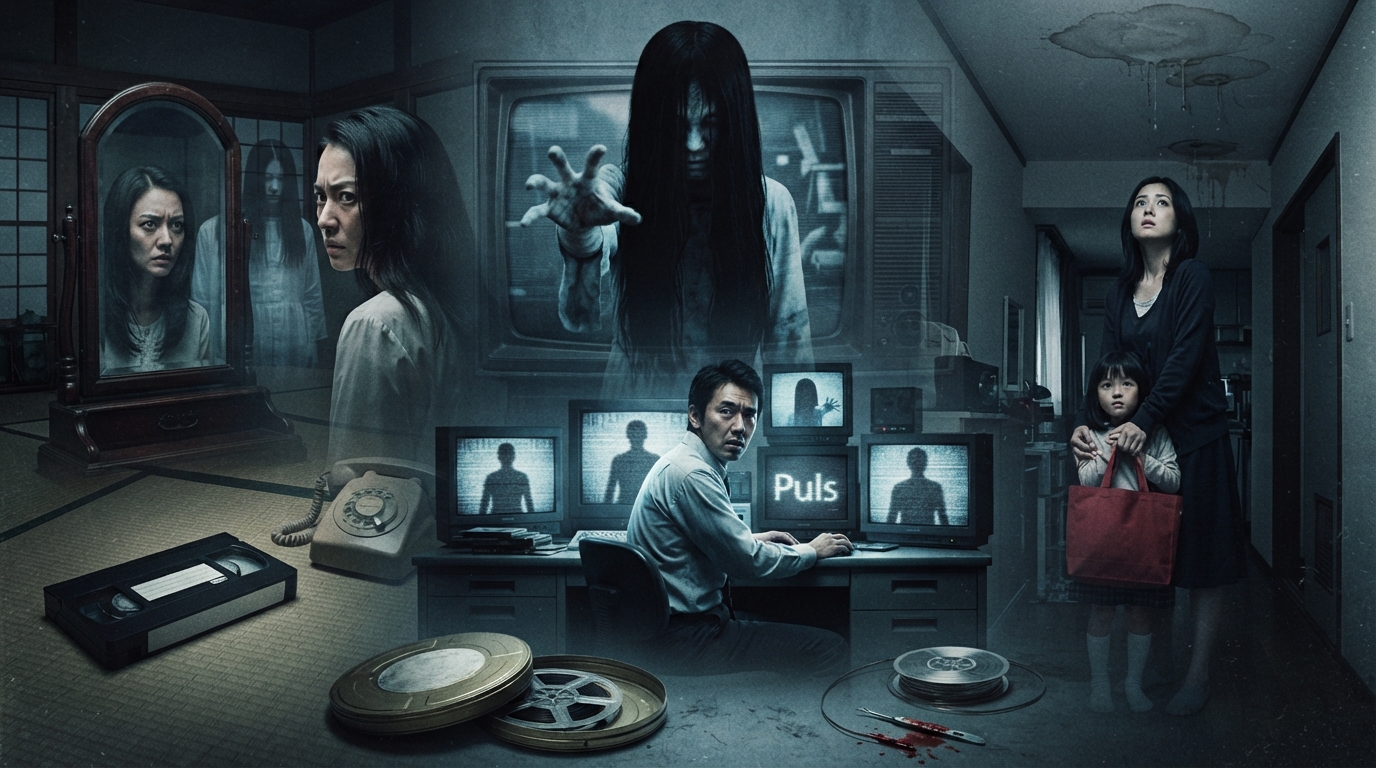
Top 7 Japanese Horror Movies: Unlike regular horror movies, they evoke a long-lasting sense of unease and fear in the viewer. In addition to ghosts, curses and supernatural phenomena, themes such as loneliness, death, depression and human helplessness in the face of unknown forces also play an important role in these films. The films listed below are some of the most striking examples of the Asian horror genre, some of which were remade in Hollywood, and some of which influenced the entire horror genre.
**“The Demon Slayer”**
A character named Airi has the ability to see his deceased sister in a mirror and helps people exorcise spirits from their homes. He arrives at a hotel where the new owners have encountered a ghost. The ghost has been scaring guests and disrupting their business. Airi, left alone in the hotel, tries to study the guest who came from the other world. But he realizes that this ghost is different from the others, and at the same time, he begins to witness unusual phenomena.
Despite the fact that the film is directed by American Dave Boyle, in terms of cast, language and culture, this is a completely Japanese film. The author has been working in Japan for a long time and founded his own production company there.
The beginning of the plot is reminiscent of the usual stories about haunted houses and exorcists. However, later the film becomes detective and even covers the theme of a time loop, which is close to science fiction.
**“The Call”**
A young journalist Reiko Asakawa, together with her ex-husband, tries to investigate a case related to a strange videotape. Those who watch this recording are called by a strange woman and say that they will die in a week. People really die of heart attacks. Since Asakawa's nephew is among the victims of the tape, the hero considers himself obliged to find out the truth to the end. The fact that the journalist's young son also saw the same infamous tape makes the situation even more difficult.
This film by Hideo Nakata made a real revolution in the horror genre, increasing the interest of international audiences in Asian horror films. The director deliberately abandoned a happy ending: in the finale, the heroes' attempts to come to terms with evil do not bring any results.
The image of Sadako, a ghost girl with disheveled black hair covering her face, is taken from traditional Japanese mythology and gained worldwide popularity after the film "The Bell" and gave rise to many imitators. However, the film is not only scary with this image: it is also distinguished by its skillfully created atmosphere of suspense and alienation.
**“Movie”**
Widower Shigeharu Aoyama decides to find himself a new lover. On the advice of a producer friend, he organizes a film audition in order to choose a bride. There, the face of the modest beauty Asami Yamazaki suddenly catches his eye. However, behind this mask of innocence, a real creature is hidden.
Director Takashi Miike manages to create an incredibly unusual film in just a few weeks, standing at the intersection of several genres. The picture begins as a sentimental melodrama, then develops in the direction of a detective, and in the end turns into a real “meat grinder”, full of scenes such as sawing off legs and decapitating heads with a wire.
**“Curse”**
Journalist Masafumi Kobayashi is professionally involved in investigating paranormal phenomena. One day, he begins to study a simple task, but during the filming, terrible things begin to happen to him and his team. The film was shot by another talented director, Koji Shiraishi, who usually works in the mockumentary genre, that is, pseudo-documentary.
**“Black Waters”**
Young mother Yoshimi Matsubara recently divorced her husband and is now trying to defend her right to keep her daughter Ikuko in court. Together they move into a terrible apartment building, where everything is dirty and water is dripping from the ceiling. In addition, Yoshimi occasionally sees the little girl and finds the same red bag in different places.
Four years later, an American remake with almost the same name was shot based on “Black Waters” - “Black Water”. The events unfold a little differently in it, but the story about a girl abandoned by her parents and killed under tragic circumstances remains almost the same.
**“Pulse”**
One of the girl’s colleagues, Miti Kudo, leaves her a mysterious floppy disk and commits suicide. At the same time, images of terrible people appear on the computer of economics student Ryosuke.
This film made director Kiyoshi Kurosawa famous and, of course, inspired his American colleagues to create a remake. But American creators did not understand the idea at all. In the American version, it is technology that separates us from each other, and Kiyoshi leaves people alone even after death. The film is intended for deep thought and is unlikely to surprise with its plot or interesting intrigue.
**“Unanswered Call”**
Several young men receive strange calls from their numbers. When they approach the phone, they hear their own death cries, and after a while they die in a strange way. A girl named Yumi and a former police officer Hiroshi begin the investigation. They find out that after death, the same number is always dialed from the victims' cell phones.
Another unusual film by Takashi Miike, the author of the famous "Kinosinov". The director mixes all the famous clichés of Asian horror films and combines them in a funny way.