

"There is a crisis regarding goalkeepers" - About the national team's painful points ahead of the Asian Cup
The friendly match of the Uzbekistan national team against South Korea once again showed the strong and weak points of the national team. How does the new team that Cannavaro is trying to build differ from the one during Katanec's era? Is there a chance for Masharipov, Shukurov, and other experienced players to return to the national team? Kun.uz Sport discussed the national team's chances ahead of the Asian Cup.
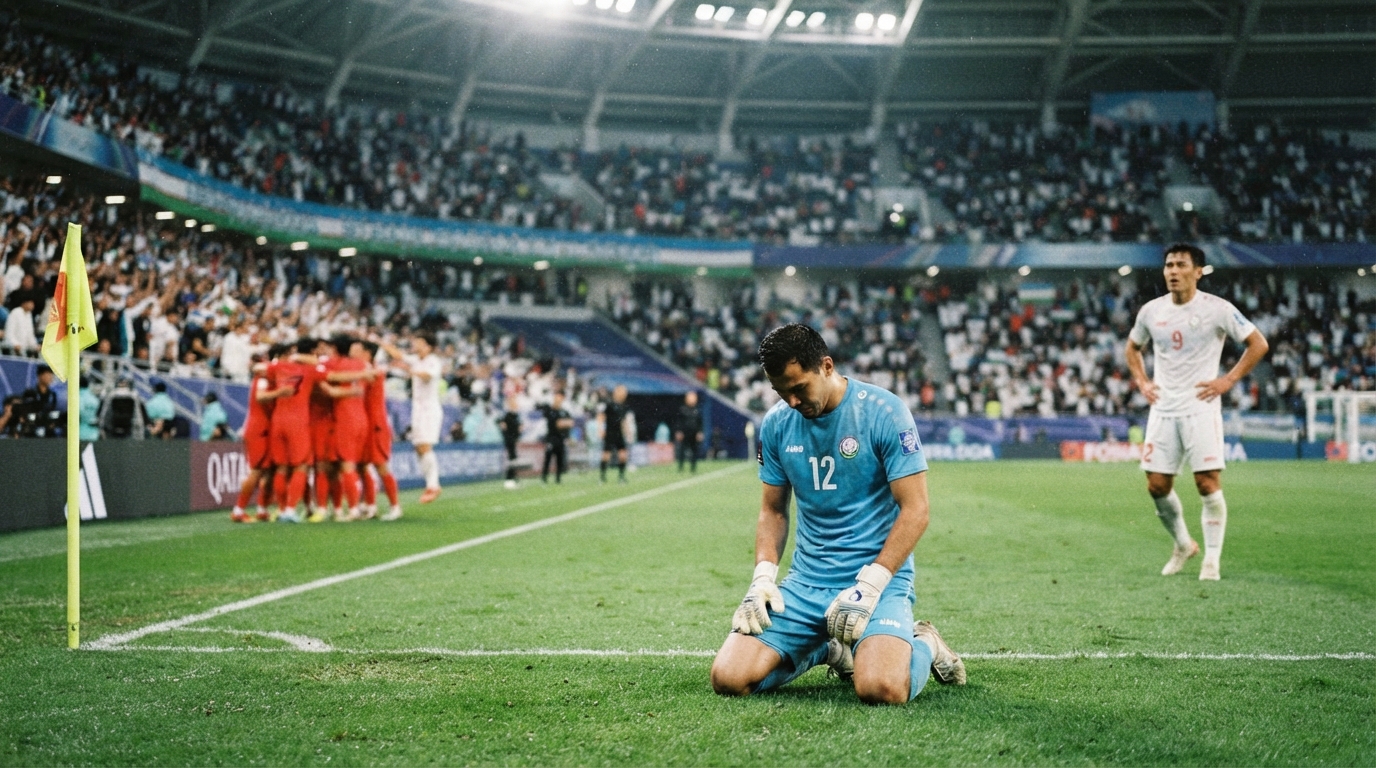
"There is a crisis in the goalkeeper position" — on the national team's painful spots ahead of the Asian Cup
Yaxyoxoʻja Ulugʻxoʻjayev:
Bobur aka, we watched the match against South Korea together. What did you expect and what did you see?
Bobur Akmalov:
Right now, my expectations from the Uzbekistan national team are not being fully met. There are objective reasons for this. It would be correct to say that Cannavaro has just started his career. There was not enough material to fully evaluate his work before and during the World Cup.
Now he is shaping his team, putting the players he wants into the squad, and has reached the stage where he is fully responsible for the results. Therefore, I would now like to see Cannavaro's "sketches", how his team differs from the previous national team. This is gradually manifesting itself. Perhaps the picture will be fully formed by the Asian Cup.
During these FIFA days, we also observed the integration of new players with experienced ones. The matches against Iran, Syria, and now South Korea provided us with material for certain conclusions.
Among the South Korean national teams I have seen since I can remember, the current one is probably one of the weakest. Conversely, the current Uzbekistan national team is among the top two or three strongest Uzbekistan teams I have ever seen.
Nevertheless, these three matches show us some details, but not yet the full picture. Cannavaro is also in search. For this reason, I would not direct excessive pressure or criticism at him right now.
There were aspects I liked in the match against Korea. In some five-to-ten-minute segments, we pressed well and moved well. But in the end, there is a problem. Small mistakes in the final pass or the final shot, compounded by Korea's good defending, exposed our shortcomings. Especially in defense and at our most painful spot — in goal.
Yaxyoxoʻja Ulugʻxoʻjayev:
Even the Korean media is writing that South Korea is weaker than ever. Before the match, was there hope for a victory or at least a draw?
Bekzod Isayev:
After the previous two matches, I did not get carried away by euphoria and think "we will beat Korea too". Because recently we have hardly played against such teams. We play a lot with Iran, and there are teams from Arab countries in between. But matches with strong teams from other parts of the continent are rare.
Their game speed is still higher than ours. Even if they recorded a negative result at the World Cup and are being criticized in their home country, Korean football is different from ours.
At the same time, watching today's match, I recalled the Uzbekistan national team of 10-15 years ago: an attacking team capable of playing on equal terms with a strong opponent. The difference remains in certain details.
In the first half, there were times when we even achieved dominance in ball possession. We created chances, but we could not convert them. In the second half, fatigue was felt.
Yaxyoxoʻja Ulugʻxoʻjayev:
Let's move on to the goalkeeper issue. Oʻtkir Yusupov was not called up for this training camp. We saw Nazarov, and Abduvohid Neʻmatov played against Korea. Doesn't it seem like this problem is getting bigger and bigger?
Bobur Akmalov:
The goalkeeper problem exists, and it has been there for a long time, since Katanec's time. We recognize Oʻtkir Yusupov for his saves and penalty stops that took us to the World Cup. But we have also seen him concede shots he should have saved in a number of matches.
As for Abduvohid, we saw his mistakes on the pitch both at Nasaf and at the World Cup. In today's first goal, to be honest, the ball belonged to Abduvohid. In the second goal, he also came forward a bit, lost his position, and failed to reach the header in time.
Everyone makes mistakes. But their regular repetition is a bad signal. In a big tournament, opponents will study the weaknesses of each of our goalkeepers. Someone makes mistakes on exits, someone struggles to save shots coming at them, someone else parries the ball right in front of them. In modern football, all of this is analyzed.
Right now, we are not 100 percent confident in any of our goalkeepers. I think Cannavaro has the exact same problem. If we combined the best qualities of Abduvohid, Oʻtkir, Vladimir Nazarov, or Botirali Ergashev into one goalkeeper, perhaps we would get an ideal keeper. But each of them has weaknesses along with their good sides.
Therefore, Cannavaro does not have many other choices either. We are forced to prepare for the tournament with the goalkeepers we have.
At one time, we praised Nesterov, and before him, Bugalo. Of course, they also had shortcomings. But if we look from the period Katanec took over the team until now, there is a decline precisely in the goalkeeper position.
This is becoming even more apparent, especially against the background of the growing number of strong players in our defense. Our attack and defense lines are good. The problem is mainly in two lines — the midfield and the goal.
In a conversation with Denis Ivankov a few years ago, he expressed an interesting opinion: "You don't notice it now, but goalkeepers in Uzbek football are regressing." When we asked for the reason, he said there is a shortage of professional goalkeeper coaches in Super League clubs.
Training a goalkeeper is not just about throwing six balls and making him jump from side to side. He must have a specific technique and training program. Unfortunately, today we are seeing the result of that problem.
Bekzod Isayev:
I also think that a goalkeeper crisis is currently being observed in Uzbek football. We know Oʻtkir Yusupov's heroism in the World Cup qualifiers. But before that, we also saw him concede a simple shot at the Asian Cup.
Now Abduvohid is in a similar situation. He seems to feel the pressure in big and important matches. Korea also studied us well. Failing to save an uncomplicated shot coming at him must be openly called a goalkeeper's mistake.
But the problem is not only with the goalkeeper. The partnership in central defense is also not working. In the second goal, a large distance appeared between the players, and the Korean player scored easily.
From this point of view, many are waiting for Husniddin Aliqulov's quick return to the squad. Today's match showed once again how important a player he is for the national team.
Yaxyoxoʻja Ulugʻxoʻjayev:
We won a beautiful victory against Iran. Against the background of today's defeat, won't the value of that result be lost?
Bekzod Isayev:
Even in simple street football, if you play a lot against one opponent, even if you always lost before, one day you start winning. We have reached this stage in our relations with Iran.
There is growth in our football. Our players are going to Europe, the level is rising. In Iran, however, the generation change is going difficult. Azmoun and Taremi, whom we have known for a long time, are still there. The Iranian press itself has been criticizing this for years.
In our case, the generation change went better. Almost in every training camp, one or two new players appear. Players like Behruz Karimov and Muhammadjonov are coming in. They are also new and unknown players for the opponent.
Therefore, the fact that we are beating Iran is not only because we have become very strong, but also because their generation change is not going well.
Bobur Akmalov:
We are playing Iran so much that at the last press conference, there was even an interpreter translating directly from Persian to Uzbek.
Iran cannot be our main benchmark right now. Our progress coincided with their regression. Four or five years ago, if we drew with Iran or got past them, we would be happy, saying "we have reached this level".
Now we need to change the target. The new benchmark is the strongest teams in Asia, like South Korea and Japan.
We have growth. We rose in the rankings, opponents reckon with us, the number and quality of our legionnaires have increased. But no matter how many good players there are in the team, if there is no understanding and connections between them, they will remain just a team of individual stars.
One thing must also not be forgotten about Korea's current state. When we say "Korea has declined", we compare them not with Uzbekistan or Iran, but with Korea's strongest period. They have declined from their high level.
But even that declined level was enough to defeat Uzbekistan in its current form today. This is exactly what we need to draw conclusions from.
At the same time, let's not forget that this is a friendly match and Cannavaro's experiments are still ongoing. He is checking who can give what. Therefore, I would not make a final judgment about the team right now.
Cannavaro's main exam is the Asian Cup. If he can prepare the team by then, we can say he went the right way. If he cannot prepare them, he will have failed his biggest exam.
Bobur Akmalov:
Who among the newly called-up players did you discover for yourself?
Yaxyoxoʻja Ulugʻxoʻjayev:
For me, Muhammadjonov was a discovery. He was a somewhat obscure player for me personally. He played for Andijan, then became a legionnaire. After Farrux Sayfiyev was not called up, there was a question of who would compete with Sherzod.
Muhammadjonov made a good run and provided an assist in his very first match. Therefore, for me, the discovery of this training camp was this player.
Akmal Mozgovoy is also joining the national team very well. But we have seen such performances from him before. Muhammadjonov, however, was news to me.
Bekzod Isayev:
For me, Muhammadjonov is not news. I have known him since the Olympic team managed by Timur Kapadze. He was an integral part of that team which achieved great results.
He has always shown his runs on the wing. Then his game did not work out so well at Andijan. This also depends on the coach, the formation, and other factors. After becoming a legionnaire, he started showing himself again and proved that he was not called up to the national team for nothing.
Now he seems to be one of the most optimal options in one of our problematic positions. We can call this one of Cannavaro's finds.
I would also add Mozgovoy. Behruz Karimov has already managed to become a starting lineup player. When Hojiakbar Alijonov returns, the competition on the right wing will become even stronger.
But now the main issue is not individual players. The main thing is their mutual "chemistry". In Katanec's team, almost the same formation and the same players played. They knew even with their eyes closed to whom the next pass would go, where their partner would open up.
The new team needs time. Both Cannavaro and the players. The new and old players need to understand each other. When receiving the ball, they must know their next move in advance. We lag behind Korea and Japan precisely in terms of speed of thought on the pitch.
Yaxyoxoʻja Ulugʻxoʻjayev:
In this training camp, former team leaders like Oʻtkir Yusupov, Otabek Shukurov, Jaloliddin Masharipov, Rustam Ashurmatov, Oston Urunov, Igor Sergeev, and a number of other players were not called up. Do they still have a future in the national team, or will Cannavaro go to the Asian Cup with this squad?
Bobur Akmalov:
If we pay attention, we do not feel a strong need for the players who are not called up right now. In no position did the thought "if only so-and-so were here" arise.
I mean Masharipov, Otabek, and Sergeev. Sergeev might be needed in some matches as a different type of forward. But there is no thought that so-and-so definitely had to be there instead of the current players.
We have Abbos, we have Ganiyev, we have Mozgovoy, and Hamrobekov in the center. A new team is being formed.
But the door is not closed for the experienced players who served us a lot and contributed to winning the World Cup ticket. Cannavaro also said the door is always open.
Otabek, Jaloliddin, and Igor can all return. This now depends on themselves. If they can motivate themselves again, if they feel "I still have work to do in the national team", they can compete with any young player.
No one has crossed them out yet.
Yaxyoxoʻja Ulugʻxoʻjayev:
These players played in the national team for many years, and they also have many personal fans. Therefore, there were questions like "why is he missing, why is that one missing?".
But the three matches in this training camp showed one thing: the players newly entering the national team are trying to make the most of the small opportunity given to them. As if this is their last chance.
Therefore, the squad is being renewed very quickly. Today we lost, there are some shortcomings. But when discussing those shortcomings, we cannot say "if that player who was not called up were in this position, the problem would be solved".
Only the goalkeeper position remains the most painful spot. Worst of all, even here we do not have a specific name to say "if only so-and-so were here".
Yaxyoxoʻja Ulugʻxoʻjayev:
Cannavaro often says he will give goalkeepers a chance. Even at the World Cup, when Oʻtkir Yusupov was replaced after one match, he said it was the coach's decision.
Cannavaro, on the other hand, said "we have three good goalkeepers, I want to give everyone a chance". But he did not field the third goalkeeper in the next match either.
Now there is also such a question: why is Edem not being tested?
If there is a goalkeeper crisis, he should be tested right now. It might be too late in the next training camp. Because the training camps in November and December will be the decisive stage before the Asian Cup. By that time, Cannavaro must have determined his starting lineup.
Bekzod Isayev:
Edem has another interesting aspect: in training, he works a lot not only with goalkeepers, but also with outfield players. There are specialists who see him as a new generation goalkeeper. We hope for both him and Samandar.
Bekzod Isayev:
We seem to be moving from the 5-2-3 formation we used for a long time to 4-3-3. What are the positive and negative sides of this change?
Bobur Akmalov:
So far, I see only positive sides. Variety and aggressiveness appeared in the team's play.
The previous formation was not Cannavaro's main working formation. He took over the team shortly before the World Cup and decided not to radically change the system Katanec built over four years. He continued with those players, with that formation.
Now, however, we see the football he wants, the formation he wants, and the players he chose.
When Husniddin Aliqulov returns, the defense will improve even more. His role in managing the defense is felt.
With the new formation, the team is more attacking than before. We have the ball more, more chances are being created. The statistics of the match with Korea also showed this.
Gradually, Cannavaro is calling up players suitable precisely for this formation. Players who know how to play with four defenders are coming, and the exact same principle works in the center and in attack.
Therefore, I see a plus in this change for now.
Cannavaro has another good side. We said even before his arrival that he is not a very strong or very experienced specialist. But he came, and this is now a reality. We also want him to succeed in Uzbekistan.
I also noticed his attitude at press conferences: so far, he has not criticized any of his players in public. Even if he drops someone from the squad, he does not list their shortcomings. He protects the players under his command as much as possible.
Bekzod Isayev:
He mentioned that after the World Cup, his salary, his staff, his style of play, and even his life in the hotel were discussed.
Then he said: "I was happy about one thing — no bad words touched my national team. I took all the blows, and my players did not get hit."
This shows his attitude towards protecting his players.
Yaxyoxoʻja Ulugʻxoʻjayev:
When Cannavaro came to Uzbekistan, there were also times when he played with three central defenders. But unlike Katanec's style, the football was more attacking. There were combinations, the game was not built only on the scheme "pass to Shomurodov, he will go with his speed".
Before the World Cup, however, a different situation arose. This was Uzbekistan's first World Cup, everyone was watching. There was little time to drastically change the style. Therefore, the decision was made to preserve the working system.
But looking back now, perhaps that was a mistake.
A team that thinks only about defense is closer to defeat than victory. An attacking team, however, can score and win. Modern football has shown this many times.
Now we are playing attacking football. We won two matches. Against Korea, however, we lost.
I have one concern: now someone should not instill the conclusion in Cannavaro that "we still could not beat a strong team with attacking football" and make him return to defensive football again.
Because if we thought only about defense today, we could not even play on equal terms with Korea. Who would have thought that we would record almost equal figures in ball possession against Korea in Korea?
Bekzod Isayev:
If we put aside the individual mistakes of some players, there were moments when we played on equal terms with Korea both statistically, tactically, physically, and mentally.
But the early conceded goal changed our plan. We could not play the counter-attacking football that is comfortable for us. From the beginning of the match, we were forced to chase a fast opponent.
It is still too early to draw a final conclusion about the current Uzbekistan national team. But one thing is clear: the team is changing. Now, to what extent this change will turn into a ready system by the Asian Cup — will be Cannavaro's biggest exam.