

The Taliban are here to stay
Alexander Knyazev: The Taliban have demonstrated that they pose no threat to Central Asia.
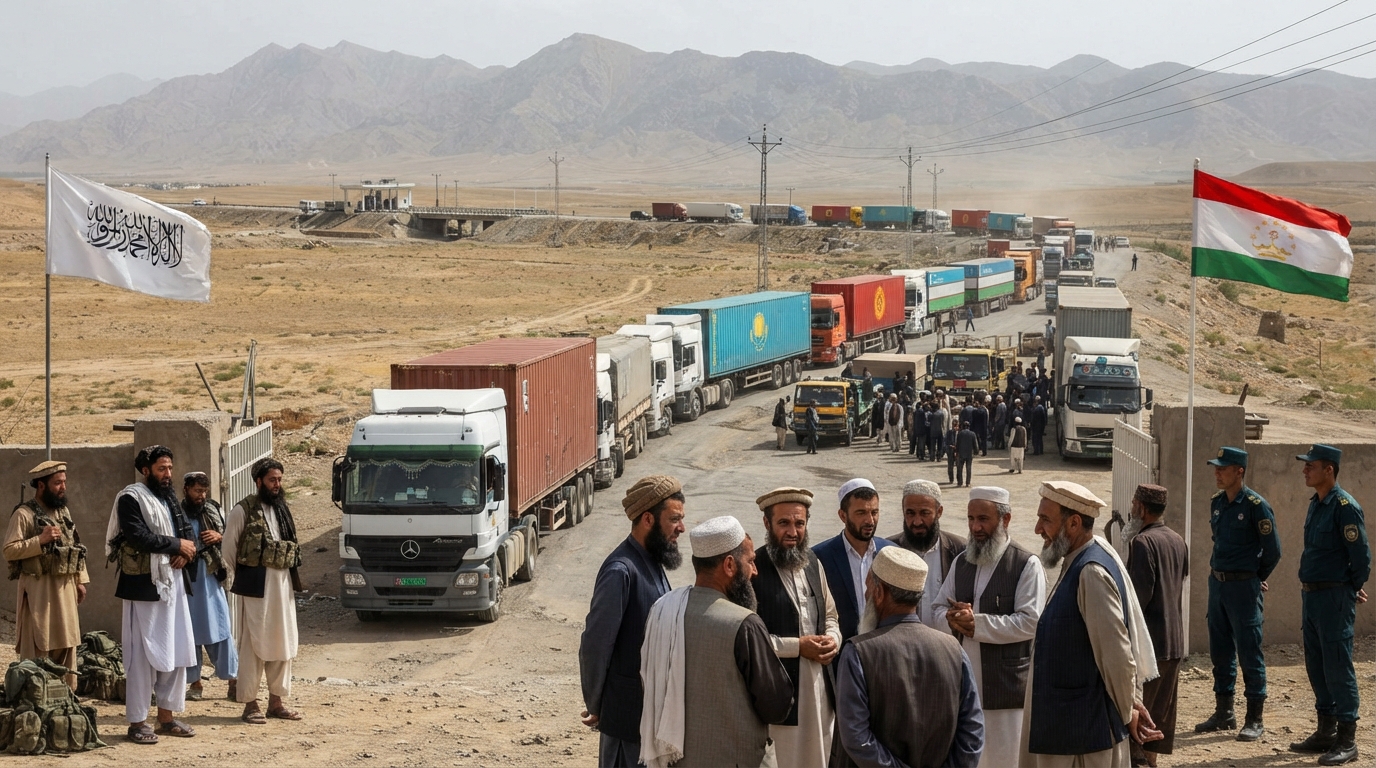
Taliban: Long-Term Presence
Five years of Taliban rule in Afghanistan have shown that Kabul does not pose new risks or threats to neighboring states, including those in Central Asia. This opinion was expressed by Alexander Knyazev, Doctor of Historical Sciences and leading researcher at the Institute of International Studies at MGIMO University, Russian Ministry of Foreign Affairs, in an interview with TASS.
"The Taliban's rise to power in 2021 has generally not generated the same alarmism in the region as it did in 1996, when the Taliban first occupied Kabul. Therefore, the rhetoric surrounding these events was quite restrained," Knyazev noted, responding to a question about the change in Central Asian rhetoric regarding Afghanistan since August 2021. He added: "The past five years have shown that the Taliban movement itself does not create any new risks or threats for its neighbors. On the contrary, a significant improvement in security in Afghanistan is now evident, as is the ability of new state institutions to control the country's territory and reduce the presence of international terrorist groups." Knyazev cited the emirate's government forces' struggle against Islamic State groups and their "subsidiaries" as an example.
The expert also emphasized that the new situation in Afghanistan is leading to a reassessment of the investment climate, and work on trans-Afghan transport and energy projects has intensified. However, he noted that the border conflict between Afghanistan and Pakistan, which has no direct connection to the Central Asian republics, remains a serious obstacle to their implementation. "So far, this conflict has, on the contrary, stimulated increased trade between Afghanistan and the countries of the region," Knyazev explained. Among the countries actively cooperating with Afghanistan, he singled out "Uzbekistan and Turkmenistan," and, naturally, given their direct proximity, Kazakhstan is also active.
The historian recalled that Kazakhstan and Kyrgyzstan removed the Taliban from their national lists of terrorist and extremist movements and organizations back in 2023-2024. "In Uzbekistan and Turkmenistan, such lists are not publicly available (???), and the issue has not been discussed at all. Only in Tajikistan does the Taliban movement remain on the list of parties, movements, and organizations whose activities, in accordance with decisions of the Supreme Court of the Republic of Tajikistan, are prohibited in the Republic of Tajikistan," he added.
The gradual amelioration of differences between Dushanbe and Kabul
Regarding the evolution of Afghan-Tajik relations, Alexander Knyazev mentioned the Taliban's first rise to power in Afghanistan in 1996, when "the greatest resistance came from Afghan ethnic Tajik groups, to whom Tajikistan provided assistance." At that time, he noted, "massive and very strong sentiments of ethnic solidarity arose in society, which remain unresolved to this day," he explained, explaining that the Taliban movement is predominantly Pashtun. "The Taliban's efforts to restore their statehood presuppose the country's development according to an ethnocratic model. In fact, the Pashtuns in the country are what is called the 'titular ethnic group.' The state of Afghanistan itself was founded by Pashtuns since the 18th century; 'Afghan' and 'Pashtun' are synonymous concepts," the historian said.
Added to this is the issue of Dushanbe and Kabul's religious relations. While Tajikistan is a secular state, the Islamic Emirate of Afghanistan operates under a theocratic system. Dushanbe views the Taliban's actions with great suspicion, as during Tajikistan's civil war (1992-1997), one side in the conflict advocated the establishment of a theocratic state. "There are concerns that the armed rise of radical Islamists to power in a neighboring country could serve as an example for local radicals. Such interest emerged after August 2021, but the Taliban quickly became disillusioned among these circles, as they were preoccupied with creating their own state without any ambition to export their experience beyond their own borders," the agency's source emphasized.
According to the expert, despite a number of problems, the overall situation in bilateral relations is changing, with practical interests gradually becoming more dominant. "Since 2021, electricity exports from Tajikistan to Afghanistan have increased severalfold. There are positive trends in trade turnover, and the creation of an Iran-Afghanistan-Tajikistan trade route is currently under discussion. Counterterrorism cooperation between intelligence agencies has been established, and meetings between their heads are becoming regular. So, we can say that the rough edges are gradually being smoothed out," Knyazev concluded.
Events in Afghanistan in 2021
The Taliban movement launched a large-scale operation to establish control over Afghanistan after the US announced its decision to withdraw its armed forces from the country in the spring of 2021. On August 15, the Taliban entered Kabul without a fight, and President Ashraf Ghani fled the country. On the night of August 31, US troops withdrew from Kabul Airport, marking the end of nearly 20 years of US troop presence in Afghanistan. In September of that year, the Taliban announced the composition of its interim government. Afghanistan was previously under Taliban control from 1996 to 2001.
Source
P.S. Meanwhile, UN experts have called on the international community to avoid rushing to normalize relations with the Taliban authorities while severe restrictions on the rights of women and girls, famine, and other humanitarian problems persist in Afghanistan. They believe that any steps toward normalizing relations with the Taliban authorities must take into account the human rights situation in the country. Particular attention should be paid to the situation of women and girls, who remain the most vulnerable group due to the current restrictions and prohibitions.