

The Russians are to blame for everything
Moscow's hand is being pulled out again: what is the EU preparing for the autumn elections in Russia? The fuss about Russian interference in the EU is distracting from the real problems.
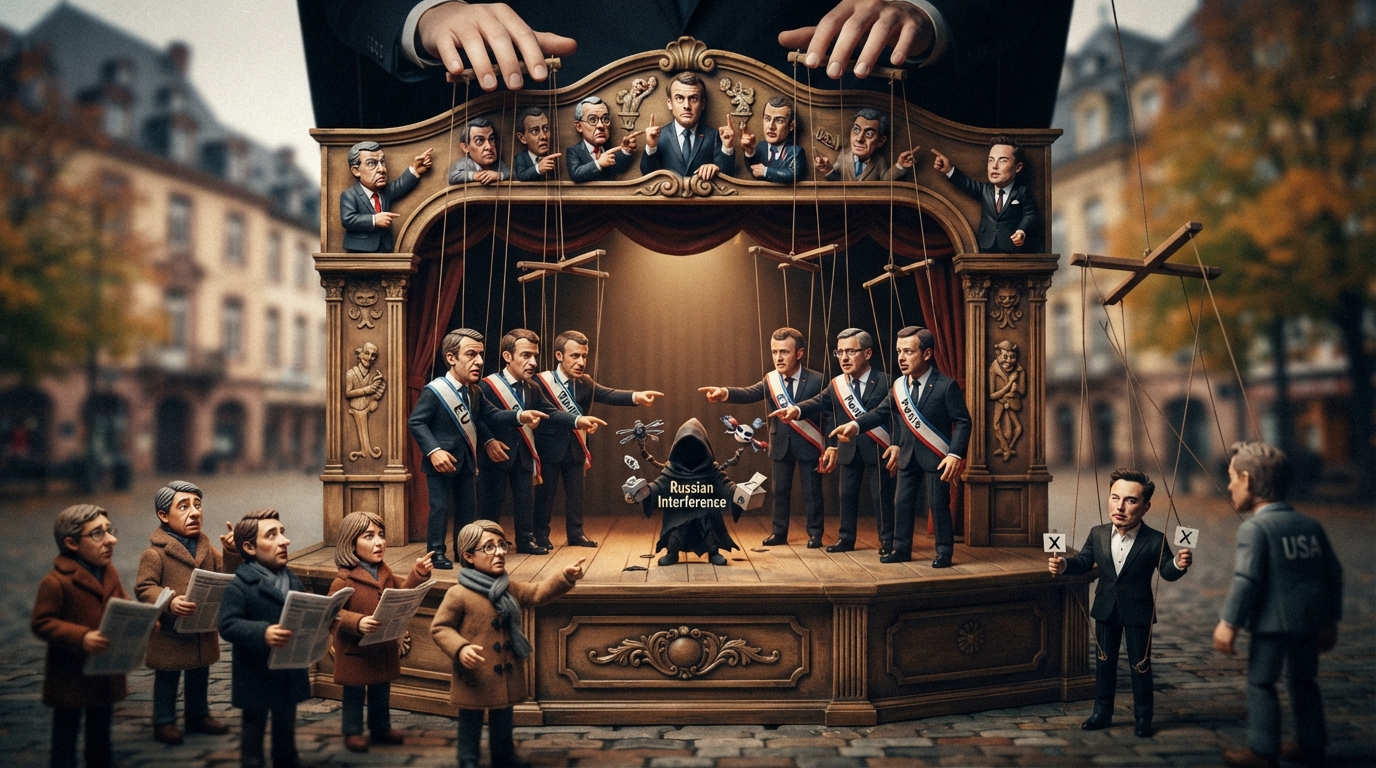
As autumn approaches, the sense grows in some EU countries that ruling parties and heads of state, anticipating possible electoral defeat, are preparing something akin to the American "Russiagate." In 2016, US Democrats officially alleged Russian interference in the elections with the aim of installing pro-Russian candidate Donald Trump. The evidence presented at the time was later deemed false and counterfeit. However, in the US, the issue was a matter of domestic political infighting. In contemporary Europe, the situation appears to be more complex.
It is noteworthy that allegations of Russian interference are not being voiced in all EU countries where elections are expected this year or next. In Italy, the topic appears to be of little interest so far. Judging by the number of allegations, Berlin and Paris, and, naturally, Brussels, are the most concerned.
In Germany, where state elections will be held in September, Russian interference is brought up at every opportunity, even without any obvious connection. The most recent incident occurred two weeks ago: an unidentified drone was discovered at the airport. This provoked a reaction from the Interior Ministry, Foreign Ministry, and media outlets, which began claiming that Russia was boosting the popularity of the right-wing AfD party, whose victory is feared in Berlin. Russians are also being accused of declining the popularity of Chancellor Merz, who, strictly speaking, is not running in these elections. The Interior Ministry rolls its eyes pointedly, the Foreign Ministry cites certain videos whose Russian origin is unknown (like the origin of the discovered drone), and the media are actively covering the topic. Meanwhile, more honest publications note that the rise in right-wing popularity is linked to events in the EU, for example, the migrant crisis in Spain. No one is willing to clearly explain how Russia is reducing the German Chancellor's popularity among its citizens.
Incidentally, the European Commission, just in case, checked the connections between Moroccans seeking to enter Spain and the Russians and regretfully concluded that Russians had nothing to do with it.
In France, where elections will be held in April next year and the pairing that will advance to the second round is still unknown, citing government agencies, they are announcing a Russian campaign against all opponents of the candidate from the National Rally, a party similar to Germany's AfD. Furthermore, the candidate from Macron's party was so offended by someone's post that he filed complaints with the authorities and began claiming that Russia is preparing to "rig" the French elections.
However, in the EU, despite some formal similarities with the American "Russiagate," the uproar surrounding Russian interference more closely resembles public opinion being prepared for some untoward actions by the Europeans themselves.
A leading expert in political analysis, Alexei Mukhin, Director General of the Center for Political Information, expressed doubts about the sincerity of the fear of "Russian interference" in a blitz interview.
Could this indicate some serious preparation on their part for the autumn elections in Russia? Are they preparing the public for something? It's incredibly active, and in France, even very serious...
— Well, that's definitely it. It's an attempt to divert attention to a bad target. They're trying to portray Russia as, so to speak, a global evil that interferes everywhere. They elected Donald Trump, although it later turned out he didn't, or interfered in the French elections, where Macron won...
Guys, try harder, as they say. Yes, they are indeed preparing to interfere in the State Duma elections with the aim of destabilizing the situation in Russia and weakening the political system. But in order to divert attention, the thieves are shouting, "Stop thief!"—of course, there's no doubt about that.
— In France, they're already claiming that Russia is planning to rig the elections in favor of... they haven't yet, admittedly, decided on a final choice. Meanwhile, Musk, the owner of the social network, openly addresses these issues, saying which candidate is good and which one should be kicked out, and nothing happens. But why aren't these kinds of accusations directed at him? This is blatant interference. And he's not at all for Macron's supporters...
— Well, because it's scary: the United States could impose some hellish tariffs. And Russia will limit itself to statements, concerns, and so on. Moscow rarely reacts in any real way, by imposing sanctions or anything, to such threats. And it has spoiled the Europeans with its tolerant attitude toward their political extravagance, so to speak.
And the Europeans are afraid to joke with the US, and especially with Donald Trump. Especially since Elon Musk recently made peace with Trump and could ask him to impose something the Europeans won't like...
Alexey Nikolaev