

The ocean is heating up to record levels and Britain's rivers are drying up.
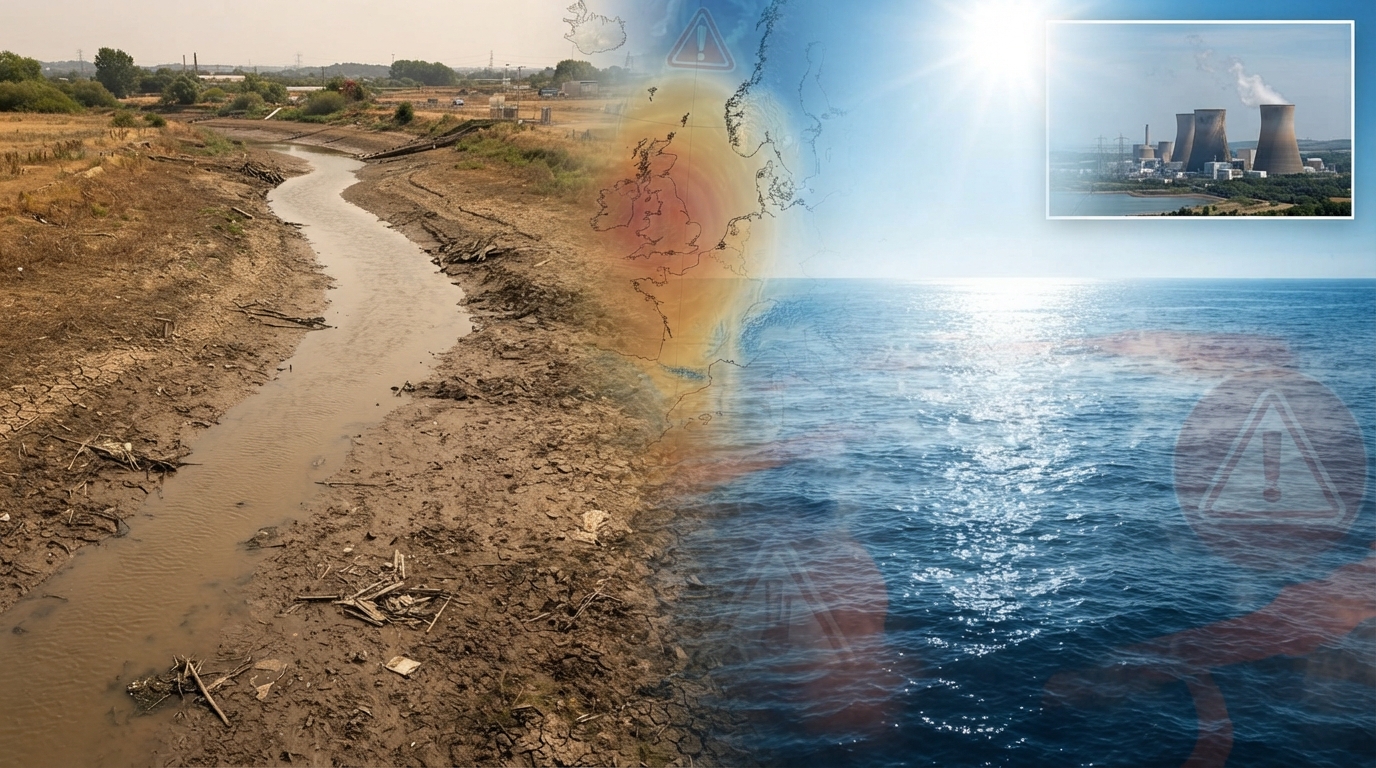
Oceans Heat Up to Record Highs, and British Rivers Dry Up
Tashkent, Uzbekistan – Podrobno.uz News Agency.
In July, the world's seas reached unprecedented temperatures for the month, while heat and drought led to rivers drying up and deteriorating water quality in Europe. Scientists attribute these events to increasing climate extremes.
According to the BBC, the average sea surface temperature outside the polar regions was around 21°C, exceeding the previous record set in 2023. Record temperatures were recorded off the Atlantic coast of Europe and in the western Mediterranean. Moreover, July became the second-warmest month on record worldwide.
Western Europe experienced its hottest June and July on record: the average temperature over the two months was 2.79 degrees above normal. Heat and drought have contributed to major forest fires, with approximately 500,000 hectares of land burned in the EU since the beginning of the year.
According to The Guardian, the drought has already impacted energy infrastructure: two coal-fired power plants in Poland and the only nuclear power plant in Hungary were shut down due to a lack of cooling water. The economic damage from the heat to European grain producers this summer is estimated at two billion euros.
In the UK, July was the driest in England and Wales in 190 years of record-keeping. Large swathes of England and all of Wales have already been declared drought zones, and the levels of the Seine, Rhine, and Danube rivers are significantly below normal.
Water problems in Britain are not only related to the drought. New Civil Engineer reports that, according to the Environment Agency’s new classification, only 14.3% of more than 4,600 surface water bodies meet the environmental standard. Another 65.4% were rated "satisfactory," 17% "poor," and 3.1% "very poor." All of the country's surface waters failed to meet chemical status requirements.
The new assessment shows a lower "good" ecological status score than in 2019, when it was 16.3%. However, the Environment Agency notes that the results cannot be directly compared: the new assessment used more extensive monitoring data and updated analytical methods.
At the same time, the situation with some indicators is improving. In 82% of cases, individual indicators of water bodies were rated "good" or "high." For example, phosphate levels in the River Roch improved from "poor" to "good" after the introduction of a special permit for upstream wastewater treatment plants.
Scientists note that ocean warming intensifies marine heatwaves, raises sea levels, and may contribute to more intense tropical storms and rainfall. On land, heat and drought are also reinforcing each other, and the formation of El Niño in the Pacific Ocean could further increase global temperatures in the coming months.
As a reminder, last July was one of the hottest ever recorded in Uzbekistan. The average temperature was 1.3–2.8 degrees Celsius above normal, with desert regions reaching almost 50 degrees Celsius. In Kyzylkum, temperatures exceeded 19–23 degrees Celsius.