

The moderator strives for the helm
"Kyrgyzstan demonstrates that state sovereignty is the ability to moderate complex geopolitical processes in the world."
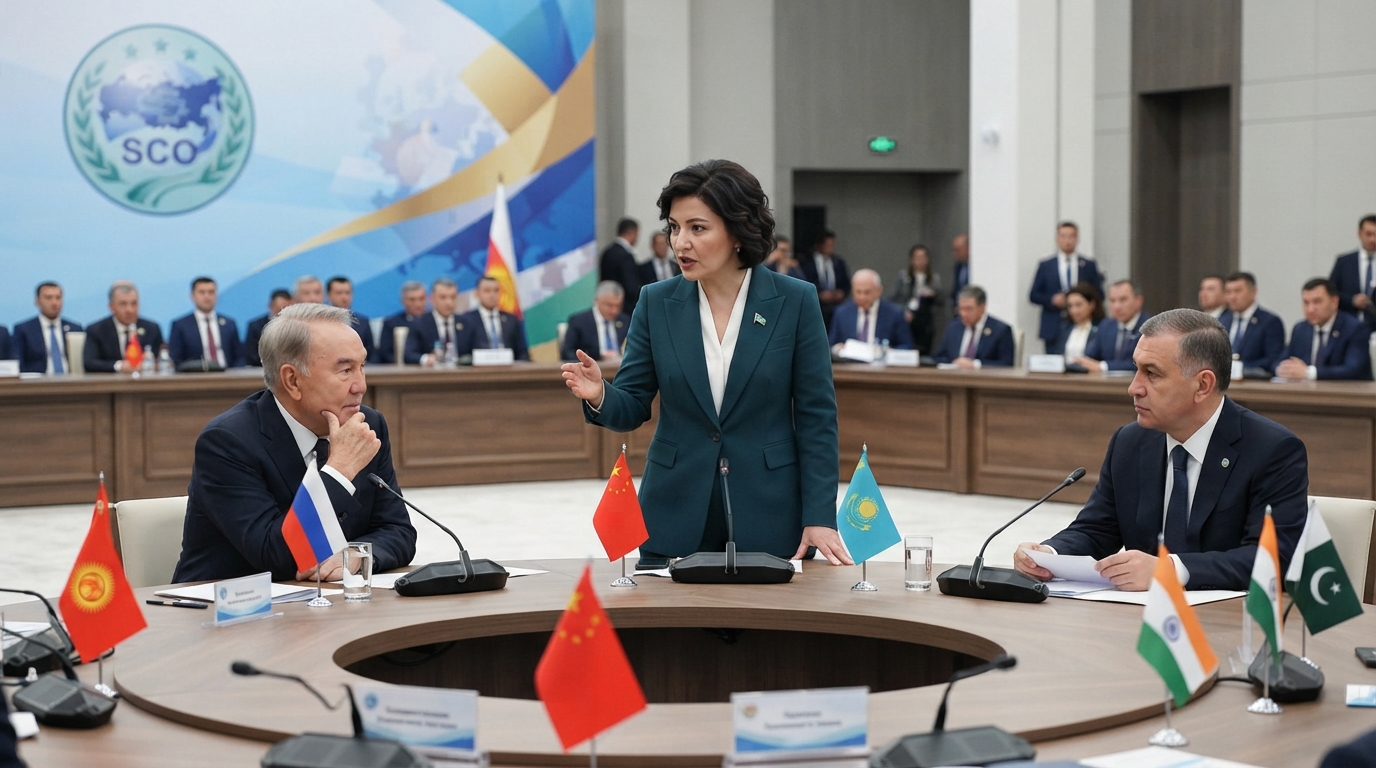
Moderator aims for the helm
On August 31, Kyrgyzstan will celebrate Independence Day by hosting the SCO anniversary summit. This event will conclude the country's fourth chairmanship of the organization and will bring together state leaders under the slogan "25 Years of the SCO – a Place for Peace and Prosperity." Former Kyrgyz Parliament member Evgeniya Strokova shared her opinion on what to expect from the meeting and how the summit will benefit Kyrgyzstan.
Strokova believes that holding the anniversary summit of the Shanghai Cooperation Organization (SCO) in Bishkek on August 31 is a "deeply thought-out political act" that addresses several issues on both a symbolic and practical level.
She believes that the choice of Kyrgyzstan's Independence Day for such a large-scale international forum is no coincidence. This is a "statement of sorts" that, over more than three decades, the republic has transformed itself from a young post-Soviet state into a fully-fledged regional player, capable of shaping the security and development agenda in the heart of Eurasia. By hosting state leaders and high-ranking representatives of the SCO countries on its main national holiday, Kyrgyzstan is demonstrating that state sovereignty entails the ability to independently determine its foreign policy position and act as a "moderator of complex geopolitical processes."
The summit, under the slogan "25 Years of the SCO – Together for Peace and Prosperity," according to Strokova, is intended to mark and "signal" the organization's qualitative transition to a new level. Further strengthening of the SCO's status is expected, not simply as a platform for dialogue on security issues, but also as a fully-fledged structure capable of exerting significant influence on global economic processes and "gradually changing the structure of international financial relations."
In this regard, improving decision-making mechanisms, taking into account the expanded membership of the organization's member countries and partners, is becoming increasingly important. Against the backdrop of a transforming global order, SCO members will need to "synchronize their watches" on the fight against terrorism, extremism, and separatism, as well as discuss mechanisms for preventing regional conflicts without the intervention of external forces.
Strokova also emphasized a "fundamental point": since it is a "Shanghai" organization, "the Chinese factor must be taken into account when considering virtually all key issues and making decisions at the summit." In this regard, one of the key expectations, in her opinion, is the further advancement of the Belt and Road initiative and the convergence of various Eurasian integration projects. The summit should provide additional impetus to the implementation of real infrastructure projects, the development of logistics corridors, including trans-Kyrgyz North-South routes, and the expansion of settlements in national currencies. This issue has already been repeatedly raised at various international forums, and Strokova hopes that it will also be further developed at the SCO anniversary summit. She believes that the summit's final document will, in one form or another, enshrine a commitment to the principles of indivisible security, mutual respect, and the formation of a more multipolar world.
For Kyrgyzstan, the SCO chairmanship and hosting the final summit could yield "concrete dividends that go far beyond image." First and foremost, this would enhance Kyrgyzstan's international status and cement Bishkek's role as one of the important diplomatic platforms in Central Asia. It would also strengthen the country's negotiating position and allow it to more actively advance national interests, including on sensitive issues such as border security and water resources, directly interacting with key neighbors and partners.
Furthermore, during the pre-election period, the successful hosting of such a large-scale international event could become a "significant domestic political factor," demonstrating the effectiveness of the state leadership and the country's ability to organize international events.
In the security sphere, Strokova expects "closer coordination between the intelligence services and law enforcement agencies of the SCO member states, particularly on security issues along the region's southern borders." Expanded access to the shared information resources of the SCO Regional Anti-Terrorism Structure, as well as the use of modern monitoring and data exchange technologies, could also be an important outcome.
In the economic sphere, Kyrgyzstan's chairmanship could provide additional impetus for attracting direct investment and implementing major infrastructure projects. This could primarily involve cooperation with China, Russia, India, and the Gulf states in areas such as hydropower, transport, and construction. The very need to host numerous international delegations and distinguished guests will stimulate the development of Bishkek's infrastructure—upgrading roads, hotels, and transportation facilities. This is an impact that will remain in the country long after the summit.
Strokova specifically highlighted the country's tourism potential. For Kyrgyzstan, the chairmanship is an opportunity to showcase the country to millions of residents of SCO countries as an open, safe, and attractive travel destination. International events allow visitors to become acquainted with Kyrgyzstan's nature, culture, and traditions, thereby generating additional interest in the country as a tourist destination.
Strokova considers humanitarian cooperation equally important. This could be expressed in expanding educational opportunities for Kyrgyzstani youth—primarily by increasing quotas for study at leading universities in SCO countries, developing student exchanges, and promoting scientific cooperation. Also promising is the gradual simplification of procedures for mutual recognition of diplomas and the expansion of cultural exchanges.
Thus, Strokova believes that Kyrgyzstan's chairmanship of the SCO is not only a matter of international prestige. With the right use of these opportunities, it could yield "quite practical results": strengthening security, attracting investment, improving infrastructure, expanding educational opportunities for young people, and enhancing the country's tourism appeal.
In conclusion, Strokova reiterated that holding the anniversary summit on Independence Day is, in her view, "not a coincidence, but a well-thought-out political declaration." On its main national holiday, Kyrgyzstan is not an object of global politics, but a full-fledged subject—a hospitable capital uniting political and economic partners.
Strokova sees this as the main symbolic meaning of the upcoming summit: a country's independence is not only the right to independently determine its own path, but also the ability to ensure security, create space for dialogue, and be an active participant in the processes that determine the future of the entire Eurasian macroregion. And finally, to forget the "tired excuse that we are a small country and nothing depends on us."