

"The last thing we want is a power shortage." Franklin Templeton on tariff reform
Marius Dan believes economic growth, digitalization, and the development of AI will dramatically increase electricity demand in Uzbekistan. Tariff liberalization, the full implementation of RAB, and accelerated legislative reforms are essential for timely investment in generation and networks.
"The last thing we want is an electricity shortage." Franklin Templeton on tariff reform
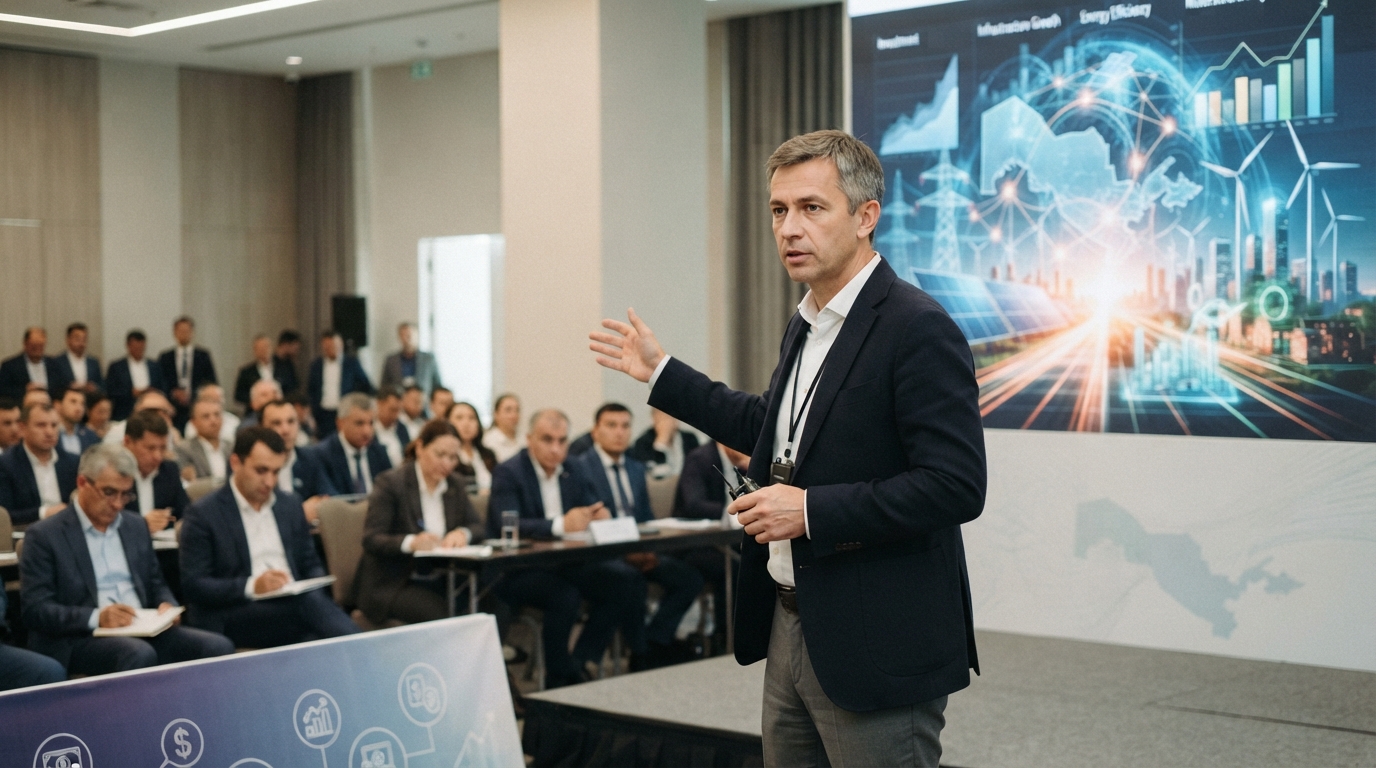
To attract foreign investment in Uzbekistan's energy sector, it is necessary to continue liberalizing electricity tariffs, fully implement RAB regulation, and create a clearer legislative framework. Marius Dan, General Director for Central Asia at Templeton Global Investments, stated this on August 24 at the Silk Road Finance & Technology Forum in Tashkent, as reported by Gazeta.
Franklin Templeton manages the National Investment Fund of Uzbekistan (UzNIF).
According to Dan, the development of artificial intelligence, the digital economy, and population growth will increase the burden on energy infrastructure.
"Ultimately, all of this will run on electricity." "We, as the National Investment Fund, own assets in the energy sector and strive to ensure our companies are prepared for these challenges. This entails significant capital investments in distribution networks, generation, transmission, and transport infrastructure," Marius Dan noted.
He also added that one of the fund's objectives is to prepare portfolio companies to raise funds on international markets to finance these investments.
To achieve this, as a representative of Franklin Templeton emphasized, reforms to energy sector regulation are necessary.
"We are talking about liberalizing electricity prices and fully implementing the Regulated Asset Base [RAB] regulatory methodology for distribution and transmission networks, so that these companies have sufficient incentives to continue investing in the network," Marius Dan explained.
He emphasized that the need for investment is increasing against the backdrop of economic growth, population growth, and the country's continued digitalization.
During the discussion, the moderator asked whether the energy system would be able to adapt to growing demand, given the need to simultaneously increase capital investment, reform tariffs, and change the regulatory system.
"Much remains to be done, and much also depends on the government's willingness to expedite the adoption of an appropriate legislative framework that will create incentives for these companies," Marius Dan responded.
According to him, private capital has already been attracted to the energy sector in recent years through power purchase agreements (PPAs), but state-owned energy companies also need to improve their investment attractiveness and ability to attract financing.
"Steps have already been taken this year, especially with the initial implementation of the RAB mechanism, but significantly more clarity should emerge by the end of this year—at least, that's what we hope for the fund. Because this will determine how much capital these companies can attract and then invest in the grid to meet growing demand in a timely manner," he stated.
"The last thing we want is to face power shortages or problems with transmission and distribution," concluded Marius Dan.
In the energy sector, UzNIF owns stakes in five companies: 40% in Uzbekhydroenergo, 40% in National Electric Grids of Uzbekistan, 40% in Regional Electric Grids, 25% in Thermal Power Plants, and 40% in Khududgaztaminot.
In May, the Ministry of Economy and Finance of Uzbekistan announced plans to implement a regulated asset base (RAB) methodology for calculating electricity and gas tariffs. This system assumes that tariffs are calculated not only based on a company's current expenses but also on the value of its regulated assets—networks, equipment, substations, gas pipelines, and other property necessary for providing the service.
After the implementation of the new methodology, the price of electricity generation is projected to increase by approximately 9%, transmission services by 30%, electricity distribution by approximately 10%, and natural gas distribution by approximately 23%. These forecasts do not directly apply to tariffs for households, but rather to the costs of individual links in the chain.
The portion of the costs of electricity and natural gas production, transmission, and distribution that exceeds tariffs set for end consumers is planned to be covered by the state budget.
For a company that has assumed management of regional power grids, RAB regulation can become a mechanism for recouping investments through a tariff model. In practice, this means that the management company's investments in network repairs, new transformers, digitalization of metering, loss reduction, and improved supply reliability can be included in the regulated asset base if the regulator deems them justified and effective. In this case, the company is entitled to a set rate of return, for example, through WACC, which, in the parameters of the Ministry of Economy and Finance, is specified at 14-16% after taxes, depending on the enterprise.
Igor Alekseev, Managing Director and Partner of the international consulting firm Boston Consulting Group (BCG), reported in October 2025 that the implementation of tariffs based on the RAB methodology was planned for 2027-2028.