

The International Olympiad in Informatics in Uzbekistan will bring together about 390 participants.
The International Olympiad in Informatics will be held in the capital of Uzbekistan for the first time. 386 schoolchildren from more than 97 countries are expected to participate, along with delegation leaders, coaches, and members of the international committee. Uzbekistan is represented by eight students, selected from a field of 100.
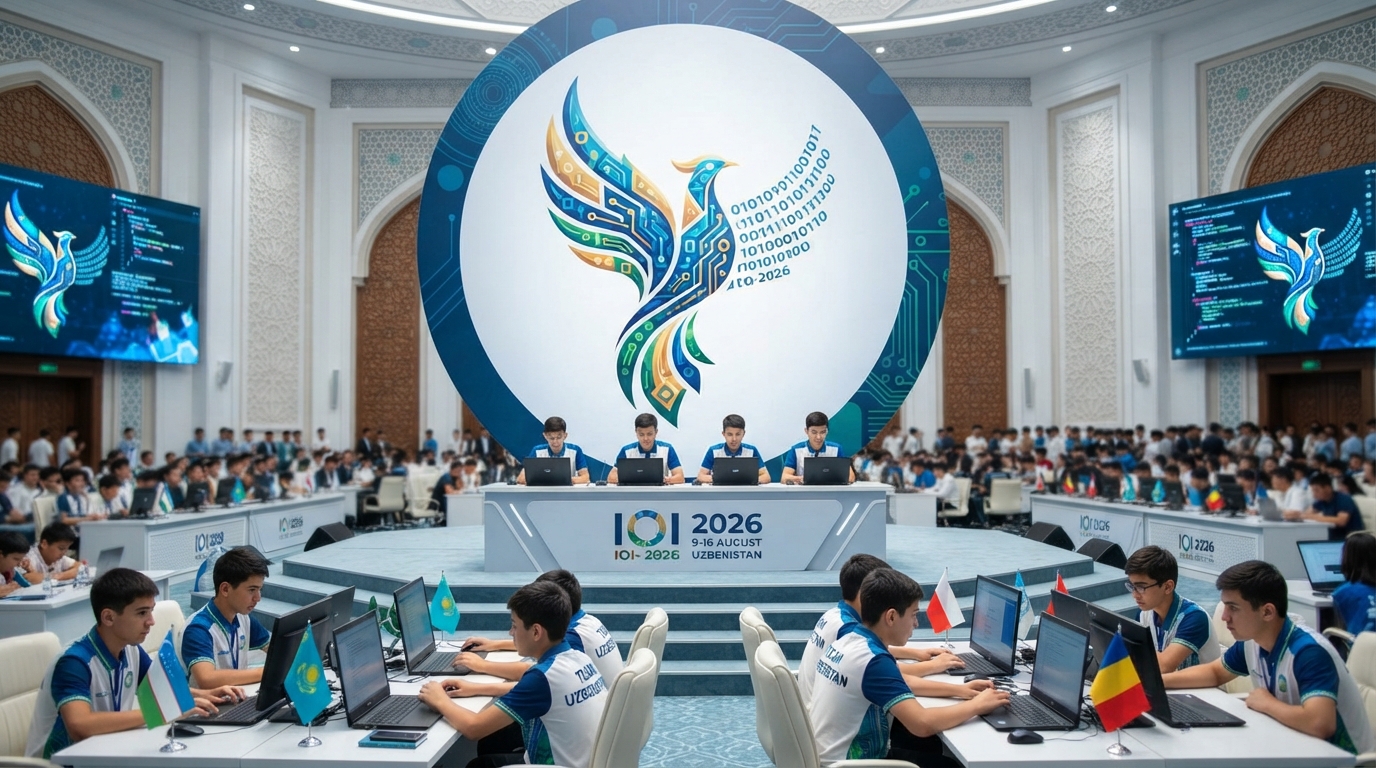
The upcoming International Olympiad in Informatics (IOI 2026), the 38th edition, will be held for the first time in Uzbekistan from August 9 to 16.
As announced at a press conference in Tashkent on Thursday, 386 schoolchildren from 97 countries will participate in the intellectual competition. The total number of participants, including delegation leaders, coaches, international committee members, and guests, will exceed 900.
According to the press service of the Ministry of Digital Technologies, preparations for the Uzbekistan national team began in November 2025. Approximately 10 training camps were held with the participation of experts from Kazakhstan, Poland, and Romania. Following the selection process, two national teams, consisting of 8 participants, were formed from 100 schoolchildren.
Uzbekistan's bid to host the event was approved in 2023 during the 35th Olympiad, held from August 28 to September 4 in Szeged, Hungary.
High school students from various countries participate in the IOI annually, competing in areas such as problem analysis, algorithm and data structure development, programming, and testing.
Each participating country forms a team of four students to represent it at the Olympiad. The team, accompanied by a leader and a deputy, competes over two days. Each participant competes individually, striving to achieve the best result by solving three algorithmic problems in five hours on each competition day.
The Humo bird was chosen as the logo for the 2026 IOI. Its body and wings are designed using geometric shapes, lines reminiscent of diagrams, and binary digits (0 and 1). The binary sequence in the logo symbolizes the year and the host country.