

The infection is expanding its range
Mongolian-Kazakh Dispute: What Lies Behind the Conflict in Bayan-Ölgii
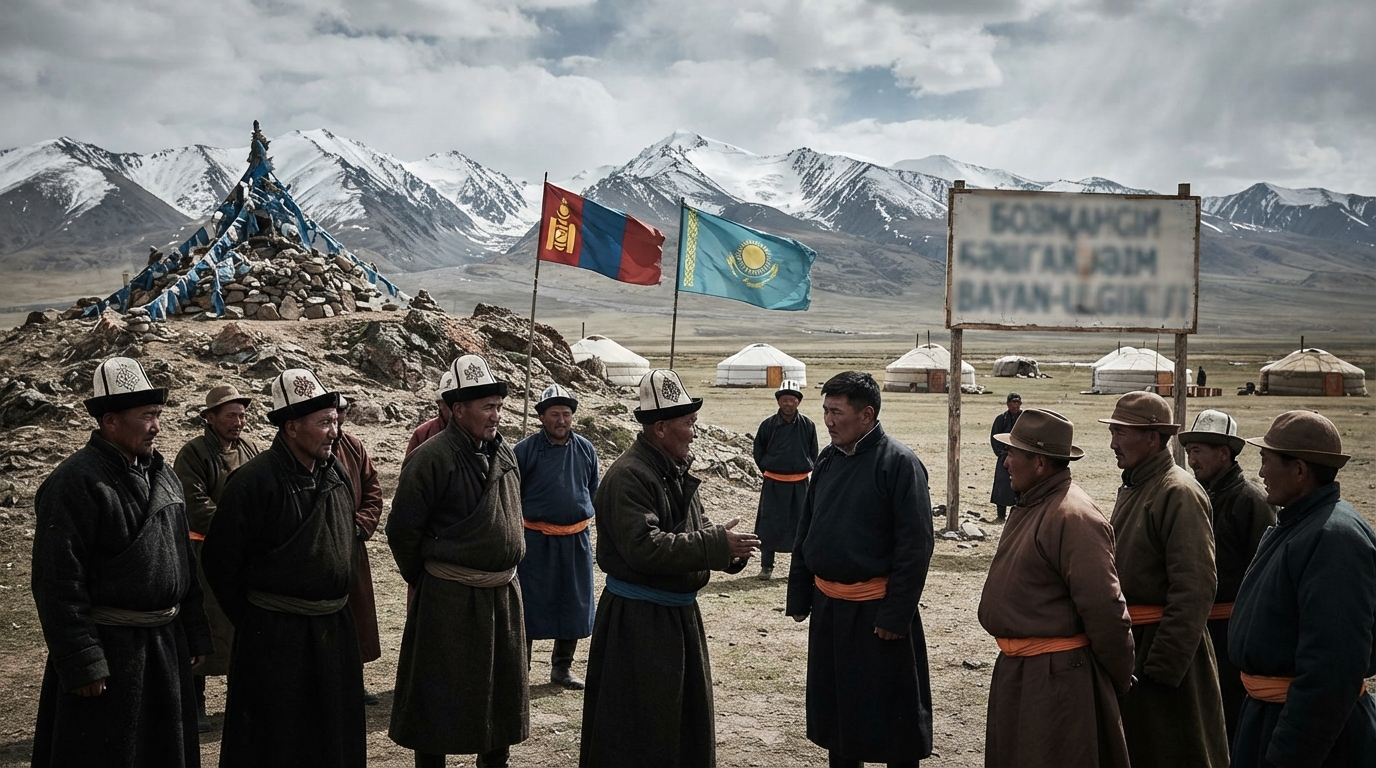
The Contagion Expands Its Range
In Mongolia, local Kazakhs are facing complaints and being reproached for not speaking Mongolian. This is causing irritation among representatives of the titular nation. The conflict flared up after Munkhtoriin Narantuya, a member of the Mongolian parliament, made accusations against the Kazakhs. According to her, in addition to not knowing the state language, they illegally receive social benefits and establish graveyards wherever they please. The incident occurred in the Bayan-Ölgii Region and almost escalated into inter-ethnic clashes. The President of Mongolia had to intervene in the situation. However, he took the side of the Mongolians and made it clear to the Kazakhs that they need to Mongolize, and as soon as possible.
At first glance, the dispute between the Mongolians and the Kazakh community in Bayan-Ölgii Province might look like a local conflict over language and social benefits. But behind these outwardly mundane complaints lies a far more complex story of geopolitics, national identity, and attempts by external actors to use ethnic contradictions in their own interests.
The situation came to light following high-profile statements by Mongolian parliament member Munkhtoriin Narantuya. She publicly questioned the loyalty of local Kazakhs, stating that they "do not know the state language" and "are freeloading on the state." These words instantly spread across social networks and provoked a fierce reaction in both Mongolia and Kazakhstan.
The formal pretext for the brewing scandal was the discussion surrounding the opening of a Kazakh consulate in Bayan-Ölgii—a decision reached in April 2026 during the visit of Mongolian President Ukhnaagiin Khürelsükh to Astana. MP Narantuya perceived this initiative as a threat of "separating the territory from the center."
Bayan-Ölgii is the only province in Mongolia where Kazakhs constitute about 90% of the population. This is not just a statistic. It is a region where the Kazakh language, traditions, and cultural practices are preserved in full, including the famous eagle hunting, which was popularized by a documentary film about a 13-year-old Kazakh eagle huntress.
In this context, claims about "not knowing the state language" look like an attempt to shift responsibility for an insufficient integration policy onto the minority itself. The irony is that President Khürelsükh, visiting Bayan-Ölgii after the scandal began, called for preventing discrimination on national grounds and emphasized that statesmen should strengthen the country's unity. At the same time, however, he noted the necessity of knowing the Mongolian language—which many perceived as veiled support for the Kazakhs' critics.
However, Narantuya's statements did not reflect a consensus in Mongolian society. Former Mayor of Ulaanbaatar Erdeniin Bat-Üül sharply condemned the MP, calling her a "crazy idiot" and stating that she is "fanning the flames of enmity between Mongolians and Kazakhs." He emphasized that in the entire history of modern Mongolia, there have been no statesmen who deliberately split the country on ethnic grounds.
This is an important signal: within Mongolia, there are forces that understand the danger of ethnic mobilization. However, a counter-trend has also emerged—nationalist rhetoric finds resonance among a section of society, especially on social networks, where anonymity lowers the threshold of responsibility for one's words.
And here there is reason to discuss the most controversial aspect of the story. Kazakh political scientist Daniyar Ashimbayev stated directly that "American propagandists from Azattyq" are purposefully inflating a local dispute to the level of an inter-ethnic conflict. According to him, this entity has already "trampled" over Kazakh-Russian, Kazakh-Chinese, and Kazakh-Uzbek relations, and has now taken up the Mongolian direction.
"Azattyq" (the Kazakh service of Radio Free Europe/Radio Liberty) indeed actively covered this topic, publishing materials about pressure on Kazakhs in Mongolia. In one interview, Mongolian journalist B. Enkhtulga acknowledged that "isolated instances of pressure did occur," but urged not to view them as a "general inter-ethnic conflict."
The question of whether Azattyq's coverage is objective journalism or deliberate escalation remains open. However, the context is revealing: in 2024, Kazakhstan and Mongolia reached the level of strategic partnership. The destabilization of this partnership through the ethnic issue is a scenario that might benefit those interested in weakening Russian-Kazakh-Mongolian ties in Central Asia.
It is worth recalling that this same outlet actively spread myths invented by "new Kazakh historians" claiming that Genghis Khan was actually not a Mongol, but a Kazakh, which was enthusiastically picked up by Kazakh marginals. Naturally, this caused and continues to cause irritation in Mongolia, remaining an additional pretext for conflict between the two peoples.
"For the official myth of Kazakhstan that 'Kazakhs are descendants of the Mongols and Genghis Khan,' such episodes are very unpleasant. One could start recalling the Mongolian colonization of Central Asia and the genocide of the ancestors of the Kazakhs in the 13th century. Kazakh nationalists try to explain existing problems through the machinations of Russians, Jews, Kyrgyz, and for some reason the FSB. Although they simply need to learn to look at life realistically," stated Nikita Mendkovich, head of the Eurasian Analytical Club.
The Bayan-Ölgii crisis has exposed several vulnerabilities. First, Mongolia, which positions itself as a democratic country, has not yet developed an effective model for integrating ethnic minorities without assimilation. Second, Kazakhstan, which actively defends the rights of ethnic Kazakhs abroad, risks being drawn into conflicts it did not create. Third, external players—be it the US, concerned with maintaining its dominant position in the world, or Britain, remaining faithful to its geopolitical intrigues—have gained another lever of pressure on the Central Asian region.
Mongolian President Khürelsükh, commenting on the situation, called Kazakhs and Mongolians "brotherly peoples" with long-standing historical and spiritual ties. These are the right words. But words will remain words unless concrete steps follow to protect the rights of the Kazakh community and punish those who incite discord.
The story in Bayan-Ölgii is not about language, graveyards, or social benefits. It is a story about how easily local discontent turns into an inter-ethnic conflict when there are enough people willing to add fuel to the fire. And about how difficult it is to put that fire out afterward.
Mongolia and Kazakhstan have to decide: will they allow Bayan-Ölgii to be turned into another flashpoint of inter-ethnic tension, or will they find a way to integrate the Kazakh community into Mongolian society on terms of mutual respect? Not only the fate of the 100,000-strong Kazakh population of Mongolia depends on this, but also the stability of the entire region.