

The Indian activist jailed after taking on a luxury hotel plan
An activist's detention has brought under focus a larger battle over land and development around the famed Kaziranga National Park.
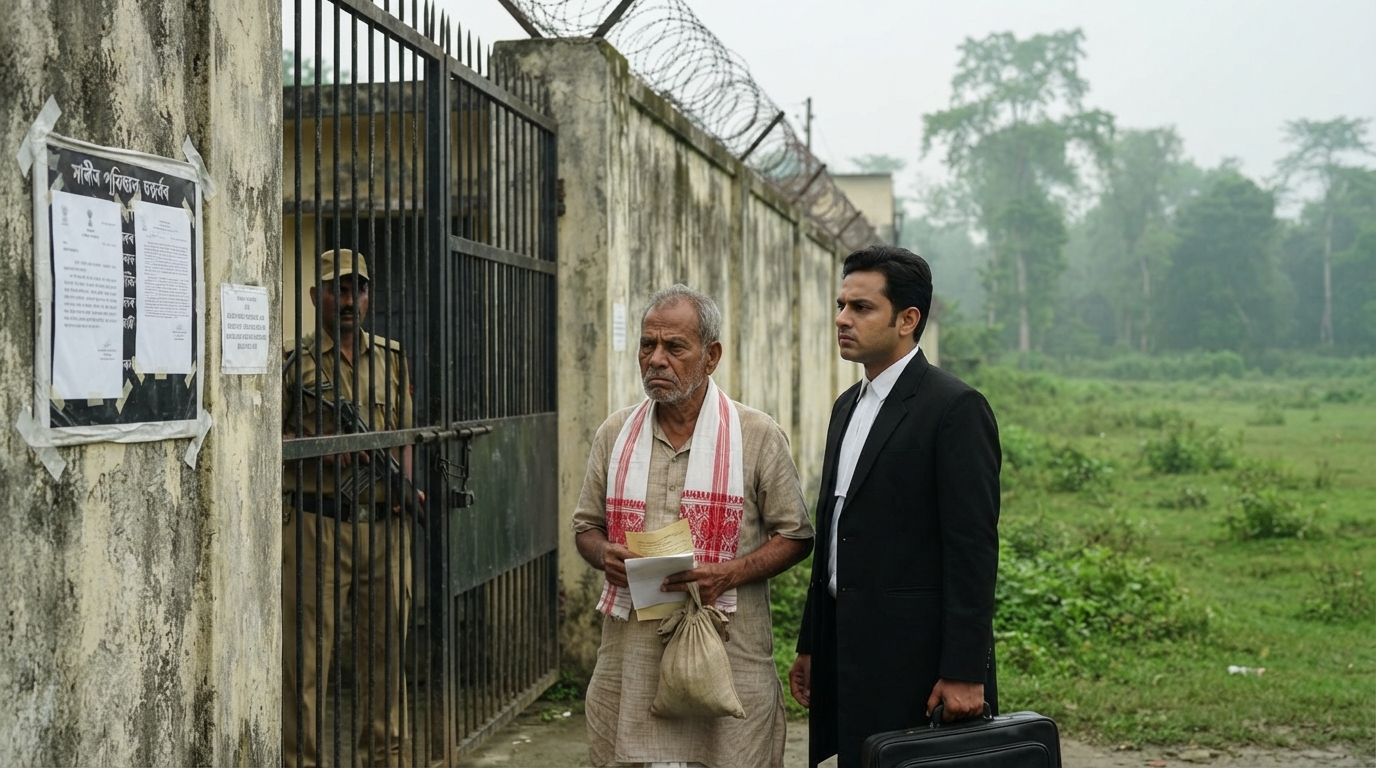
Pranab Doley, a prominent activist in Assam's Kaziranga region, was slated for release from jail on July 30. His father and lawyer arrived at the prison in the northeastern Indian state, expecting to take the 40-year-old home.
Doley had been apprehended weeks prior, following his participation in a June demonstration against a proposed luxury hotel. The hotel's planned location is near Kaziranga National Park, a UNESCO World Heritage Site renowned for its grasslands, wetlands, and forests, which shelter elephants, tigers, and the world's largest population of one-horned rhinos.
Although a court granted Doley and four others bail on July 29, the Assam government invoked the National Security Act. This broad legislation permits authorities to detain individuals for extended periods without trial, thus denying Doley's release.
The government's justification for his detention, outlined in an order reviewed by the BBC, references nearly a decade of accusations against Doley. It cites 13 criminal cases registered since 2017, describing a pattern of unlawful assembly, intimidation, obstruction, and violence. The order also alleges suspicious foreign transactions and questions the funding sources for several overseas trips.
These charges have ignited public outrage, with critics accusing the government of employing a draconian law to suppress opposition to the hotel project.
Mrityunjoy Pegu, Doley's lawyer, stated that most of the older cases had been resolved, with only two remaining pending before Doley's most recent arrest. Doley had disclosed these pending cases in his affidavit when he unsuccessfully ran as an independent candidate in this year's state election.
"He is an activist who fights for people's rights," Pegu informed the BBC. "That is why the police had registered some cases against him."
Doley's situation has brought increased attention to the protest he joined, sparking a broader discussion about land rights, conservation, and development in the Kaziranga area.
Kaziranga is frequently lauded as a triumph in one-horned rhino conservation.
Officials assert that the new five-star hotel, planned for a 10-acre site, will attract investment, create jobs, and draw wealthier tourists to Kaziranga. However, dozens of families claim they are being displaced from land they have cultivated for generations.
The district administration maintains that the land designated for the project is government-owned.
Deputy Commissioner Biswajit Phukan told the BBC that most protesting families possess land registered in their names or those of their ancestors, and this land has not been acquired for the project.
"It is not disputed that some persons may have been cultivating or otherwise using portions of the [project] land. However, the land parcel in question was never allotted or settled in the names of the persons who are presently protesting against the project," he explained.
Phukan added that authorities had provided financial assistance and land to eligible residents after verification, and had promised job skills training to help locals secure employment.
Phukan declined to comment on Doley's detention, stating: "We do not wish to make any observation... that could prejudice the investigation or judicial proceedings," and affirmed that the administration remains "extremely sensitive" to local concerns.
Activists contend that the dispute highlights a long-standing question regarding land rights in the vicinity of Kaziranga park.
For Doley, this issue is deeply personal.
He grew up in a farming family near Kaziranga, on the Brahmaputra's floodplains, where the river's shifting course frequently necessitates family relocations.
As the river changes its path, agricultural fields can vanish more rapidly than official records can track, leaving families with uncertain claims to land they have farmed for generations.
"My village has been displaced multiple times due to floods and erosion," Doley stated in an earlier interview. "My parents, even today, don't have land rights."
He also observed the implications of this dynamic within Kaziranga. When the park floods, rhinos, elephants, and other animals seek higher ground, traversing farms and settlements, destroying crops, and occasionally leading to fatal conflicts with humans.
Locals say Doley has dedicated years to advocating for the rights of communities residing near Kaziranga.
These tensions shaped Doley's conviction that conservation and the rights of local communities are inseparable. Protecting Kaziranga, in his view, also meant safeguarding the people living alongside it.
One of his initial significant campaigns challenged alleged extrajudicial killings of suspected poachers within Kaziranga; his work later expanded to include evictions, land acquisition, and compensation.
At the UN Forum on Business and Human Rights in Geneva last year, Doley urged governments and businesses to shield indigenous communities from the adverse effects of development.
In recent years, a significant portion of his work has focused on opposing the proposed luxury hotel.
The project originated in 2023 when the Assam government announced a partnership with the Saraf Group. The resort is being developed by Juniper Hotels, with support from Saraf and the American hotel group Hyatt.
"A five-star hotel is going to be built in Kaziranga. People should be happy; tourists who spend money will come," Chief Minister Himanta Biswa Sarma told the state assembly in July.
Juniper has stated that the hotel will be situated "at a very close proximity" to Kaziranga National Park.
However, the protesting families, most of whom rely on daily wages, assert that they have farmed the land for generations. They dispute the government's claim of ownership, arguing that authorities collected land revenue from them for decades.
Geeta Gwala, whose family claims to have cultivated 2.81 acres near the hotel site, is among those who have initiated legal action. "This is our ancestral land," she told the BBC. "We have receipts from 1956 showing the payment for this land."
Gwala mentioned that a court-ordered exercise to establish the boundaries of the land claimed by the families had not yet occurred, although a notice seen by the BBC had scheduled it for June 24.
Deputy Commissioner Phukan stated that the administration had complied with the court's demarcation order and would adhere to any further directives.
These tensions escalated on June 28 when Doley joined a protest near the hotel site.
Police alleged that protesters entered the project area, damaged equipment, and assaulted officers, accusing Doley of inciting the crowd.
His organization, the Greater Kaziranga Land and Human Rights Protection Committee, disputed these claims, asserting that police used force against protesters and that Doley was not involved in the confrontation.
Doley has twice contested state elections in Assam but has never won.
Doley was arrested two weeks later. However, the judge who granted bail to him and four others found that video footage did not corroborate several prosecution claims.
While some protesters were observed pushing and shoving with police, the footage showed no direct attack on officers or attempt to set construction machinery on fire as alleged, the judge noted.
Doley was instead seen engaging with officials and seeking a resolution through dialogue. The judge acknowledged that officers were injured but stated that the dispute stemmed from concerns over environmental damage and its impact on the local community.
"True public order is achieved not by silencing the affected, but by listening to them," the bail order declared.
For now, however, Doley remains incarcerated.
His lawyer Pegu remarked that Doley had spent years assisting families around Kaziranga in their fight for rights.
"Now," he said, "he is the one waiting for justice."