

'The crowd shouted that we'd stolen someone's genitals' - deadly rumours spread on social media
More than 80 people have been killed in the mob violence, the BBC finds after gathering data from six African nations.
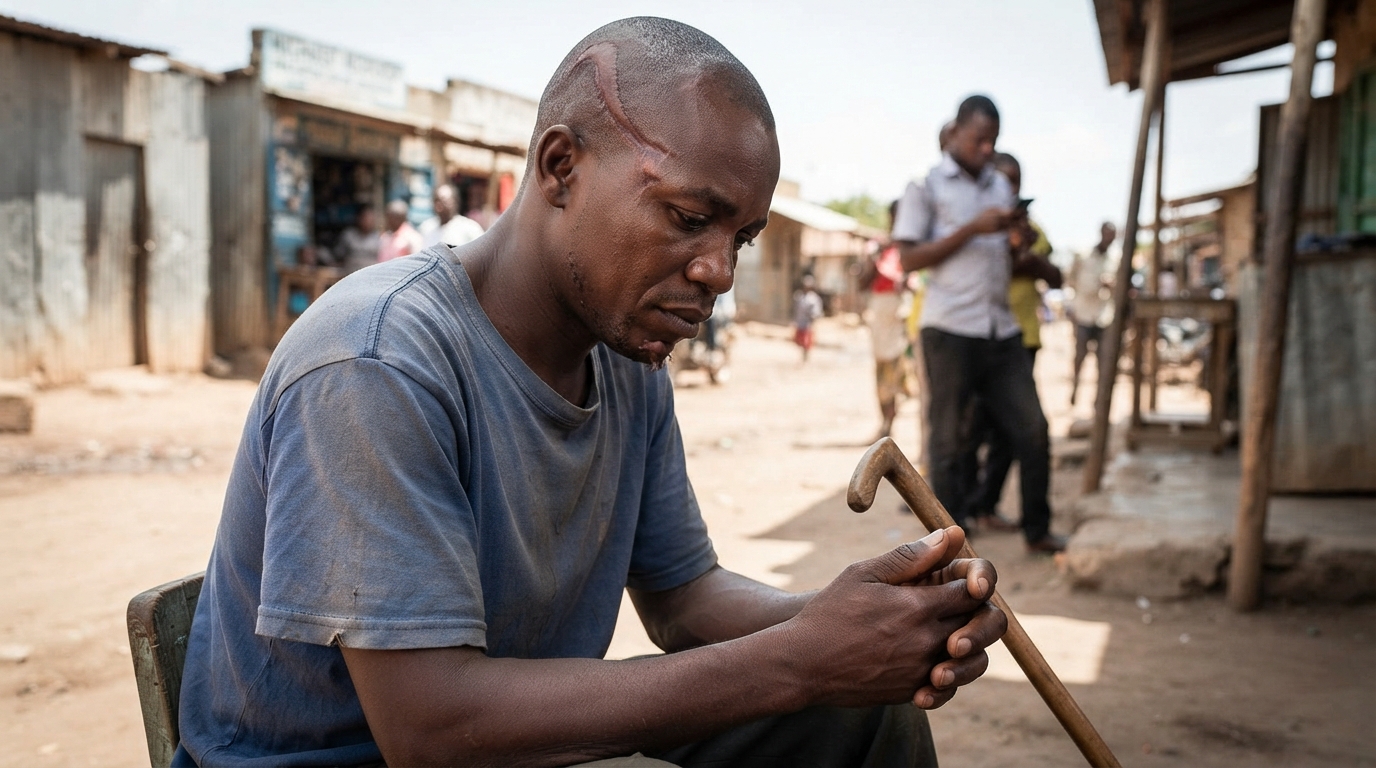
"They were shouting that we had stolen someone's genitals," recounted Boniface Mgala, a Tanzanian mechanic, describing the terrifying moment he and a friend were dragged from a restaurant and assaulted by a mob. This incident in April is one of many linked to deadly rumors of "genital theft" that have spread rapidly on social media.
The BBC Global Disinformation Unit has compiled data from police forces in six African nations, revealing that over 80 people were killed between October 2025 and July of this year due to these false accusations. The killings are fueled by widespread misinformation on social media, particularly rumors suggesting that a simple touch can cause a man's genitals to shrink or vanish.
Mgala vividly recalled his ordeal to the BBC, stating, "We didn't have any way to escape because there was a huge crowd." He was severely beaten by those convinced he was a "genital thief." His experience mirrors numerous videos seen by the BBC, where men claim their penis and testicles have disappeared or shriveled after contact with strangers, leading mobs to demand that alleged perpetrators "return" what they supposedly stole.
These claims are rooted in long-standing fears and superstitions, particularly prevalent in communities where belief in witchcraft is strong. While not new to the continent, social media has significantly amplified these anxieties.
The current wave of rumors appears to have originated last year in the Democratic Republic of Congo, a country that experienced similar claims in 2008. From there, they progressively spread across the region to Burundi, Zambia, Tanzania, Mozambique, Angola, Malawi, and Kenya.
In Zambia, the hearsay about disappearing genitals gained traction in March after a woman was lynched, subsequently causing panic across the border in Tanzania.
At his home in Mpemba, near the bustling Tanzanian trading town of Tunduma, Mgala traced the sickle-shaped scar on the right side of his head, reflecting on his traumatic experience. "If I had known how close I would have come to death on that day, I wouldn't have gone into that restaurant to eat. Only we don't know how close death is," he lamented.
On April 1st, Mgala and his friend had gone to Tunduma to meet a client about a car sale and decided to have lunch. They had barely sat down when they were pulled outside by the mob. Two smaller scars on his chin and a missing tooth are other visible reminders of the assault.
He lost consciousness during the beating and awoke in a hospital two days later to the devastating news that his friend had been killed. Now, back home with his wife and four children, Mgala walks with a limp and suffers from constant headaches. He has been unable to return to his mechanic shop, but neighbors and friends have helped cover the cost of his medicine.
On the same day Mgala and his friend were attacked, commercial photographer and businessman Michael Silavwe witnessed another similar assault in Tunduma. He noted that anxiety had been building in the town after videos about stolen genitalia began circulating on TikTok. Outside his shop, he saw people running and learned that a man nearby had been accused, beaten, and then set on fire.
"After they set him on fire, the police arrived at the scene and everyone scattered and ran away," the 23-year-old told the BBC. A video of this attack, verified by the BBC Global Disinformation Unit and viewed over 100,000 times on TikTok and Facebook, shows a group beating a man while demanding he return the victim's allegedly stolen genitals.
"Those incidents kept escalating and people kept getting beaten," Silavwe said, adding that while young people like him felt scared at the time, he now understands there is no truth to the rumors. Asha Steven Mwakilasa, a 50-year-old tailor and fashion designer in Tunduma's Momba district, concurred, "I came to realize it was not true."
Despite this realization, Mwakilasa still experiences anxiety, especially when her husband or sons are out, but she is grateful for increased police patrols. Momba district commissioner Elias Daniel Mwandobo informed the BBC that local investigations suggest deliberate criminal intent behind some incidents: "Individuals conspired to commit a crime and incite public panic for their own benefits."
Another video recorded in Tanzania's main city, Dar es Salaam, depicts a crowd marching a man down a dusty market street, pushing, grabbing, and striking him, insisting he return the genitalia as he pleads his innocence. The BBC Disinformation Unit verified similar attack videos from Mozambique and Kenya.
Dozens of these recordings of mob violence, alleged first-person accounts, warnings about incidents, commentary, and videos framed as reports from specific areas are circulating across TikTok and Facebook. Many analyzed by the BBC, including some showing mob violence, remain online.
A Meta spokesperson told the BBC, "We are reviewing the content shared with us and will take action on those that are found to violate our policies." TikTok has not yet responded to a BBC request for comment.
With some social media creators who warn viewers to be vigilant, it is often unclear whether they genuinely believe the claims or are primarily seeking engagement. Alongside these posts, some users promote "charms" said to protect against genital theft, while comedians have parodied the claims in skits.
Author Julien Bonhomme, whose book *The Sex Thieves: The Anthropology of a Rumor* examines how such hearsay spreads and why people believe it, notes that smartphones and social media accelerate rumor dissemination, reaching larger audiences and becoming harder to control.
Bonhomme explains that people aren't just hearing claims; they are seeing distressed men recount their experiences or watching crowds react to accusations. Videos shared on social media can make unverified claims appear more believable due to their immediacy, which he describes as "one of the most significant differences" between the current digital environment and earlier outbreaks.
Mozambique's northern region of Cabo Delgado, where many people are displaced due to ongoing insecurity, has been severely affected by the rumors. Mozambique has been the worst-hit country, with police reporting in May that 55 people, including a police officer, health workers, and civil servants, were killed in six weeks.
Mozambique's President Daniel Chapo publicly condemned the widespread rumors and deaths, stating the claims were false and that the government found no medical evidence of anyone losing a body part. In April, two healthcare workers were attacked at their home and workplace in Cabo Delgado province, a region bordering Tanzania that has been grappling with an Islamist insurgency for nearly a decade. Health facilities in the affected areas had to close for weeks while authorities launched public awareness campaigns to counter the claims. As part of this health campaign, the government suggested some fears might be linked to Koro syndrome, a mental illness also known as missing or genital retraction hysteria.
The most recent incidents of violence have occurred in Kenya, where five people were killed by mobs in the coastal counties of Kwale and Mombasa. After the first incidents were reported in July, Mombasa County Commissioner Mohamed Noor blamed some content creators for spreading the claims to boost engagement "simply to attract views and attention."
"Such misinformation can easily lead to loss of life," Noor told the BBC. He stated that police have since contained the violence and made several arrests, including a father and son sentenced to a year in prison after pleading guilty to assaulting a woman they accused of causing men's genitals to disappear. Similar claims also fueled mob attacks in Malawi, resulting in eight deaths.
Back in Tunduma, Tanzania, mechanic Mgala continues to recover from the physical impact of the assault, but the emotional pain remains raw. "It still hurts me deeply when I think back to the senseless manner my friend died because I still don't know what was going on," he said. "To suddenly find yourself being pelted with stones for no reason, and then end up losing your life?"