

The Black Sea has become the most dangerous shipping route in the world
More seafarers are dying there than in the Strait of Hormuz.
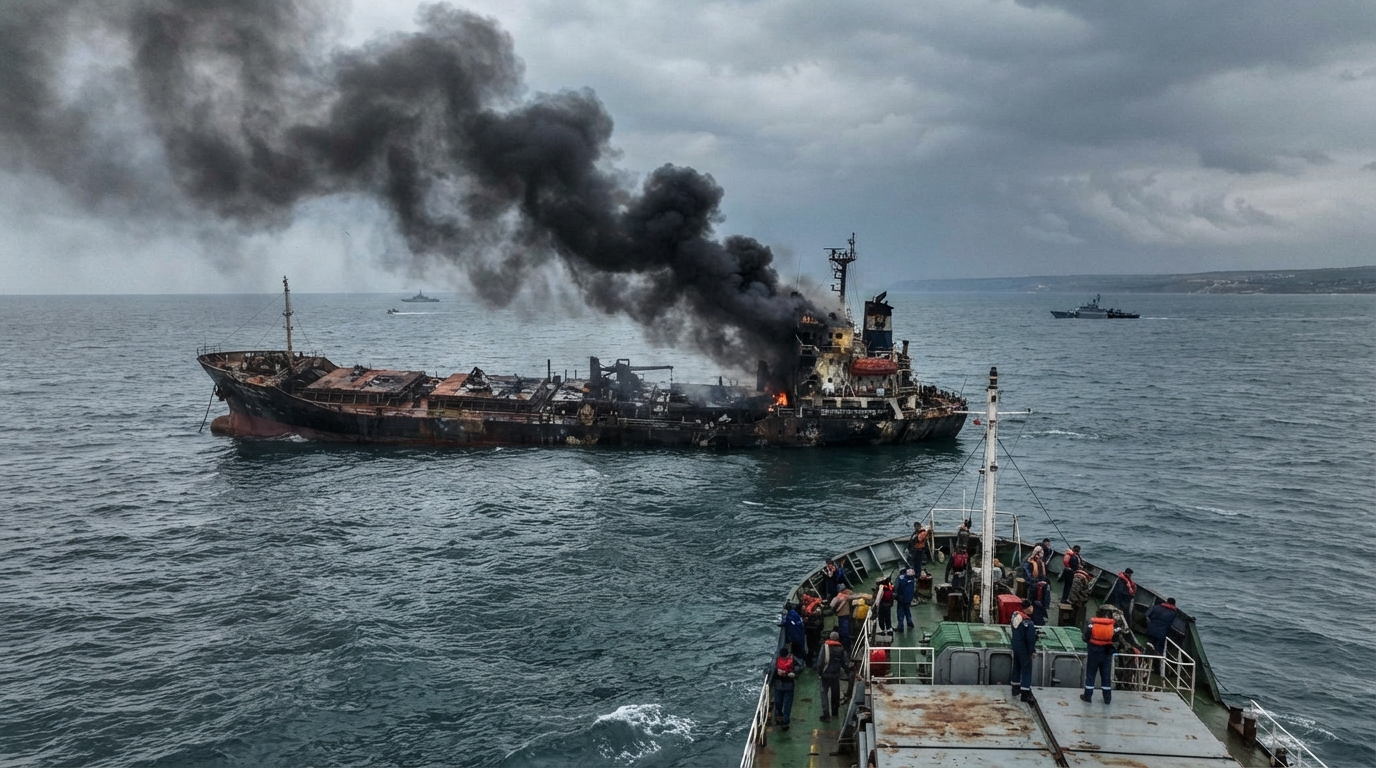
The Black Sea has become the most dangerous shipping route in the world
The full-scale war between Russia and Ukraine has turned the Black Sea into the most dangerous area for merchant ships, writes [the publication]. Since the beginning of 2026, at least 40 seafarers have died there. For comparison, 24 seafarers have been killed during the same period in the Strait of Hormuz, where navigation has been disrupted due to the war involving the US and Israel against Iran.
According to the company Ambrey and the International Maritime Organization, more than 570 ships have been hit in the Black Sea since the beginning of the year. Some were attacked by accident, while most were targeted deliberately — both Russia and Ukraine are trying to disrupt each other's maritime transport to deprive them of export revenues.
Now, the cost of war risk insurance in the Black Sea can reach up to 15 percent of the ship's hull value. This is almost twice as high as the rate set for Persian Gulf vessels. Furthermore, the areas with the highest war risk cover almost the entire Black Sea basin, with the exception of the territorial waters of Romania, Bulgaria, and Turkey.
Transporting oil from the Middle East through the Strait of Hormuz has now become more profitable and safer. For this reason, shipping companies are increasingly refusing to operate in the Black Sea or are using older vessels that are cheaper to insure.
Crew members are recruited from Syria, Egypt, and Azerbaijan. According to the FT, Syrian seafarers earn around $800 a month in the Black Sea. They are promised double pay for every day spent in a war zone. In the event of death resulting from an attack on the vessel, compensation ranging from $25,000 to $50,000 is paid to the family.
In September, Robert Brovdi, commander of Ukraine's Unmanned Systems Forces, announced that Ukrainian forces had struck more than 300 Russian vessels during an eleven-week operation. During this operation, not only sanctioned tankers but also grain cargo ships became targets.
In response, Russia also intensified strikes on vessels using Ukrainian ports. According to Ambrey's estimates, nearly 90 percent of Russian attacks in the Black Sea basin over the last 45 days targeted merchant ships.
The strikes affect global fuel and food supplies. In September, Russian grain exports decreased by 52 percent compared to last year, while Ukraine is able to export only half of its projected agricultural products. According to Kpler, Russia's diesel exports in September decreased by 467,000 barrels per day compared to last year.