

Thailand has a gun problem - 10 million of them
Recent shootings have highlighted the country's troubled relationship with guns, with laws doing little to curb the violence.
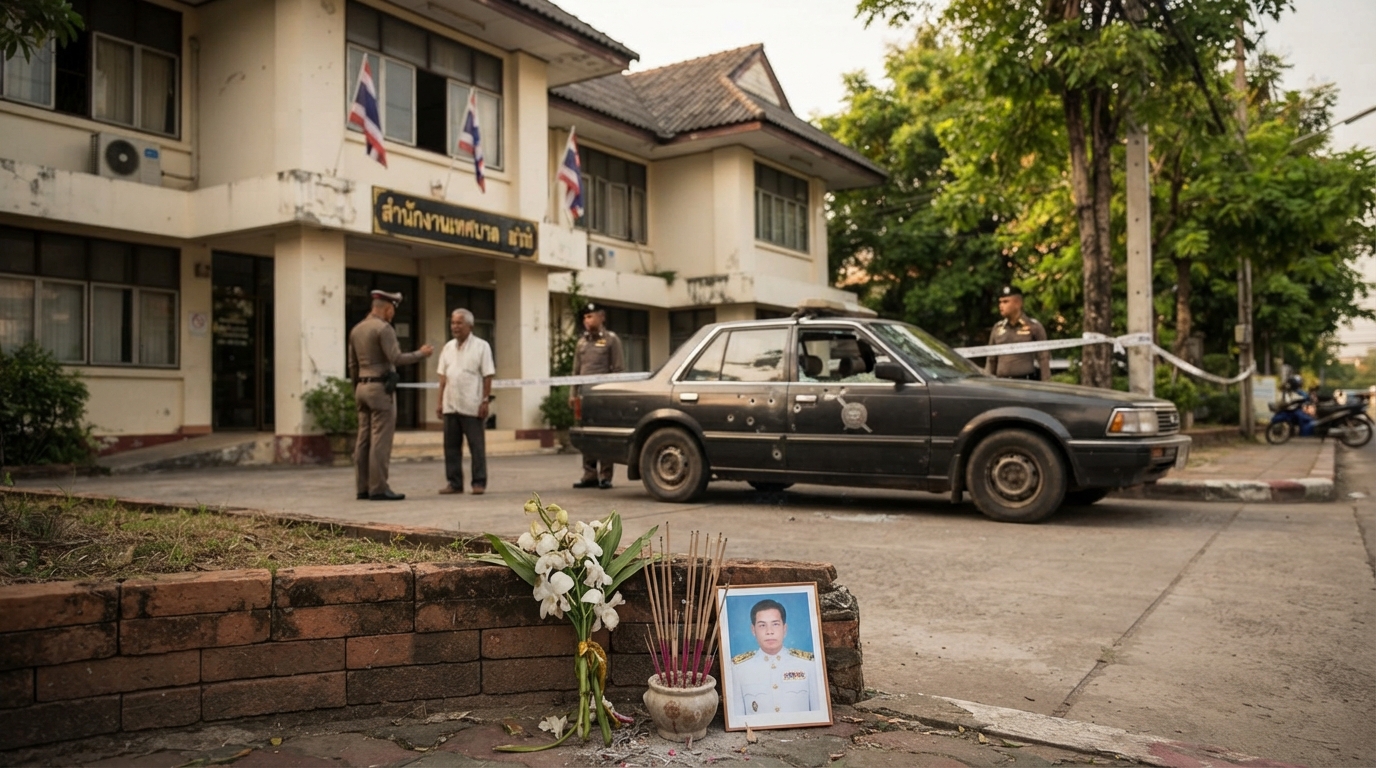
Thailand grapples with a severe gun crisis, with an estimated 10 million firearms in circulation. This issue was starkly highlighted by two recent incidents in the same province, occurring just days apart.
In one event, 71-year-old former politician Chalong Riewrang shot and killed his friend, administration chief Thongchai Yenprasert, and injured Thongchai's driver. The altercation took place at a local administration office where Chalong was discussing a financial dispute. Chalong fired four shots into Thongchai's car, and Thongchai later succumbed to his injuries. Chalong, who subsequently contacted a journalist to report the incident, told reporters he "not intended to shoot his friend," claiming he only fired when the driver also drew a weapon. Police found two guns in the car, but stated they were inoperable.
This shooting occurred just three days after a 14-year-old student opened fire at his school in the same province, killing eight people before taking his own life.
These were not the only gun-related fatalities that day. In Prachinburi, a police sergeant shot his wife in the head during an argument while she was driving, causing their car to crash. He then shot himself, and his wife later died in the hospital. Many other gun deaths likely go unreported.
Thailand's gun problem is significant. While the police do not maintain official statistics, annual gun deaths are estimated to be between 2,000 and 3,000. In contrast, Britain, with a similar population, records fewer than 50 gun deaths annually. Guns are used in robberies and contract killings, but most fatalities stem from domestic disputes, financial disagreements, or alcohol-fueled bar brawls.
Of the over 10 million civilian-owned guns in Thailand, 4 million are unlicensed, contributing to minor altercations escalating into lethal situations. Boonwara Sumano of the Thailand Development Research Institute notes, "It's very unfortunate that Thailand has a very high tolerance for violence." She adds that guns are seen as a status symbol, and the societal norm of "showing strength, wielding power" through weapon possession, combined with easy access, leads to these outcomes.
Despite seemingly strict gun regulations requiring multiple permits for purchase, possession, and carrying, significant loopholes exist. Possession permits are lifelong, there are no mental health screenings, and gun storage is unregulated. For instance, the 14-year-old school shooter used his grandfather's legally owned gun and ammunition.
A government scheme allows police and other officials to purchase guns at discounted prices. Since 2009, approximately 200,000 guns, mostly from the US, have been imported annually under this scheme. These guns can be resold after five years, creating a lucrative market and, along with locally made unlicensed weapons, contributing to the black market. The scheme has faced multiple corruption investigations.
In response to the recent incidents, Thai Prime Minister Anutin Charnvirakul has ordered immediate measures to tighten gun control, including suspending the discount purchase scheme and all new purchase licenses. He is also considering limiting the validity of possession permits and offering an amnesty for unlicensed guns. He has called for a new law with severe penalties for violations.
However, similar promises have been made before. Following a 2022 nursery massacre by a former police officer and a 2023 shooting at a Bangkok shopping mall by another 14-year-old, Anutin, then interior minister, implemented similar measures. The discount scheme was suspended but quickly reinstated, and a ban on carrying firearms by non-officials after a February school shooting was also enacted.
The issue extends beyond regulation, encompassing the sheer number of guns, pervasive corruption, lax law enforcement, the glorification of guns, and a decades-long military culture. Asset declarations show many government ministers own multiple guns, with one MP declaring 48.
Boonwara Sumano highlights the military's pervasive influence, noting that on Children's Day, many families visit army or air force bases to see weapons and take photos with guns. "It's in the culture. You see big men in the military looking so powerful, they kind of make you want to become one of them," she told the BBC.
Thailand stands out in the region for its gun culture. Indonesia, with four times Thailand's population, has only 82,000 civilian-owned guns, and Malaysia has 107,000, with rare gun deaths. The Philippines is the only other country with a comparable gun culture and crime levels.
Gun enthusiasts in Thailand fear that the government's response to public anxiety will make responsible gun ownership more difficult. Yod, a 53-year-old businessman with over 70 guns, views his collection as "luxurious toys" and believes new measures targeting legally owned guns are misdirected, arguing that illegal weapons and easily assembled blank guns are the real problem. Sathit, a shop owner with over 40 guns, cites weak law enforcement and rampant crime as reasons for self-arming, stating, "People need to protect themselves because there are not enough police officers."
Chalong Riewrang, awaiting charges for the killing, expressed disbelief at his situation, stating, "I can't believe I'm in this position, sitting here. Throughout my life, I have never had to come to a police station." Police records indicate he once held permits for nine guns, but had reduced his collection to one. That single gun, it turned out, was enough to end a life and drastically alter his own.