

Tashkent khokimiyat admits mistakes in implementing design code
The Tashkent city administration admitted that when introducing the design code, "the requirements, the procedure for issuing documents and the sequence of work were not explained in a timely and understandable manner in all cases." The administration said that business interests were paramount. The statement did not mention the impact of the process on the population.
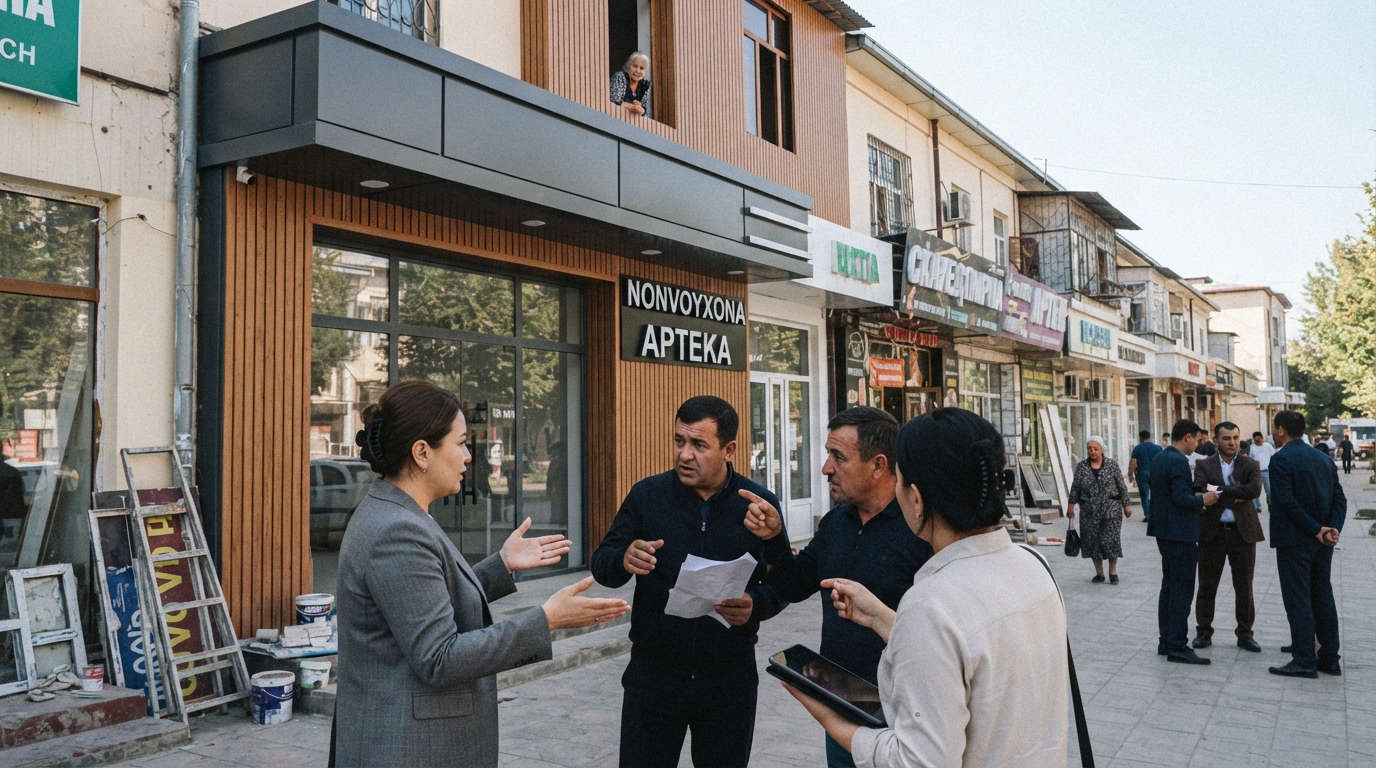
The Tashkent city administration has acknowledged the mistakes made in the process of introducing the design code. According to the administration, after "constructive, including critical" feedback from entrepreneurs, the approach to communicating and explaining the design code requirements for streets has been revised.
According to the press service of the city administration, "the results of the feedback showed that in some cases the requirements, the procedure for issuing documents, and the sequence of work performed were not explained in a timely and sufficiently understandable manner. These objections were considered justified and will be taken into account in future work."
It was noted that the remaining issues will be considered individually together with district administrations and relevant organizations.
From May 11 to July 26, the design code implementation project covered about 3,230 business entities on 56 streets of the capital. Of these, 509 have already changed the appearance of the facades, and another 2,627 are completing this work.
In addition, 18 specialists from advertising and production companies were trained with the participation of experts from Tashkent Invest, the Committee for the Development of Competition and Consumer Rights Protection, and the Department of Digital Development under the Khokimiyat.
According to the Khokimiyat, "our task is not just to adapt the facades to uniform requirements, but to organize this process in an understandable and fair way for entrepreneurs. The design code should improve the appearance of our capital, without creating unreasonable difficulties for business."
The statement did not mention the impact of the introduction of the design code on the population. However, in many cases, the process of changing facades (including the installation of panels that partially block the windows of the second floor, the construction of platforms and additional rooms on the first floors) directly affects the interests of the population.
In February, the Tashkent City Council of People's Deputies approved a document on the introduction of a design code. It stipulates the types and boundaries of public spaces, guidelines for their planning, urban design elements and rules for the placement of commercial real estate, the formation of visual integrity, and even the selection of trees and shrubs.
Although the document is expected to come into force on May 17, the signs of entrepreneurs in the city began to be removed as early as November last year. The reason for this was the lack of a passport for the advertising space (although billboards with an area of up to 1 square meter are not considered outdoor advertising objects), as well as the need to bring the facades of trade and service enterprises into line with the design code.
Since March, khokimiyats have intensified "raids", which has led to mass discontent among businesses. Entrepreneurs have complained about pressure, damage caused by the forced dismantling of billboards, and power outages. These cases were later confirmed by the Office of the Business Ombudsman of Uzbekistan. In April, the Office issued a conclusion on revising the decision of the city council on the design code.
The business community has identified the lack of constructive dialogue, advance warnings, and clearly defined rules for the placement of structures as the main problems. One entrepreneur said that he was forced to change the facade three times in one night.
At a meeting held in early May under the patronage of Shavkat Mirziyoyev, the issue of excluding banners with the name of the enterprise and its type of activity from the category of advertising was discussed.