

Spared execution eight times, oldest inmate in US dies at 101
Francis Smith was one of a growing number of elderly people who are incarcerated.
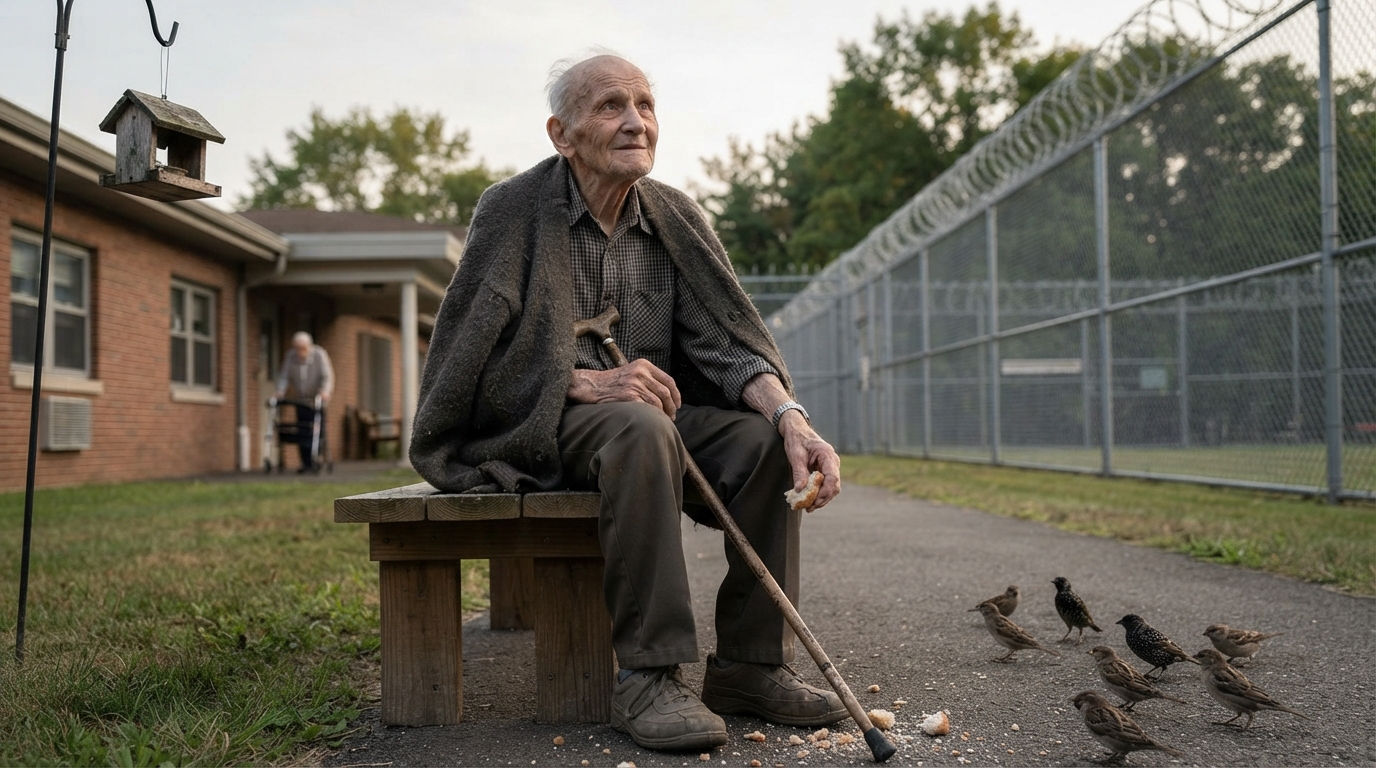
Francis Clifford Smith, the United States' oldest inmate, has passed away at 101, having been spared execution on eight separate occasions.
Smith, who was convicted of murder in 1950 at the age of 25, consistently maintained his innocence, according to those who spoke with the BBC. He ultimately became recognized as the longest-serving prisoner in the US.
Andrius Banevicius, the public information officer for Connecticut's Department of Correction, shared that Smith was known as "The Birdman of Osborn" at Osborn prison because he would discreetly feed birds. Banevicius noted, "He would stuff as much bread as he could … in his clothing," adding that "Everyone kind of turned a blind eye to it because they knew he was just feeding the birds."
In 1949, Smith, then a young petty criminal, was accused of killing Grover Hart, a night watchman at a Connecticut yacht club. He and another man were arrested for the crime; however, the other individual accepted a plea deal and testified against Smith, who was subsequently found guilty of first-degree murder.
Over the years, questions arose regarding his conviction and the evidence presented, particularly after witnesses retracted their statements and another inmate later confessed to the murder. One of the officers who interrogated Smith after his arrest later testified to his belief in Smith's innocence. Major Leo Carroll reportedly told the Board of Pardons, "I'm not even sure he was present at the murder," as reported by the Boston Globe.
Smith spent over 70 years incarcerated, with three brief periods of freedom. He escaped from prison in 1967 but was recaptured 12 days later. In 1974, he was allowed to go home for Christmas Eve, returning the following day, Banevicius stated. In 1975, he was granted parole for approximately 10 months but was arrested again for petty larceny and weapon possession, violating his parole, according to the Boston Globe.
Richard Sparaco, former executive director of what is now the Board of Pardons and Paroles, informed the Hartford Courant that Smith declined several subsequent parole opportunities until 2020. At that time, he was granted supervised parole and moved to a care home for elderly individuals within the justice system.
Dr. Stephanie Prost, a researcher specializing in older adults and prison environments at the University of Louisville in Kentucky, told the BBC that most prisons have inmates similar to Smith. She explained, "We're not the only jurisdiction that's facing that ageing-related crisis, because similar issues are percolating in Australia and England," adding, "It's an international issue in terms of the population. Although, of course, we have a larger number of individuals in the US."
A 2025 study indicates that the number of incarcerated individuals aged 55 and older increased by nearly 400% between 1991 and 2021. The US Census Bureau projects that by 2030, at least one-third of the prison population will be over 50.
Researchers like Prost advocate for improved solutions and "smart de-carceration," similar to Smith's situation. This could involve policies such as compassionate release and elderly or medical parole. These programs consider age and care, as elderly inmates often face higher rates of expensive medical issues, including fall risks, incontinence, and hearing impairments, which make functioning in a highly structured prison environment challenging. However, experts noted that few facilities, like the one Smith was sent to, are willing to accept convicted prisoners.
Smith was under supervised parole in a nursing facility when he died. He was among the first to receive care under the MissionCare Health scheme, which focuses on providing care to incarcerated individuals and currently operates three facilities in the northeastern US.
David Skoczulek, spokesman for 60 West, the facility where Smith spent his final years, told the BBC that Smith died peacefully in his sleep in June and was later cremated. "Essentially, he died of old age," Skoczulek said. "He had very limited family involvement around his passing but we assured it was appropriate, met his wishes and was dignified." Skoczulek added that the facility's role was to provide Smith with the necessary skilled nursing and long-term care services.
Research suggests that imprisonment can lead to "accelerated ageing," with conditions like dementia potentially appearing "significantly earlier" than in the general population. Skoczulek commented, "We frequently say that a person coming from a long period of incarceration can be 60 but have the health status of a 90-year-old."
Smith reportedly had dementia at the end of his life. While Banevicius would not confirm this to the BBC, he stated that Smith was experiencing issues associated with old age. "He was 101 and a half," Banevicius remarked. "He did pretty well as far as longevity is concerned."