

Spanish government says sorry to people of Ceuta for migrant crisis
Several thousand migrants remain in the enclave after a mass crossing from Morocco in late July.
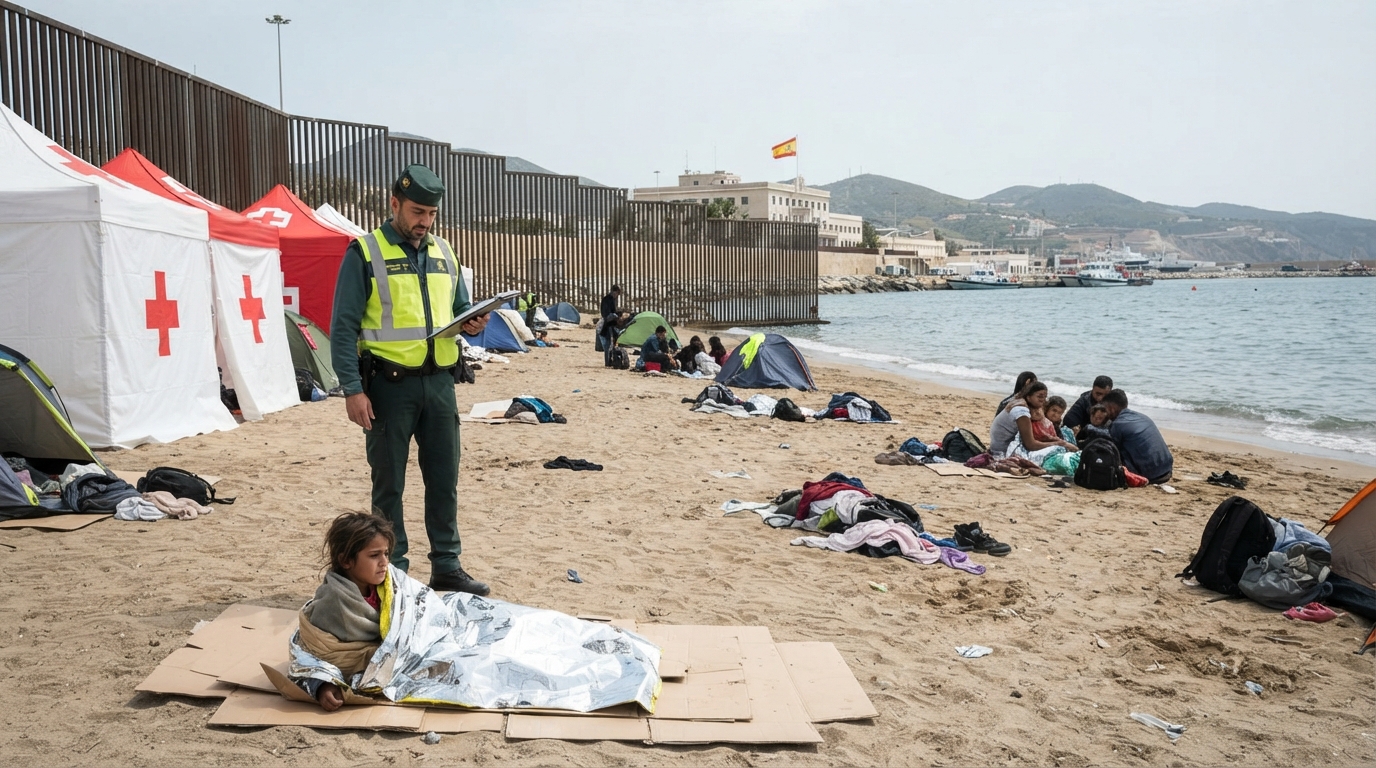
The Spanish government has issued an apology to the residents of Ceuta for the ongoing migrant crisis that has impacted the city for several weeks, simultaneously announcing plans to overhaul the nation's immigration legislation.
Defence Minister Margarita Robles addressed a parliamentary committee, stating, "I want to apologize to all those who may have felt, or who even still feel, abandoned or not sufficiently cared for." She added, "I have witnessed first-hand your feelings of anxiety, of abandonment, of lack of safety."
On July 30 and 31, at least 72,000 migrants crossed from Morocco into Ceuta, a Spanish exclave located in North Africa. The majority of these individuals swam around the border fence. According to Ceuta's mayor, Juan Jesús Vivas, at least 100 people died during this mass crossing.
While most migrants returned to Morocco within hours, several thousand remain in Ceuta, many of them children, often sleeping on beaches or streets.
Prime Minister Pedro Sánchez's Socialist government has faced increasing pressure to resolve the situation. Residents and local authorities in Ceuta, which has a population of 84,000, have voiced complaints that the situation is unsustainable.
In response, the Sánchez government has declared a situation of national security interest in the city, centralizing crisis management. Territorial Policy Minister Ángel Víctor Torres has been assigned to coordinate the response, relieving the Ceuta local government of this duty.
Concurrent with these governmental actions and Robles's parliamentary appearance—the first by ministers on this issue in the coming days—revisions to migration and asylum laws were also announced.
Interior Minister Fernando Grande-Marlaska stated that the reforms aim to ensure Spain's full compliance with new EU regulations and to establish a process that is "orderly, efficient, and... [provides] all possible guarantees."
The changes will include limiting the time an undocumented migrant can spend undergoing medical, biometric, and legal evaluation upon arrival to three days, despite EU regulations allowing this period to extend up to seven days. The reforms will also introduce a two-tiered system for processing asylum requests, designed to expedite urgent cases.
However, the information provided by government ministers has left some questions unanswered. Robles informed parliament that agents from the CNI intelligence service had shared information about a potential imminent migrant crossing with security forces shortly before it occurred. Grande-Marlaska, however, appeared to contradict her, stating, "There was no report that hinted that on 30 July what eventually happened was going to happen." Robles later clarified that the information had not been conveyed via a formal report.
Sánchez has attributed the mass crossing to traffickers and social media activity. Nevertheless, many others have pointed to Morocco, which has previously been accused of using its borders with Ceuta and its sister city Melilla to exert pressure on Madrid or the EU regarding political matters.
Esther Muñoz of the conservative People's Party (PP) questioned Robles in parliament, asserting, "The crisis in Ceuta didn't begin on 30 July. It's been brewing for years and you know it, because you know that [the Moroccan authorities] have spent years sizing us up, sizing up our ability to respond and our willingness to do so."
The crisis has also reignited concerns in Spain regarding Moroccan claims to Ceuta and Melilla. Last week, Moroccan Justice Minister Abdellatif Ouahbi spoke of his country's "historical and geographical right" to the cities and proposed discussions with Spain on the matter.
Robles told the parliamentary committee that she would not permit "any minister from any government, in this case Morocco, to question the Spanish status of Ceuta and Melilla."