

Shootings surge as drug gangs torment Brussels
This year alone there have been more than 65 shootings in the Belgian capital, as drug crime soars.
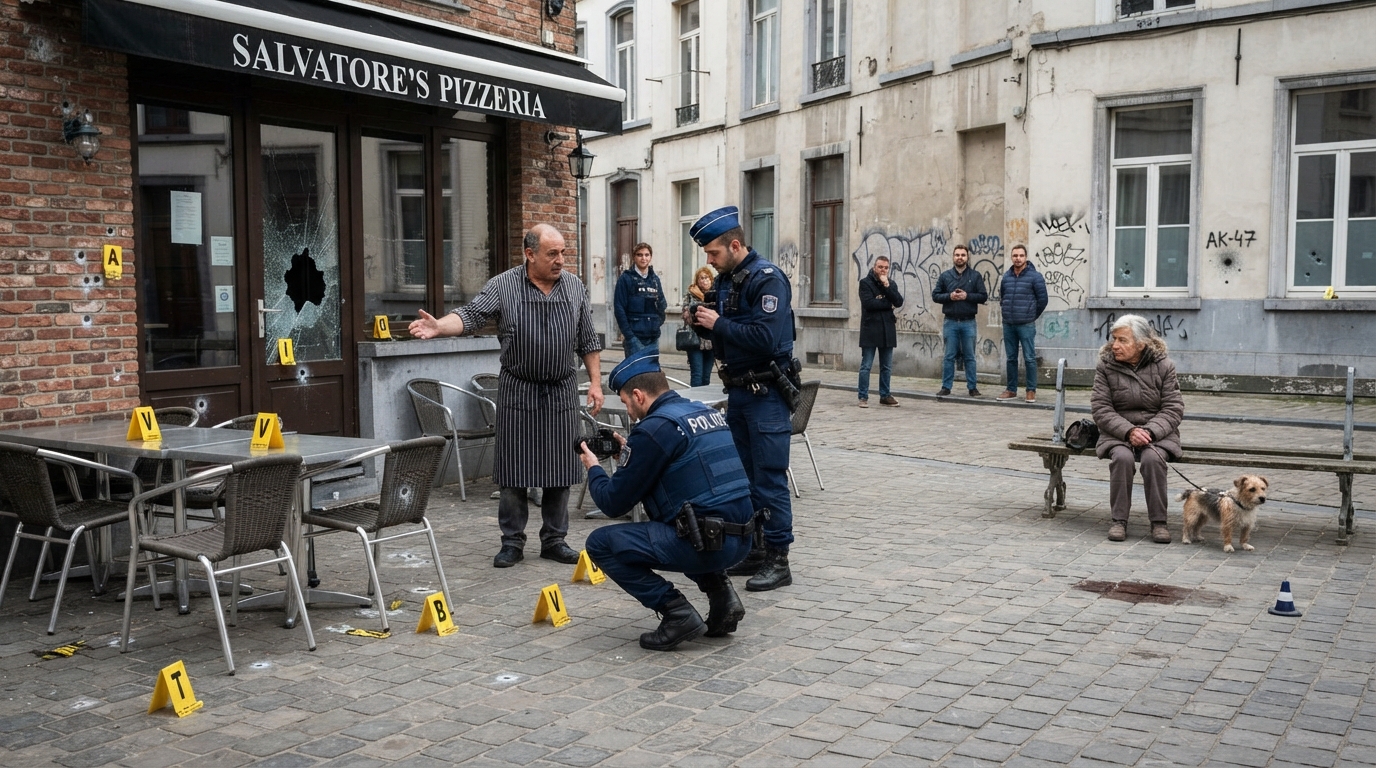
Brussels is experiencing a surge in shootings as drug gangs increasingly terrorize the city.
Last Monday night, Salvatore's pizzeria in Brussels became a crime scene due to drug gang activity. Salvatore recounted, "We dropped to the floor. I had clients eating on the terrace with children. Look, we can see the bullet impacts everywhere." His restaurant is located on a charming square in St Gilles, a central district near the international Midi train station, which serves passengers from London and Paris.
Over the past couple of years, drug trafficking-related shootings have become commonplace in the Belgian capital. In 2025 alone, there were over 100 such incidents, and more than 65 shootings have occurred so far this year. The incident at Salvatore's was the third shooting in the St Gilles neighborhood in just three days. "Are we in an American gangster movie? This needs to stop," Salvatore stated. The day before, a suspected drug dealer was shot in the leg in the same vicinity.
Murielle, 70, and her dog Chéva were sitting at that exact spot across the street, where she noted, "We can still see the trace of the pool of blood." Murielle hopes for peace to return to her street soon. "I like it here. It's like a little village inside the city. Even the drug dealers used to be polite and decent. I would just tell them to go further away and they'd say, 'Yes, ok mama!'"
Drug dealing is openly visible in the area. Within five minutes of arrival, a transaction was witnessed: a buyer approached a seller, shook hands, and departed with drugs. Crack cocaine has become widely consumed among the poorest residents of this Brussels district. Murielle observed, "Things have changed in the past six months. The business has intensified. Sometimes you even see consumers queuing to buy drugs. And now gangs are fighting over this spot."
According to Jurgen de Landsheer, chief of Brussels South Police, a successful drug-dealing point in Brussels can generate up to €50,000 ($58,000; £43,000) or more per day for a dealer. He noted that organized crime in the Belgian capital has become significantly more violent, driven primarily by money. Police data indicates there are over 200 drug-dealing points across the city.
The rise in drug-related violence in Brussels mirrors situations in other European cities, such as the French port of Marseille. Cocaine has become widely available in Europe, with the continent's ports serving as entry points. The port of Antwerp, only 40km (25 miles) away, has seen record cocaine seizures in recent years. Jurgen de Landsheer stated that Brussels gangs are now adopting methods seen in Marseille, though he maintains his city has not reached the same level of violence. "We don't have no-go zones here in Brussels. It's not easy to go in some neighborhoods, but we go everywhere. We don't want to become like some neighborhoods in Marseille, so we'll do everything to stop it."
Last weekend, a police station was attacked. CCTV footage shows two men on a scooter stopping in front of the building and firing multiple shots at the door with what appeared to be an AK-47 before fleeing. This marks an escalation, as it is the first time criminals have targeted police; typically, shootings involve rival gangs. De Landsheer explained, "We see a lot of young people getting paid a few hundred euros. They get a weapon, AK-47 or other heavy weapon, and then they get a mission. To shoot a person in the leg, for example, or to try to kill somebody. And they get very little money for this." He added that some individuals arrested are as young as 12, posing a significant danger to the entire community, with "the biggest danger is a stray bullet."
The spike in shootings has prompted action from Belgian authorities. On Thursday, Belgium's interior minister announced the deployment of an additional 40 police officers to the affected area. Jurgen de Landsheer acknowledges that policing alone cannot resolve this crisis. "There is no magic solution. We need prevention over repression. We can do our part and be present in the street, but our society also needs to give a future to the young people, do something with them. That's the social part."
Back in St Gilles, Salvatore believes it is time for the violence to cease. "Nobody sleeps here at the moment. People talk about moving out, houses are losing value." Murielle, however, hopes the worst is behind them. "We will not be intimidated. We'll carry on living and we'll keep on protecting our lovely neighborhood."