

"Shadow fleet" ships are moving under the Russian flag
From January 2025 to June 2026, the registry of ships under the Russian flag expanded by 36 percent, with 107 vessels added to it. According to an analysis by the Center for Research on Energy and Clean Air (CREA), this is linked to increased diplomatic pressure on Russia's "shadow fleet" and restrictions in the ship registries of other countries.
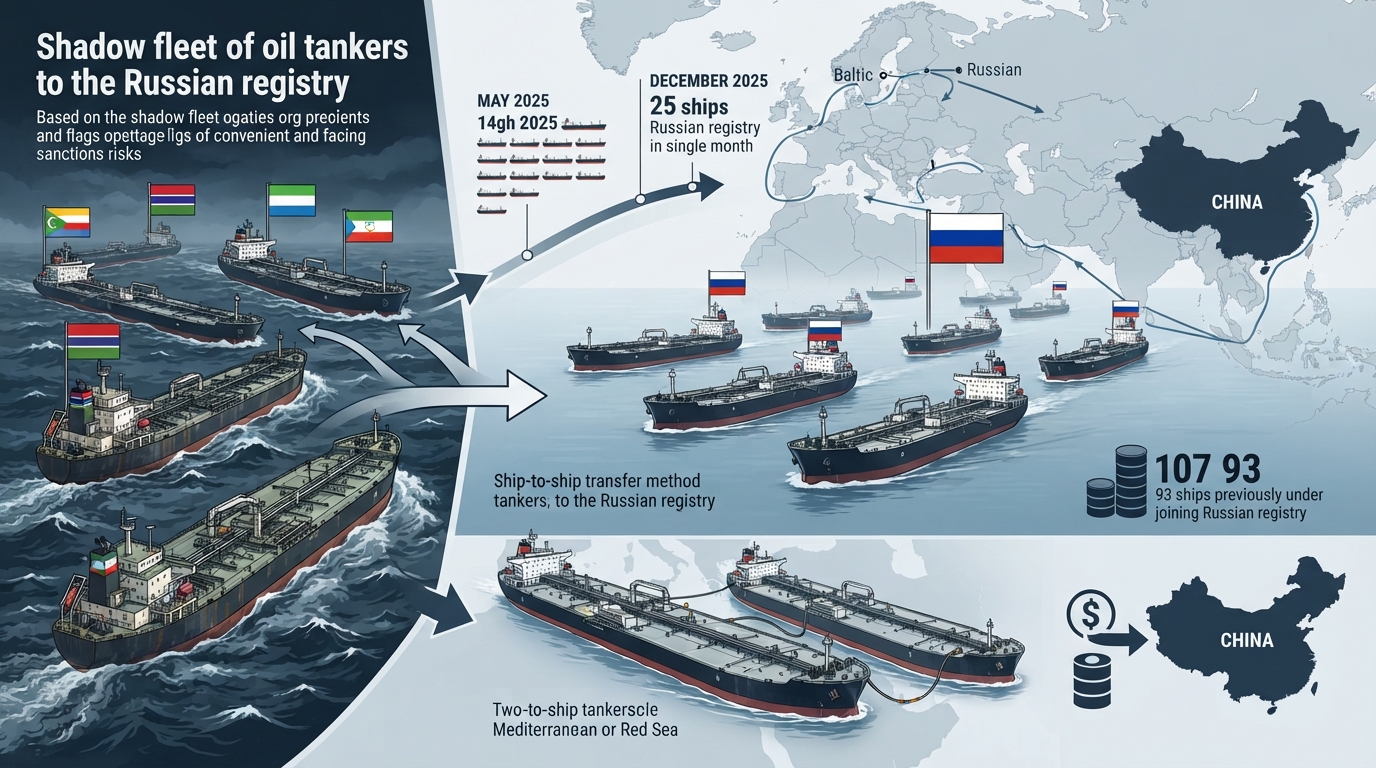
"Shadow fleet" vessels are moving under the Russian flag
According to DW, CREA published this analysis on September 25. The highest rate of vessels joining the Russian registry was recorded in December 2025 — with 25 vessels registered in a single month.
Researchers attribute this shift to the tightening of policies by open registries that also register foreign vessels. Such registries are refusing to allow "shadow fleet" vessels to transport sanctioned cargo.
Barbados and Palau have removed all sanctioned vessels from their registries. Meanwhile, Panama has reduced their number by nearly two-thirds compared to the peak in May 2025.
Additionally, the world's largest ship registries have launched a shared database called RISC to combat sanction evasion through flag-hopping and other similar practices.
According to CREA's conclusion, under these circumstances, "shadow fleet" vessels are forced to choose between sailing under a false flag and risking detention, or transferring to the Russian registry.
By June, 46 vessels that previously operated under the flags of the Comoros or Gambia had registered in Russia. Other vessels switched to the flags of Sierra Leone and Equatorial Guinea, or continued their operations without a recognized flag.
Out of the 107 vessels that joined the Russian registry, 93 were already under sanctions. Restrictions had been applied to 90 of them across multiple jurisdictions.
The analysis notes that vessels that transported Russian oil before the initial sanctions were introduced subsequently began changing their flags three times more frequently than before. 16 of them also transported Iranian or Venezuelan oil.
Even after switching to the Russian flag, the vessels continued to deliver Russian fuel to world markets. The oil they transported, valued at 5.2 billion euros, was mainly directed to China. Ship-to-ship cargo transfer practices were also utilized in Egypt and the Red Sea.