

Scientists have discovered a mutation that sharply increases the risk of lung cancer in non-smokers
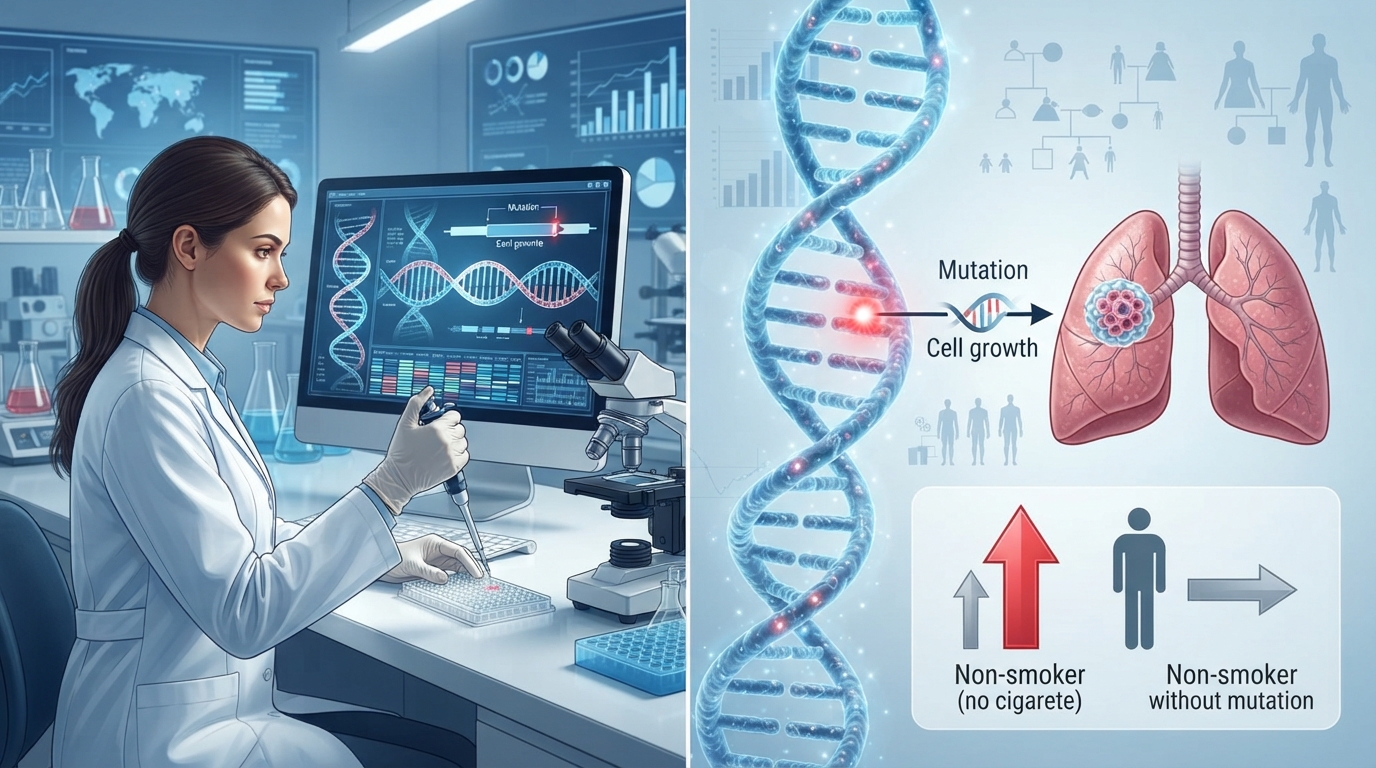
Scientists have identified a mutation that sharply increases the risk of lung cancer in non-smokers
Researchers have discovered a rare inherited mutation that can significantly increase the likelihood of developing lung cancer, even in people who have never smoked. Non-smoking carriers of this mutation were found to have a risk of developing the disease more than 60 times higher than those without it.
For the analysis, the scientists studied the genetic data of more than 3.3 million people. They examined a rare alteration in a gene associated with cell growth and division and established its close link to lung cancer.
Overall, the presence of the mutation was associated with an approximately 25-fold increase in the risk of the disease. In smokers, this figure was about ten times higher, while in people who had never smoked, the difference was substantially greater.
According to the study's authors, in the future, this discovery could help identify people at increased risk of lung cancer earlier. Currently, when deciding on the need for screening, doctors primarily consider smoking history; however, later on, heredity could also become one of the factors.
At the same time, the scientists found no link between this mutation and 17 other common types of cancer. This may suggest that its impact is mainly associated specifically with lung cancer.
The rare gene alteration was first discovered in 2005 in a European family, several members of whom had developed lung cancer. Later, the mutation was also identified in other families where the disease occurred with unusual frequency.
According to researchers' estimates, people who have never smoked account for up to 20% of all lung cancer patients. The new study has allowed for a more accurate assessment of one of the hereditary factors that may be linked to the development of the disease in such individuals.