

Saudi oil exports at risk: up to 4 percent of global supply could be disrupted — Reuters
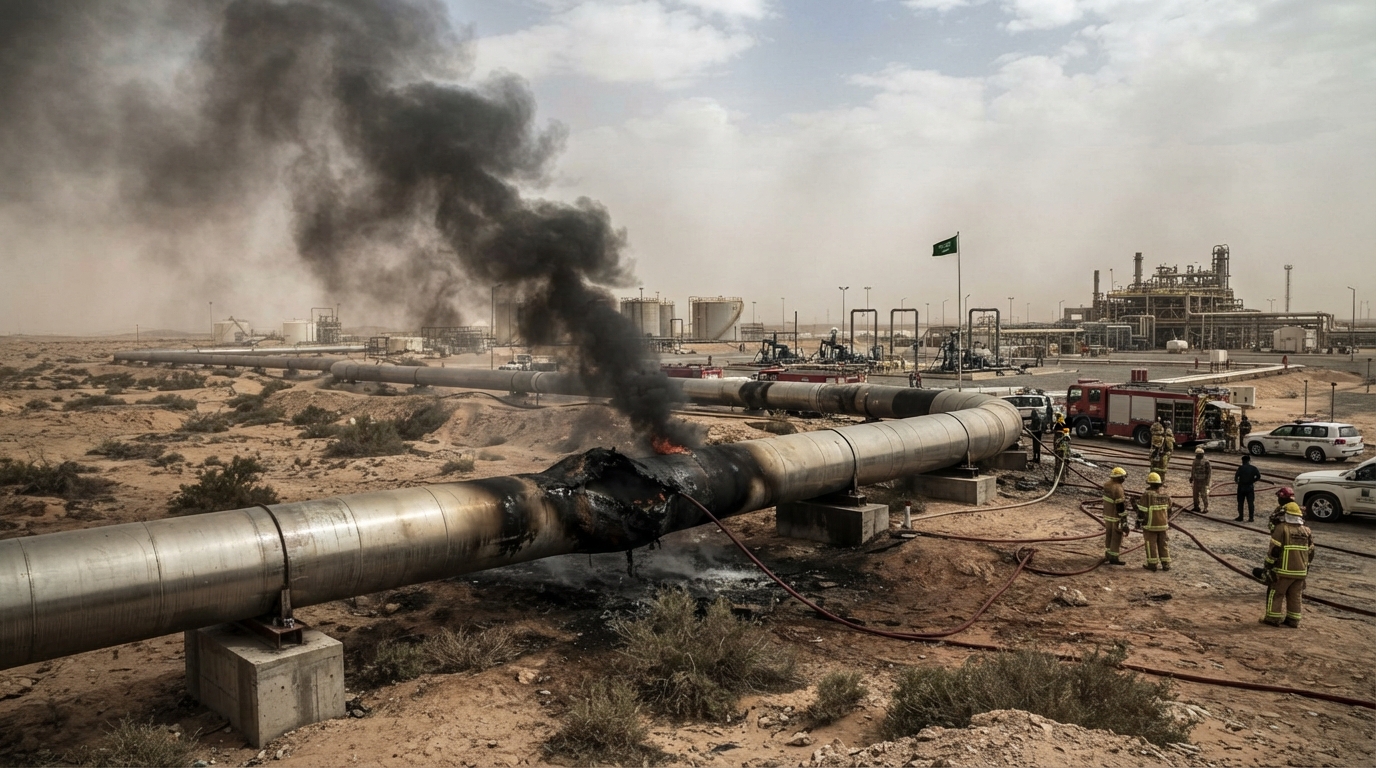
Saudi crude exports at risk: up to 4% of global supply could be disrupted — Reuters
The Saudi Arabian stock market fell sharply following an attack on the country's oil pipeline and new strikes in the Gulf. This situation has heightened concerns over the Middle East situation and global oil supplies.
On Sunday, Saudi Arabia's main TASI index decreased by 1.3%. This was the largest daily decline recorded since the beginning of April. The drop in the index was driven, among other things, by a 1.2% decline in Al Rajhi Bank shares and a 3.2% drop in Saudi Arabian Mining Company shares.
The stock market decline occurred after Saudi Arabia suspended the use of its East-West oil pipeline as a precautionary measure. On Thursday, airstrikes were carried out on facilities in the Riyadh and Medina regions, injuring several people.
Saudi and Iraqi officials stated that the attacks were launched from Iraqi territory. Armed groups backed by Iran operate in Iraqi territory. Consequently, the Iraqi government dismissed a high-ranking military commander on Saturday.
Riyadh did not launch an immediate military response following an appeal by the Iraqi Prime Minister. However, Saudi Arabia emphasized that it reserves the right to defend its sovereignty and critical infrastructure.
Meanwhile, US President Donald Trump directly blamed Iran for the attacks on Saturday.
The East-West pipeline is a key alternative route allowing Saudi Arabia to bypass the Strait of Hormuz and export oil via the Red Sea.
Traders and buyers say that if the pipeline is not restarted in the coming days, Saudi Arabia could face a serious shortfall in oil exports. This could put up to 4% of the global oil supply at risk.
Such a potential shortage could deal an additional blow to a global market that is already under pressure. The situation is further complicated at a time when surging energy prices are fueling global inflation and driving US Treasury yields to their highest levels since 2008.
Disruptions to shipping in the Gulf and the continued closure of the Strait of Hormuz are also worrying investors.
According to Milad Azar, an analyst at XTB MENA, caution in the markets will persist unless a quick agreement is reached during diplomatic talks between Iran and the Gulf states scheduled to be hosted by Oman on Monday.
Other markets in the Gulf also saw declines. Egypt's EGX30 index fell by 1.1%. Meanwhile, Qatar's QSI index bucked the general regional trend, rising by 0.3%, driven by an increase in Qatar National Bank shares.
At the same time, foreign ministers of the Gulf states plan to meet with the Iranian foreign minister on Monday, mediated by Oman. The meeting is expected to discuss reaching a temporary agreement on managing vessel traffic through the Strait of Hormuz.