

Russia's elections had few surprises - but how the Kremlin uses the results is far from clear
Vladimir Putin will likely use the result to claim most Russians back the so-called special military operation in Ukraine, writes the BBC's Steve Rosenberg.
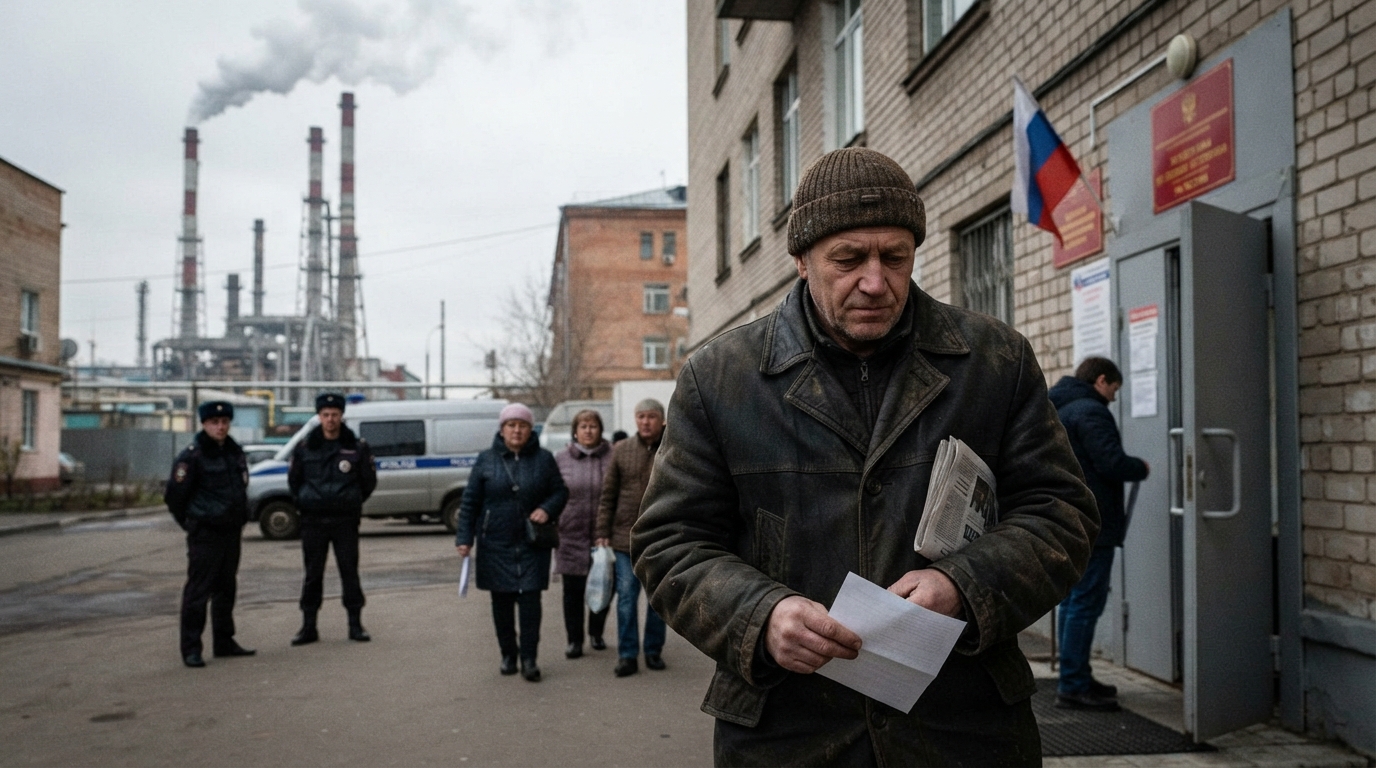
Russia’s election delivered few shocks, but how the Kremlin will exploit the outcome remains uncertain
Russian President Vladimir Putin recently dismissed the prospect of another mobilisation wave for the war in Ukraine.
So much in Russia is difficult to foresee.
This election result was not among them.
In a political system firmly managed by the Kremlin, the ruling party — United Russia — was broadly expected to keep its hold on parliament.
There was no upset. No surprises. No rival party came close.
Early results indicate that United Russia is set to keep its constitutional majority in the State Duma.
That comes after more than four and a half years of war in Ukraine, which have brought heavy battlefield losses for the Russian army, caused economic strain, and led to petrol shortages after Ukrainian drone strikes on Russian oil facilities.
It seems the parties that cleared the 5% threshold and entered the new Duma are the same ones that sat in the previous parliament.
And that Duma was entirely supportive of the Kremlin and the so-called special military operation.
One party that failed to enter parliament was Yabloko.
Yabloko had been the only anti-war party permitted to contest this election. But just 12 days after it was registered, the Supreme Court removed it from the ballot. That appeared to signal Kremlin concern that Yabloko’s pro-peace message was resonating too strongly with the public.
The party says it is not surprised that the new Duma appears likely to be as obedient as the last one.
“What other result can there be if there were 10 parties on the ballot and they all support the policies of [Russian President Vladimir] Putin?” Yabloko party chairman Nikolai Rybakov tells me.
“I don’t think the Duma will change. They’ll vote 100% for the policies of Putin just like they did.”
Although Yabloko was struck off the party list, about 100 of its candidates stayed in individual constituency races, even as the party continued to face heavy pressure.
“Some of our candidates, who should have been running, are in jail, many were barred from running and some of our election observers weren’t registered and were unable to keep an eye on the voting,” Nikolai says.
Before the final day of this three-day election, Ukraine carried out a major drone attack on the Moscow area.
The city’s oil refinery was hit.
At a polling station near the refinery, I spoke with voters about the attack.
There was little surprise here either.
More than four and a half years into Russia’s war on Ukraine, Muscovites had become accustomed to their city periodically turning into a front line. Rather than shock, there was quiet resignation.
“People in the Donbas, as well as in Bryansk, and Belgorod near the Ukrainian border, hear this kind of thing every day,” says a voter named Viktor, who has left the polling station.
“They just get on with their lives.”
If the election result was predictable, what comes next is much less so.
The Kremlin will probably use the outcome to argue that most Russians have united behind the president, and to defend future policies and later decisions on the war.
President Putin recently ruled out another mobilisation wave.
“There is no scenario today that would require it,” he said.
Not today. But what about tomorrow?
Despite official denials, there is still deep anxiety in Russian society about the possibility of a new mobilisation.
At the very least, the Kremlin is likely to present the election result as a “mandate from the people” to keep the war going.
War may be coming. Are we psychologically ready?