

Russia – Uzbekistan: A New Step in Museum Cooperation
On September 29-30, the project "Russian Language: Reading, Listening, Watching," aimed at preserving, strengthening, and raising the status of the Russian language, was implemented in Tashkent. On October 7-8, Bukhara will take over the baton. Within the framework of the project, the exhibition "Russian Literature in Lacquer Miniature" from the collection of the All-Russian Museum of Decorative Art, whose holdings preserve […], opened at the State Museum of Applied Arts and Crafts History of Uzbekistan.
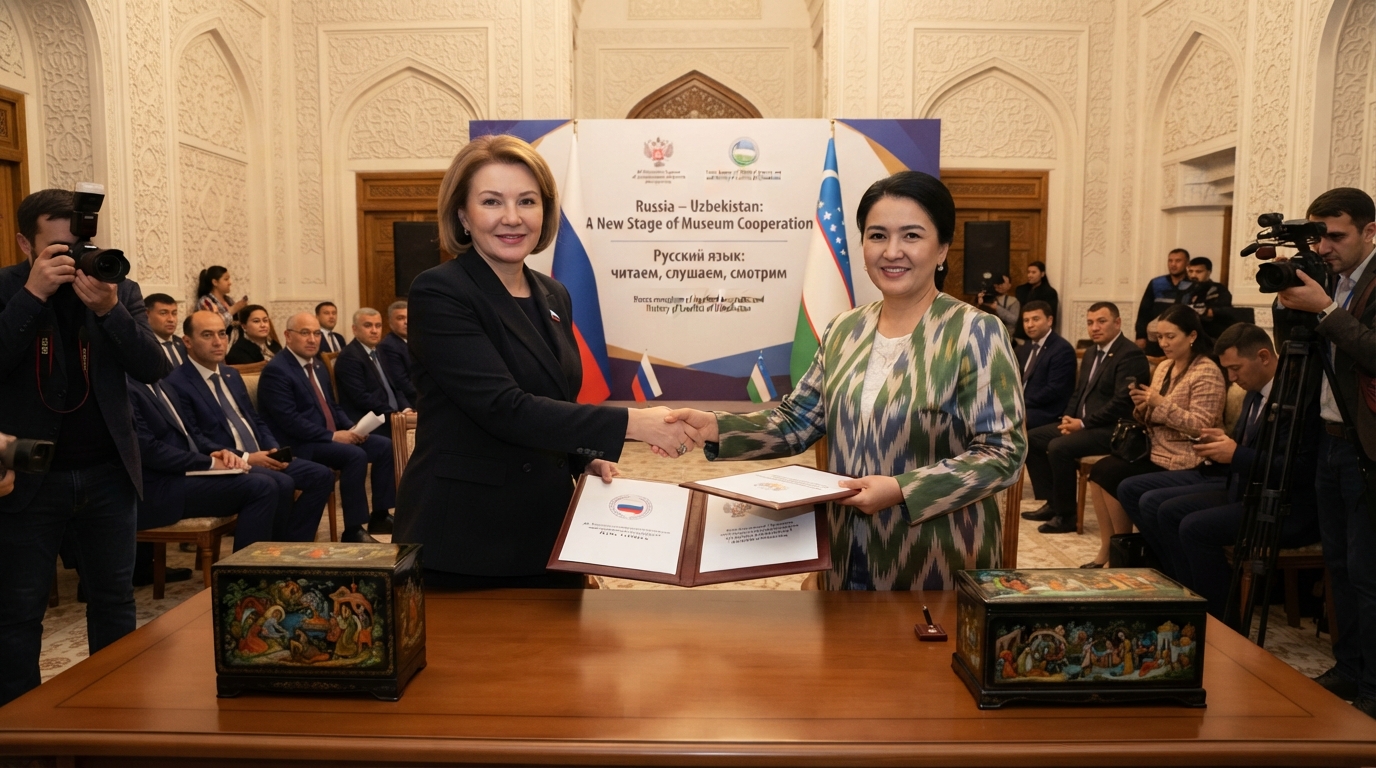
Russia – Uzbekistan: A New Stage of Museum Cooperation
On September 29-30, the project "Russian Language: Reading, Listening, Watching," aimed at preserving, strengthening, and raising the status of the Russian language, was implemented in Tashkent. On October 7-8, Bukhara will take over the relay.
As part of the project, the exhibition "Russian Literature in Lacquer Miniature" opened at the State Museum of Applied Arts and Craft History of Uzbekistan. The exhibition features items from the collection of the All-Russian Museum of Decorative Arts, whose holdings include a unique collection of Russian lacquer painting numbering more than six thousand objects. The museum's exposition brings together works from the key centers of Russian folk crafts: Fedoskino, Palekh, Mstyora, and Kholuy. Each school possesses its own unique style.
The Russian museum brought a small but highly interesting exhibition to Tashkent, combining a classical display with interactive solutions: multimedia visualization and audio accompaniment. QR codes are marked on panels depicting lacquer miniatures, allowing visitors to see the plots of the works in dynamics. This approach opens up new opportunities for attracting a younger audience and helps to immerse deeper into the origins of folk art.
During the opening of the exhibition, a solemn signing of the "Memorandum of Understanding and Cooperation" between the museums took place.
"Today, active work is being carried out in the Russian Federation to preserve national culture. Our museum pays special attention to this: we are aimed at expanding international activities and developing broad cooperation, and we are at the very beginning of this journey. I am sincerely glad that Uzbekistan – a country with the richest traditions of preserving and developing culture, including modern design based on national heritage – has become our first partner. This is the first national museum with which we have signed a memorandum of cooperation. This is a great honor for us, and we look forward to productive joint development," noted Tatyana Rybkina, Director of the All-Russian Museum of Decorative Arts.
The interaction will cover several key areas at once: exhibition activities: holding joint expositions and projects; scientific and educational work: participation in forums, symposiums, and friendly meetings; publishing projects: preparation and release of joint publications; educational programs and exchange of professional experience; holding joint events in the field of attribution and preservation of museum collections.
At the current stage, preliminary plans have been formed; the next step will be the signing of a more detailed agreement with a specific list of events and practical steps to implement the memorandum.
"This is an extremely important step both for Uzbekistan as a whole and for our museum. First of all, it contributes to the development and deepening of cultural dialogue between our countries. In addition, during meetings with colleagues, we discussed issues of improving the national database for the accounting, preservation, and restoration of museum objects and collections. I am convinced that this document opens up new promising opportunities for strengthening the already strong and reliable friendly ties," emphasized Ismat Yusupov, Director of the State Museum of Applied Arts and Craft History of Uzbekistan.
The caskets presented at the exhibition, crafted by hereditary masters of Mstyora, were donated to the State Museum of Applied Arts and Craft History of Uzbekistan. The narrative basis of the donated lacquer miniature samples consists of traditional Russian fairy tales, legends, bylinas, and epics, revealing the mastery of painting and the history of the craft.
This event became not only an entry point into studying the traditions of Russian lacquer miniature for visitors, but also an important step in strengthening the professional dialogue between the museum communities of the two countries.
The main partners of the project are the Embassy of the Russian Federation in the Republic of Uzbekistan, Rossotrudnichestvo, the Art and Culture Development Foundation under the Administration of the President of the Republic of Uzbekistan, and the "Sharq Ayoli" Public Fund.