

Romania suspends nuclear power plant operations
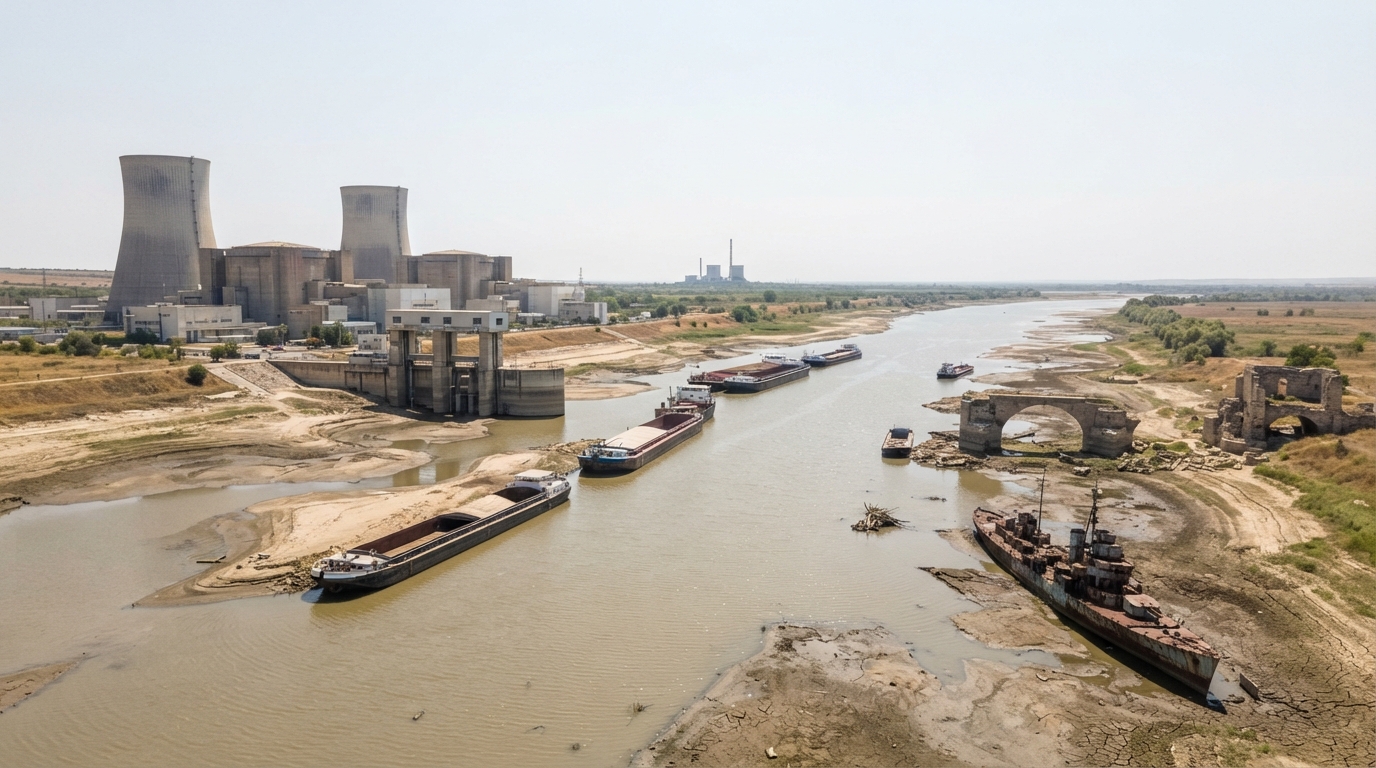
**Romania shuts down nuclear power plant: Consequences of record-breaking Danube water levels**
Romania has been forced to shut down the last remaining unit of its only nuclear power plant, Cernavoda, due to record-breaking water levels in the Danube River, The Guardian reports.
The two reactors at Cernavoda provide about 20 percent of Romania’s electricity. One was shut down in late July and the other on August 13 due to “significant and ongoing” drops in the Danube River. There are no plans to restart them for the next ten days.
**Energy crisis and emergency measures**
Amid the electricity shortage, Romania declared a state of emergency in the energy sector throughout August. Residents and companies were asked to reduce their electricity consumption during peak hours. To compensate for the lost capacity, the government has launched a 330 MW brown coal power plant. Additional energy is also planned to be generated from wind and hydroelectric power plants.
Earlier, authorities announced that the Dacia and Ford car factories would close until August 19 to reduce the load on the energy system.
**Problems for Moldova**
The shutdown of the Chernavoda NPP also poses serious problems for neighboring Moldova. Moldova imports electricity from Romania, which covers 60 percent of its deficit. Now Chisinau will have to increase imports from Ukraine or buy more expensive electricity from Western countries. Another possible option is planned power outages.
“I think we should be prepared for the worst, including power outages,” said Moldovan energy expert Sergio Tofilat. “Although it’s hard to say for sure right now.”
**The consequences of the drought**
The crisis was caused by a prolonged drought. According to the European Climate Service Copernicus, water flow in almost two-thirds of the Danube in July fell to its lowest level in 34 years of observation. The drop in water levels has also made it difficult to navigate the 2,850-kilometer-long river.
Earlier, Romania sank four ships to supply water to its nuclear power plant. As the water level in the Danube dropped, the remains of a nearly 1,700-year-old Roman bridge were visible. The remains of a German warship also surfaced.