

Rising energy costs add to cost of living for Northern Ireland's consumers
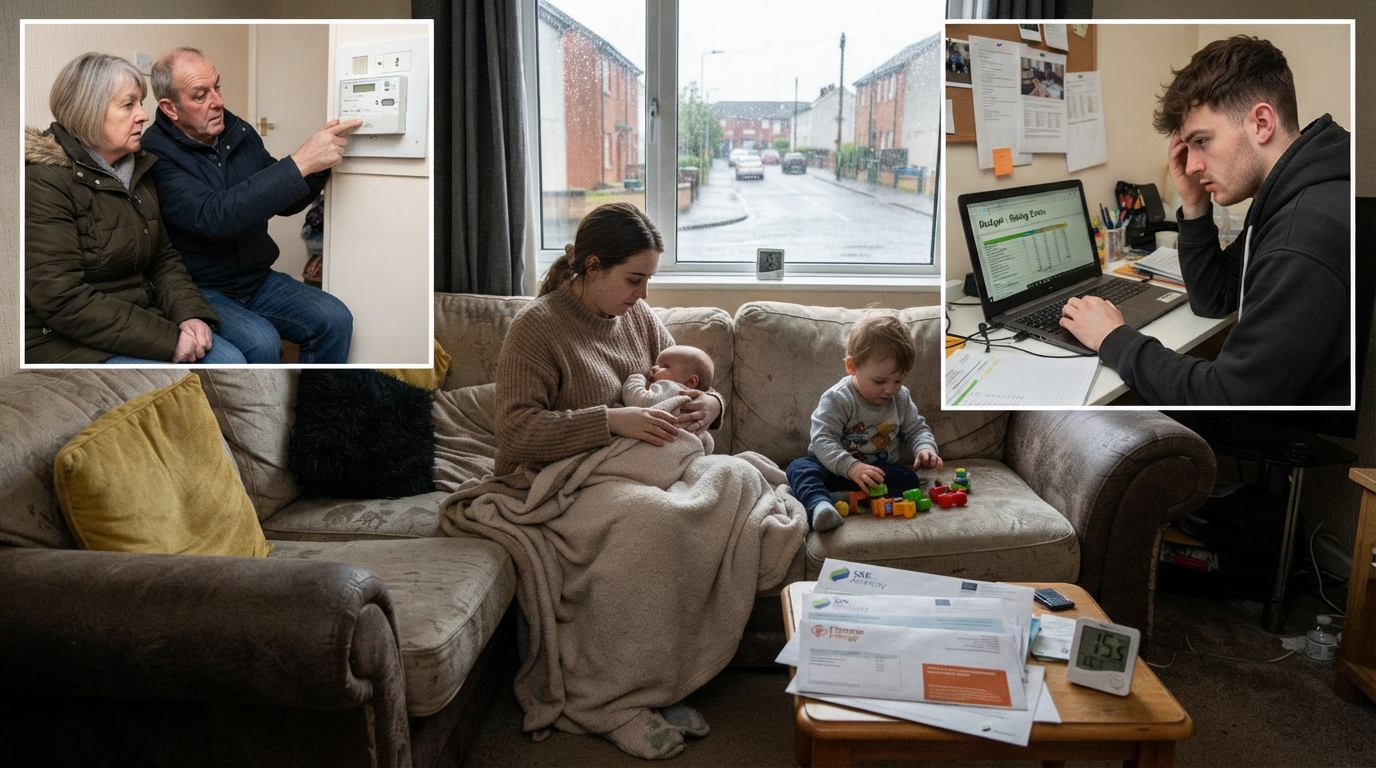
Households across Northern Ireland face increasing pressure on the cost of living as energy price hikes have come into effect.
Rising energy costs add to cost of living for Northern Ireland's consumers
Households across Northern Ireland are facing growing pressure on living costs as energy price increases take effect.
Northern Ireland's biggest natural gas supplier, SSE Airtricity, raised its prices by almost 19% on Thursday for its 200,000 domestic and small business customers.
That means the yearly gas bill for a typical household in the greater Belfast and west gas network areas will go up by almost £172.
The company said "unprecedented levels of volatility in global energy markets and higher wholesale gas prices" had caused the increase.
Wholesale gas prices in the UK have effectively doubled since the US and Israel began their attack on Iran.
Keeping the home warm is especially important for parents with young children and babies.
Lucy Kells is a mum of two in east Belfast and is on maternity leave.
She said she expects the winter months to be hard because "most people are going to have to have the heating on, especially if you've young kids in the house".
"There's no escaping it - everything feels more expensive and it is more expensive."
She added that, despite "budgeting proactively" and "being as careful as you can with savings and credit cards", rising bills mean people's financial situations are beyond their control.
"You have to cut somewhere else and I already feel we are doing that," she said.
Lucy is among the parents who go to a weekly baby class at Woodstock Library in east Belfast.
Branch manager Nuala Hyde said she has seen more people making use of the free activities there to help deal with the rising cost of living.
She said: "As well as families, we have lots of older people coming in now to keep warm."
"We have people coming in who will stay all day, use the computer, have a chat and stay until closing time sometimes, so it is quite evident that we are providing an essential service at the minute when people are struggling," she added.
Ryan McStay is a final year student at St Mary's University College Belfast, where he is studying to become a primary school teacher.
He said he and his flatmates were "shocked" when they got a letter saying their Firmus energy bills would rise by 12.5%.
"It shouldn't be normalised," he told BBC News NI.
Ryan said rises like this worsen an already severe cost of living crisis for students like him.
"The price of everything is rocketing. You're always second guessing and thinking about how much money have I got."
The 21-year-old, who is from Newry, said the cost of living in Northern Ireland means he intends to move abroad after university.
"I personally believe the best option for me right now would be to leave the country."
Naomi Campbell is an urgent hospice care nurse for Marie Curie. She delivers palliative nursing care to patients in their homes.
"Many of them are affected by fuel poverty," Naomi said.
"I think it is getting worse. People are struggling more, and the problem is that your energy needs increase hugely when you're dying at home.
"Somebody is already struggling with the fact that they're dying. To then know that they can't keep their house warm."
Naomi explained that several factors add to the higher energy needs, including the need to stay warm, different sleeping patterns, and essential medical devices.
She said some patients have refused services that could improve their quality of life because they cannot afford their electricity bills.
Naomi said terminal illness brings extra costs for patients, including transport to and from hospital appointments.
"There is a huge problem, and you see that struggle often.
"I'm really saddened. The support is limited, there is very little out there. There is no reduction in costs of their electricity, even though their needs are so much higher and essential for their care."
Naomi added that Marie Curie has called for the introduction of a "social tariff" for people with terminal illnesses, to reduce their financial burden.
"It would make such a huge difference to have that bit of extra money in your last months of life, so you're comfortable and you can spend it with your family," she said.
She said some people spend the end of their life working because they "don't have any other access to money".
"You end up dying not being able to keep your house warm. That to me is just devastating."
It comes as Share Energy announced electricity prices will also rise by 12.6% from today.
This will add an extra £129 a year to the typical household bill of its 41,000 customers.
Head of Energy Policy at the Consumer Council Raymond Gormley said: "This increase has been driven by the continued volatility in wholesale energy costs, caused by geopolitics in the Middle East.
"I suspect some of the other unregulated suppliers may follow suit and increase their tariffs."
Gas prices outside greater Belfast also rose on Thursday.
Firmus energy has announced an 8.98% increase for 77,000 domestic and small business customers in the Ten Towns network area from 1 October.
That means a typical annual gas bill will rise by around £87.
It follows an increase of 15.65% in July 2026.
Households across Northern Ireland will receive the one-off £63 cut in electricity bills from this month.
It will be applied automatically without the need to apply.
The reduction is the local result of two schemes that apply in Great Britain, which has a separately regulated electricity market.
The schemes are being funded by the UK government.
Bank payment customers will have their bills automatically reduced, while pay-as-you-go customers will get £63 in credit when they top up their meter.
The only issue for pay-as-you-go customers is that they should not buy more than £112 of credit if they want to receive the discount all at once.
That is because meters are set up to accept a maximum payment of £175. Top ups above this amount mean the £63 payment will be split across a later top up.
Last month, applications opened for a separate means-tested scheme to provide a £100 voucher to some heating oil users.
It is jointly funded by Stormont and the UK government.
Two thirds of homes in Northern Ireland use home heating oil, the cost of which has also risen sharply in recent months because of the US conflict with Iran.
Data from the NI consumer council suggests 500 litres of home heating oil currently costs around £560, more than twice the price compared with this time last year.