

Restaurant's curry appeal for Nepal floods
A Nepalese restaurant owner is asking people to help support those affected by the floods.
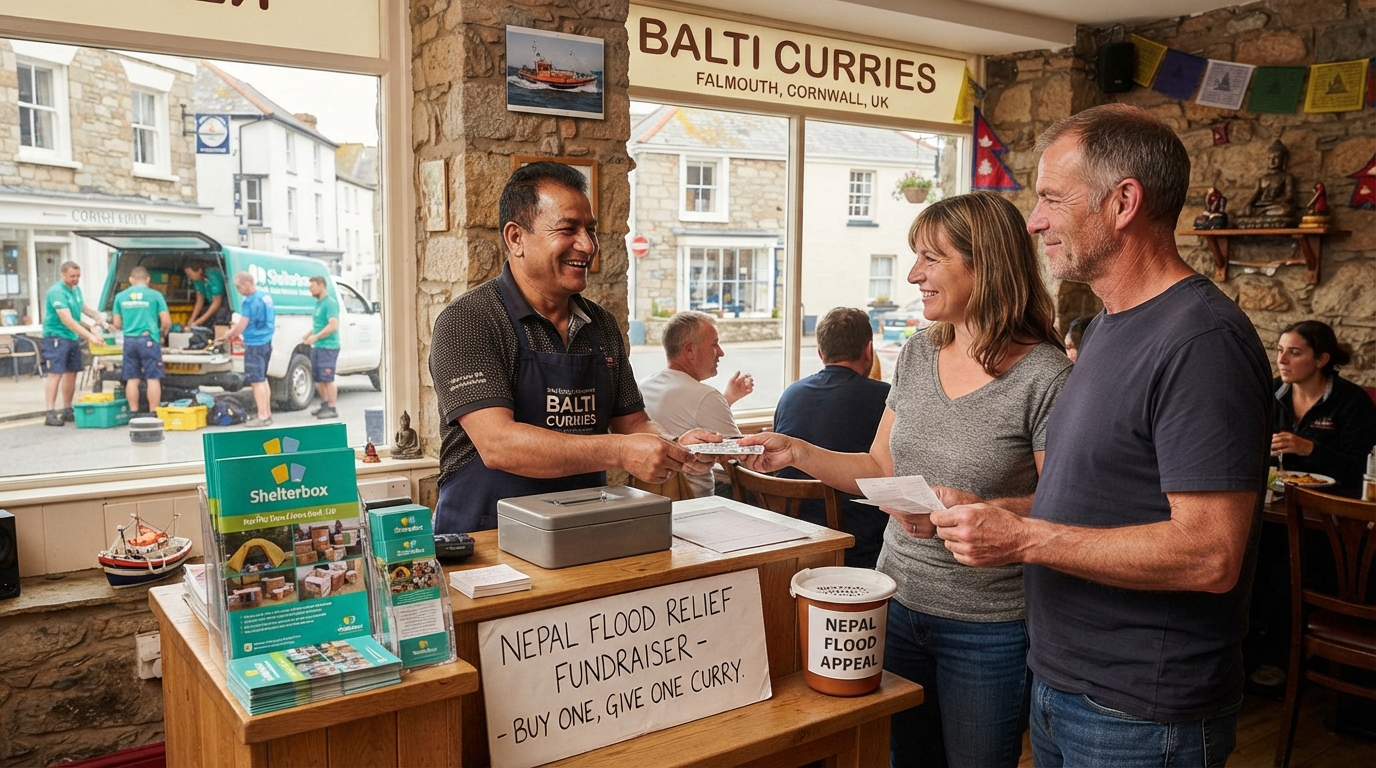
## Cornwall Restaurant Rallies Support for Nepal Flood Victims
A Nepalese restaurateur in Cornwall is spearheading a unique fundraising initiative to aid those impacted by devastating flash floods in his native country. Sharma Hem, owner of Balti Curries in Falmouth, is encouraging customers to purchase two curries while only ordering one, with the additional payment going towards relief efforts.
The catastrophic flooding, which struck near the Nepal-Tibet border on Wednesday, has resulted in over 1,500 people reported missing. As of Friday, the death toll had climbed to 547.
Hem, who attended college in Gajuri, a region affected by the floods, shared that he knows individuals who have lost family members in the disaster. He has transformed his restaurant kitchen into a fundraising hub and expressed gratitude for the immediate support from the Cornish community.
"It is a very sad time for Nepal," Hem stated, "but in Cornwall – how they're supporting at the moment is amazing."
Hem, who has operated his restaurant since 1998, conveyed his "immense pride" in living in Cornwall. In addition to the "buy one, give one" curry initiative, he plans to host charity lunches to further boost fundraising.
"I'm proud to be doing this charity thing, and it brings me more happiness in my life," he remarked. "The Cornwall people always help in any charity I'm doing."
Meanwhile, Hatty Carder, a member of the disaster relief charity Shelterbox, is part of a team deploying to Nepal on Sunday to provide assistance. Carder indicated that Shelterbox anticipates supplying crucial emergency shelters, solar lights, and blankets.
"We are sending a Shelterbox team to meet with partners and to understand where affected people are living and how we, a charity based in Cornwall, can support best," Carder explained.
She noted the challenges in accessing many remote villages in the mountainous regions due to ongoing rescue operations. "Once our team have travelled there, we'll get a better understanding of where that need might be," Carder added.