

'Rascal' landlord ran WW2 black market inside pub
Harry St Clair Dean was eventually imprisoned in Nazi Germany for his actions.
The Plough Inn, believed to be Guernsey's oldest pub, dating back to 1810, holds a profound significance for former landlord Chris Dean, whose family has operated the establishment for generations, extending back to the Nazi occupation of the island during World War Two. Although the historic pub has been closed for a year and may be converted into residential units, Dean cherishes numerous memories tied to his family's connection to The Plough.
Among these, the most captivating is the account of his grandfather, Harry St Clair Dean, who operated a black market within the pub under Nazi rule, was subsequently imprisoned by the Germans, and was ultimately discovered deceased inside the building a decade after the war concluded.
"Although my grandfather died before I was born, my mum told me a lot about his life," Chris Dean recounted. "From what I can gather, I think he was a bit of a raconteur and a bit of a rascal."
Harry St Clair Dean was deported from Guernsey in April 1944. Dr. Gilly Carr, a historian who documented Harry St Clair Dean's life in the Frank Falla Archive, noted his interesting, albeit somewhat unorganized, life. She stated, "Harry St Clair Dean was born on 29 December 1898 or 1889 – he wrote different dates on different registration documents." She added, "According to his occupation registration card, he served in the army during the First World War, retiring in 1919."
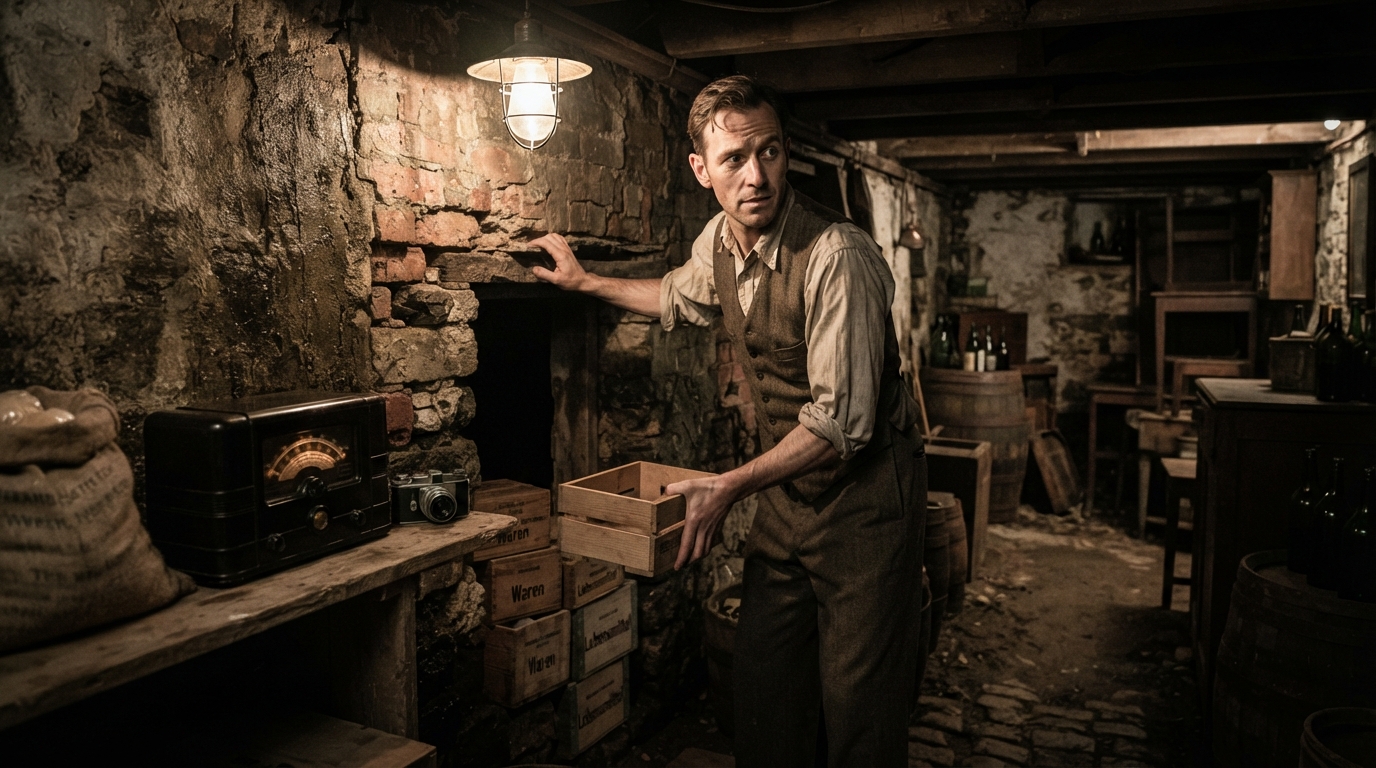
Chris Dean explained that his grandfather found ways to resist the Nazis during World War Two. "My grandfather had a black market going in the pub where he was dealing with stolen goods," he said. A now-sealed secret passage to The Plough Inn was utilized by Harry St Clair Dean to smuggle these items. Chris Dean also mentioned that his grandfather possessed a wireless set, which was prohibited by the occupying German forces, to receive news updates from the UK, as well as a camera, another banned item.
Wireless radio sets were banned in Guernsey during the Nazi occupation. Carr stated that Harry St Clair Dean frequently ran afoul of the German authorities. "A number of documents survive in Guernsey Archives showing his presence in court," Carr noted. She further revealed that on February 25, 1944, a letter from the German authorities in Guernsey to the island's Bailiff indicated that "an amount of 12,000 RM (notes and coins) was seized from him last year."
Chris Dean added that his grandfather was brought to court and, upon refusing to pay a fine, was imprisoned. Harry St Clair Dean was transferred to France and eventually ended up in Hamelin Prison in Germany, where "he spent the rest of the war." Chris Dean described his grandfather as being "more or less starved" and severely beaten. "He was like 15 stone when he left Guernsey and when he returned he was only seven-and-a-half stone," he said. Chris Dean characterized his grandfather as "a bit of a rascal."
Carr corroborated that Harry St Clair Dean "was given meagre rations." She stated, "He testified to a reporter that, as an Englishman, he was brutally treated, punched, kicked and beaten by German guards."
Towards the end of World War Two, American troops liberated the prison and found Harry St Clair Dean in a "poorly" state, according to his grandson. Chris Dean added, "They built him back up and then they put him in charge of the camp and the prisoners that were there, up until the time that they got him back to the UK and then back to Guernsey." Carr confirmed that Harry St Clair Dean was appointed controller, police chief, and general secretary of the remaining prisoners. "He was able to organise the supply of food and clothes for his prisoner comrades," she said.
Upon his return to Guernsey in 1945, Harry St Clair Dean told a reporter that it was difficult for Guernsey residents to comprehend the extent of Nazi unpleasantness. A quote attributed to him stated: "You have to go through it to know the extent and thoroughness of their brutality."
Chris Dean said his grandfather resumed running The Plough Inn and remained there until his death in 1955. "The details surrounding his death are a little bit strange," he added. "He had a barman working for him in here in the Plough who had gone off for his lunch. When he came back he found my grandfather dead at the bottom of the stairs."
Chris Dean emphasized the extensive shared history between his family and The Plough Inn. Following Harry St Clair Dean's death, Chris Dean's father, uncle, and cousin each managed the pub before he took over in 1989, staying until the late 1990s. "We're all very proud of the history of the pub and the fact that we've been a part of it for so long," he concluded.