

Pubs in England and Wales to allow digital ID apps to prove age
New rules introduced on Tuesday mean establishments will be able to accept digital ID apps alongside physical documents.
Pubs in England and Wales to allow digital ID apps to prove age
Alcohol buyers will be able to use a digital ID app on their phones to prove their age under new rules introduced on Tuesday.
Pubs and shops in England and Wales can use the technology alongside existing physical forms of ID, with the government saying a digital option will make age checks faster and more secure for customers and staff.
Customers will be able to choose ID apps from a range of suppliers such as the Post Office, Yoti or Luciditi, as long as they are on a government-approved list.
The change means businesses will no longer be required to accept physical ID, although the government says most establishments would.
The plan will be technology-agnostic, meaning the government is not specifying in detail how each app must operate.
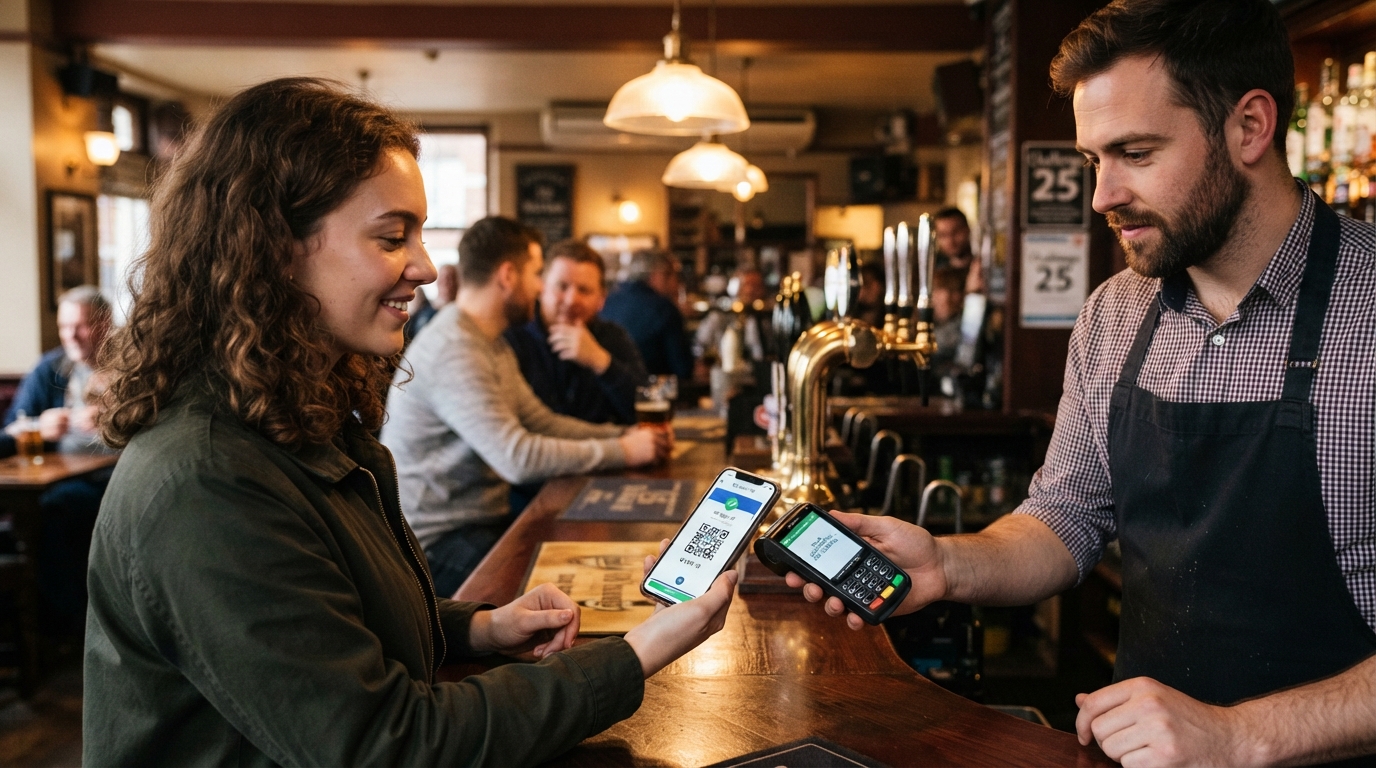
It says that under the voluntary digital ID scheme, drinkers would share fewer personal details with a venue or shop — for example, by tapping their phone on a reader or showing a scannable QR code rather than handing over an official document.
The apps will also need to prevent customers from borrowing devices from older friends and relatives, and make sure the ID app belongs to the person using it.
Yoti's digital ID app, for instance, will only allow a user to log in if a scan of their face matches the person who signed up for the app.
The app then creates a QR code that can be scanned by a business using a free checker app, which tells them the person's age.
This is time-limited to make duping or sharing the QR code harder.
Digital government minister Stephanie Peacock said having the option for digital ID would "mean you do not need to carry a physical ID, nor hand over sensitive personal information" meaning people could "feel safer on a night out'".
Allen Simpson, chief executive of trade body UKHospitality, said the new rules were a "positive step".
He added that the industry would work with government to ensure the scheme's roll-out would not be "burdensome" for the hospitality sector.
This would include making sure there were multiple options for suppliers and that it was cost-efficient, Simpson said.
The government wants digital ID apps under its scheme to work together so customers do not need to use different apps in different venues.
It also wants the services to work offline and be accessible even without mobile data or a Wi-Fi connection.
In future, the digital proof of age scheme could be extended to cover tobacco and vapes.
But digital rights campaigners have said such measures could lead to the exclusion of some groups.
Jasleen Chaggar of Big Brother Watch said that while having multiple ways to prove your identity was helpful, the Government should ensure that digital ID did not become effectively mandatory "as it would shut out millions of people".
"Many people have legitimate reasons for relying on physical ID, whether out of choice, privacy and security concerns, or because they lack the digital skills or means to use digital ID," she said.
"The Government should expressly prohibit businesses from requiring digital IDs for age checks without offering reasonable alternatives," she added.
The new rules come after a wider digital ID programme promoted by former Prime Minister Sir Keir Starmer proved controversial, and was later abandoned by Andy Burnham.