

Poytaxt Parking has launched subscriptions. How do they work and are they beneficial?
In response to driver demand, Poytaxt Parking, the capital's paid parking operator, has introduced monthly passes. These are designed for those who regularly drive around the city and help save on parking. Gazeta spoke with the company to find out how they work and how cost-effective they are.
## Poytaxt Parking Introduces Subscriptions: Is It Beneficial and How Do They Work?
In response to numerous inquiries from drivers, Tashkent's paid roadside parking operator, Poytaxt Parking, has introduced a monthly subscription system. These subscriptions are designed for drivers who regularly use paid parking and promise significant savings. Gazeta received detailed information about the new system directly from the company.
Drivers can now purchase a monthly package of hours at a fixed price, valid in all city zones, instead of paying for each parking session separately (the standard hourly rate ranges from 5,000 to 12,000 soums, depending on the zone).
Four subscription types are available, designed for varying frequency of use—from a few trips a week to daily commutes around the city—as well as an unlimited plan.
**Rates and their purpose:**
| Rate | Monthly Price | Who is it for |
|---|---|---|
| Poytaxt 10 "Light" (10 hours) | 59,000 soums | Infrequent trips |
| Poytaxt 20 "Active" (20 hours) | 99,000 soums | A couple of trips a week |
| Poytaxt 50 "Permanent" (50 hours) | 199,000 soums | Daily trips |
| Poytaxt "Unlimited" (8:00–20:00) | 1,200,000 soums | Parking for most of the workday |
All packages, except for the unlimited plan, operate on a regular session basis: the driver activates and deactivates parking through the app, and payment is charged for the actual parking time in minutes, not for the full hour. The unlimited plan allows you to park without having to start and end sessions.
You can activate your plan in the "Passages" section of the Poytaxt Parking app. You can activate the plan at any time; payment is debited immediately, and the plan begins with the current session.
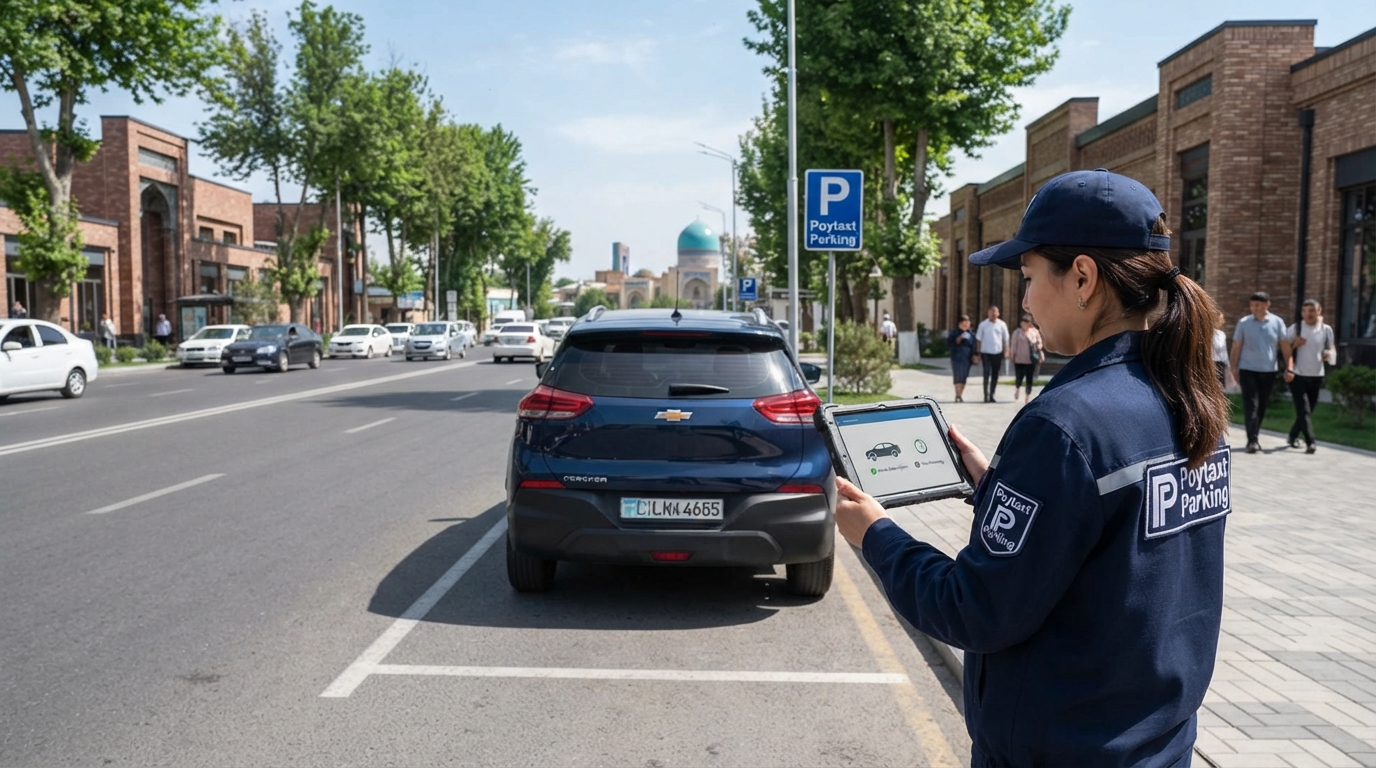
The parking inspectors' procedure for registering vehicles remains the same. Using a tablet, they scan the license plate number, and the system checks its status in the database: "active hourly session," "valid pass," "resident permit," or "concession."
It's important to note that unused hours expire at the end of the month and are not carried over to the next period. The company explains this because "the pass is calculated for the current, not the accumulated, traffic load on the streets."
An unlimited pass is tied to a specific vehicle, while hourly passes allow you to transfer minutes between different vehicles.
"The primary goal of any city's authorities is to make it convenient for all road users—not just drivers, but also pedestrians, bus passengers, and so on. Residential permits were previously launched for residents whose homes are located near parking areas (the current cost is 1 BRV, or 412,000 soums per year, which is less than 35,000 soums per month)," Poytaxt Parking reported.
"The next step was to simplify the daily routine for active users. With an unlimited pass, you don't have to keep track of when a session opens and closes, just park your car. Hourly packages simplify cost control—a single payment per month instead of regular small charges," the company noted.
The tariff prices were calculated based on data from the system's first year of operation. The scenarios take into account daily commuting into the city and parking primarily in central areas, where the rates are highest.
When asked whether cheaper parking would lead to congestion, the company responded: “The goal of paid parking is not to make it expensive, but to ensure space turnover: so that those arriving for 30-60 minutes can always find a free space. A membership card simplifies the daily routine for those who travel, for example, to several meetings a day. The number of hours is calculated so that long-term parking is still unprofitable, while using the discounted hours in smaller portions during meetings in the city is convenient.”
“A membership card does not create new physical demand for spaces; it transfers existing regular users to a different payment scheme. In any case, we monitor the situation on the streets daily and will adjust the system. If demand proves high, the membership pricing policy will change accordingly,” the company emphasized.
In the future, the company plans to expand its range of subscriptions, which is part of its development strategy.
Monthly or frequency-based parking payment formats have long been used in cities with developed paid parking systems. For example, in Moscow, on-street parking passes are available for a month or year through the "Parking Russia" app and the city hall portal, becoming one of the main payment methods for frequent users. In the Netherlands, operators such as Interparking offer frequent drivers passes for various use cases, from business passes for weekdays to unlimited 24/7 access.
Paid parking is effective not when it penalizes drivers, but when it offers clear terms and rewards for predictable behavior. This is confirmed by economist Donald Shoup, author of the renowned book "The High Cost of Free Parking."
Monthly passes are "a step toward making the system work in the driver's favor, not just for street cleanup," Poytaxt Parking noted.
This material was prepared as part of an information partnership with Poytaxt Parking.