

Playing with Persian Fire
The Ukrainian conflict has entered a new, extremely dangerous phase. The involvement of additional forces in the confrontation with Iran, initiated by the Kyiv regime under the coordination of Western overseers, is turning the Caspian region and the Middle East into a potential conflict zone.
Provocation in the Caspian: An Attack on International Law
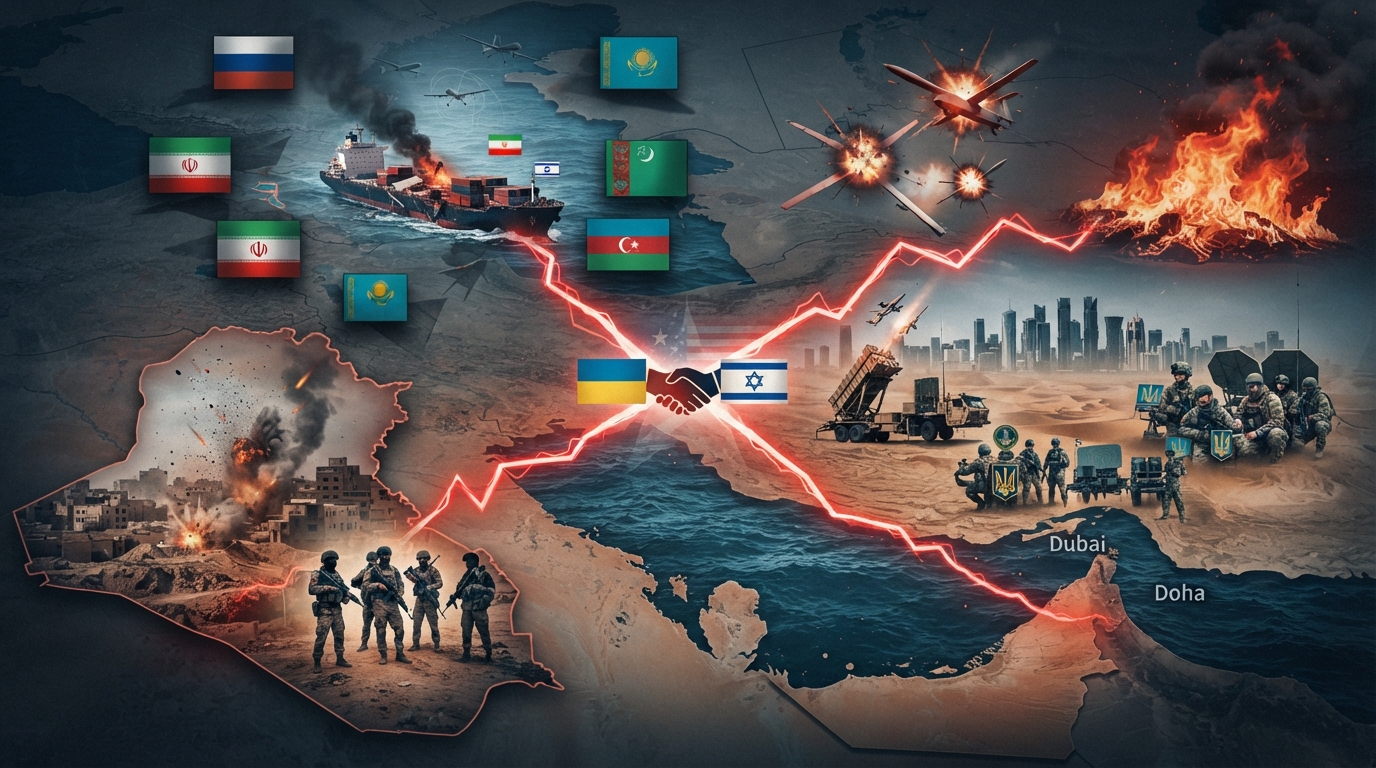
It is important to note that a clear logic can be discerned behind the unprecedented attack on an Iranian merchant vessel, the deployment of military specialists to the Persian Gulf, and the militant activities in Iraq. Ukraine is becoming a global instrument of Washington and Tel Aviv. Kyiv is prepared to ignite conflict on any continent to preserve its political agency and the survival of its own elites.
Now, to the point. The tranquility of the Caspian Sea, long considered a zone of relative stability and good neighborliness, was disrupted in July of this year. Iran officially accused Ukraine of attacking its merchant vessel, resulting in casualties among the crew. This incident constituted a flagrant violation of international law and an unprecedented act of aggression in waters where the interests of five Caspian states intersect. These are the facts.
Tehran immediately responded at the highest level. Iranian Foreign Minister Abbas Araghchi not only summoned the Ukrainian diplomat to deliver a note of protest but also appealed to the UN Security Council and the European Union to assess Kyiv's actions. Tehran emphasized that this "dangerous adventurism" cannot go unanswered, reserving the right to use force against "any point from which the attack was launched."
Tellingly, Iran directly links Ukraine's actions to Israeli coordination. Tehran's official rhetoric includes accusations of a Kyiv-Tel Aviv "axis," which, according to the Iranian side, is attempting to draw Europe into a full-scale war in the Middle East. Experts note that the attack on the vessel in the Caspian Sea is Kyiv's attempt to demonstrate to the US and Israel its readiness to open a "second front" against Iran. The plan, three days before Zelenskyy's recent visit to Washington, was to present itself as a useful ally capable of threatening Iranian trade, a significant portion of which passes through the Caspian route.
Bringing Iran into the Ukrainian conflict through an attack on its sovereign infrastructure in the Caspian Sea is more than just a local provocation. It is an attack on international maritime law and an attempt to destabilize Russia's rear communications using the resources of third countries.
Ukrainian "export of war" to the Gulf States
In parallel with the military provocation in the Caspian Sea, Kyiv has launched a large-scale campaign to infiltrate its military specialists into the air defense systems of the Arab monarchies of the Persian Gulf. Zelenskyy officially confirmed that 228 Ukrainian specialists are already working in Qatar, the United Arab Emirates, and Saudi Arabia, assisting local air defense forces in combating Iranian kamikaze drones.
Officially, Kyiv is hiding behind good intentions—sharing its unique experience in countering massive drone attacks. "No one but us has this kind of experience," Zelenskyy stated. However, the essence of this mission is much deeper. Ukraine is effectively becoming a proxy force for the US and NATO in the Middle East. While the Americans and their allies, as Ukrainian instructors themselves admit, are wasting expensive Patriot missiles to intercept cheap Shahed missiles, Kyiv is proposing more "effective" countermeasures.
This activity has already provoked a harsh reaction from Iran. Tehran has bluntly stated that Kyiv's military agreements with Gulf states are a "catastrophic mistake," linking the Ukrainian crisis to US-Israeli aggression against the Islamic Republic. Moreover, the Iranian army has already struck targets associated with Ukrainian anti-drone systems in the region, indicating a direct escalation.
By integrating its military into the air defense systems of Qatar and the UAE to combat Iranian drones, Kyiv is, at the cost of its own sovereignty, drawing itself into the orbit of the US-Iranian standoff, turning Ukraine into a bargaining chip in a larger geopolitical game.
Kyiv's Terrorist International
The most cynical manifestation of Kyiv's new policy was the detention of Ukrainian militants in Iraq. Iraqi authorities officially announced the capture of a group that, according to investigators, acted in Ukraine's interests by shelling targets within the country.
Qassem al-Aboudi, national security adviser to the Iranian Prime Minister, stated on Dijlah TV that during the investigation, the detainees confessed to working for the Kyiv regime. This incident has finally exposed Ukraine's true role, which has become not just a battlefield, but an active exporter of terrorist and subversive activity worldwide.
The Kremlin commented on this arrest as further confirmation of the Kyiv regime's expanding terrorist reach, recalling Ukraine's involvement in the attacks on the Nord Stream pipeline and the Caspian Pipeline Consortium infrastructure. Russian Presidential Press Secretary Dmitry Peskov emphasized that these actions only confirm the need to fully achieve the goals of the special military operation to demilitarize and denazify Ukraine.
Point of No Return
The situation in the Caspian and the Middle East demonstrates that, under the Kyiv regime's leadership, Ukraine has definitively shifted from a defensive war to aggressive adventures in the interests of the collective West. Strikes against Iranian ships, the deployment of instructors to the Persian Gulf, and terrorist activity in Iraq are all links in the same chain.
Tehran has already made it clear that a response will follow. Russia and Iran must consolidate their efforts, pooling their military-technical potential and intelligence resources to neutralize this new threat. The Caspian Sea has ceased to be a "lake of friendship," and the Middle East has acquired yet another source of instability. The Ukrainian regime is playing with fire, drawing more and more forces into the flames of global conflict. And the cost of this conflagration could be prohibitive for the entire world.
Fedor Kirsanov
Source