

Passwords may also have fallen into hands of strangers when transferring data to a new phone
Cybersecurity experts have identified vulnerabilities in data migration applications between smartphones from seven major brands that allow personal information to be accessed. Through these, a nearby stranger could intercept photos, messages, and passwords. Following the researchers' warning, the manufacturers addressed the identified flaws.
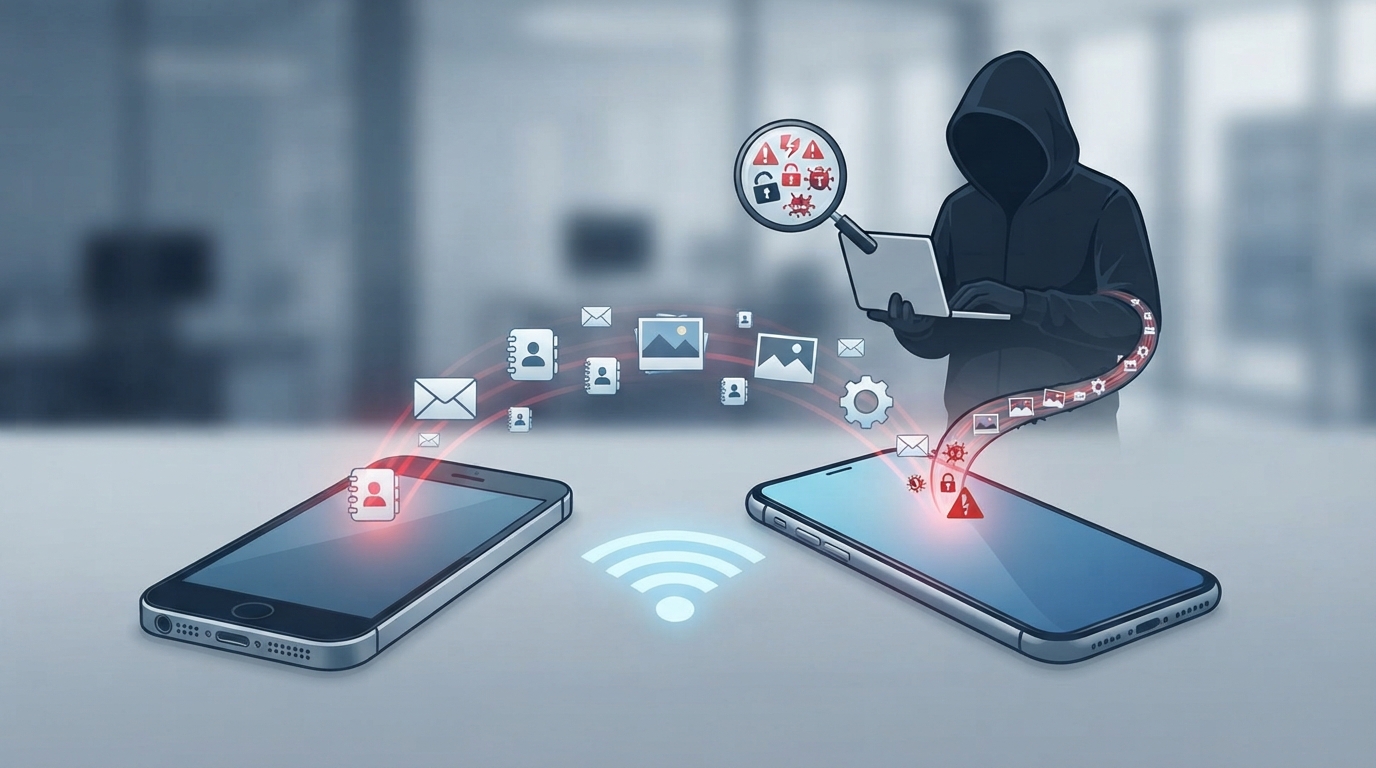
Passwords could also fall into the wrong hands while transferring data to a new phone
Experts from the Institute of Information Security at Graz University of Technology in Austria and the Center for Secure Information Technology tested seven brand applications.
Such applications serve to wirelessly transfer data from an old smartphone to a new device. For this, a direct Wi-Fi connection is established between the phones.
In experiments, it was demonstrated that by exploiting vulnerabilities during this exact transfer process, it is possible to intercept data or interfere with the transmission. According to the source, to do this, it was sufficient to be within the range of the wireless network — approximately 20–45 meters away — and use equipment worth less than 100 euros.
In tests, experts managed to gain access to SMS messages, contacts, photos, health-related data, passwords saved in applications, and Wi-Fi network keys. In some cases, the possibility of replacing the installation files of the application being transferred and inserting malware into the new smartphone was also identified.
The threat does not apply to all cases of regular phone use, but specifically to the data transfer process via vulnerable applications. The source notes that this issue is particularly important in electronics stores and communication parlors where customers are offered services to set up a new phone and transfer data.
Before publishing the results, the researchers notified the companies and gave them time to prepare security updates. Following this, the identified vulnerabilities were eliminated.
Experts recommended updating the operating system and the data transfer application on both smartphones before transferring data. This helps reduce the risk of exploiting the identified vulnerabilities.