

Parties demand change
A new political culture has changed the nature of election campaigns in Kazakhstan.
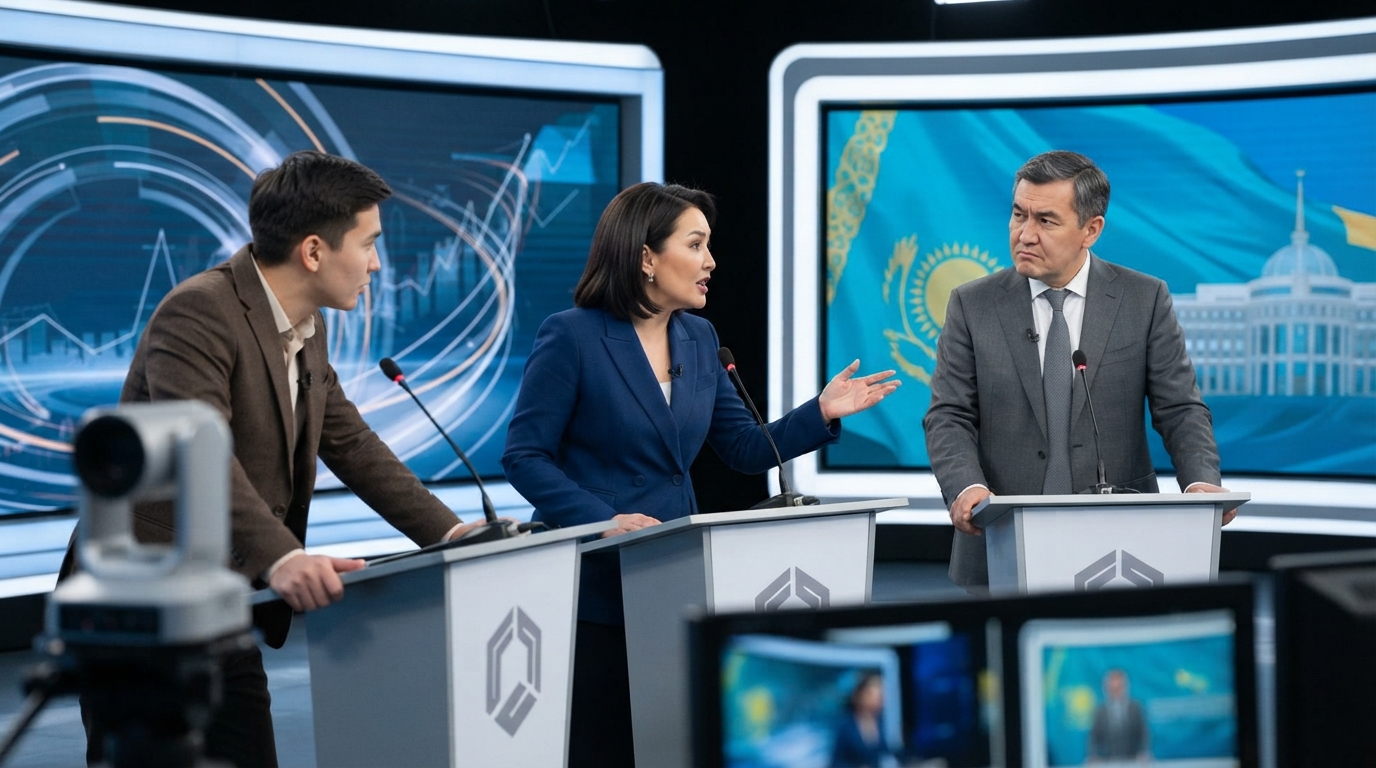
During the Kurultai election campaign, Kazakhstan's parties are demonstrating a departure from traditional campaigning methods, emphasizing open political competition and public debate on pressing issues of the state agenda. This was announced by Yeldos Zhumagulov, head of the Regional State Institution "Kogamdyk Kelisim," at the expert platform "SAILAU-2026: Media and Digital Platforms."
**A New Level of Discussion**
According to Zhumagulov, even at the start of the campaign, issues of representing business interests, tax policy, rural development, and the environmental agenda have become the focus. This demonstrates a higher level of substantive political competition compared to previous campaigns. "We are seeing how parties have begun to discuss each other's programs, ask challenging questions, and engage in debate, which was previously less common," he emphasized.
Political scientist Naila Mukhtarova agrees with this assessment, noting that voters are becoming more mature, placing less trust in populist slogans, and seeking concrete mechanisms for implementing promises. "Today, parties are forced to compete not just with big names, but with real proposals. This is changing the very philosophy of the campaign," she stated.
Political scientist Talgat Kaliyev noted a shift in emphasis toward assessing the effectiveness of parliamentary activity and the role of business in the political system, which, in his opinion, increases parties' accountability to the electorate and encourages them to improve their programmatic documents.
Yeldos Zhumagulov also noted that rivalry is developing on several levels, including inter-party debate and internal party processes, such as discussions on candidate nominations and position coordination. "The intra-party struggle for the right to represent the interests of a particular social group is becoming no less important than external criticism of opponents," the expert explained.
This, he said, adds dynamism and multidimensionality to the campaign, as voters see not only ready-made slogans but also lively discussions within political forces. "Under these circumstances, televised debates are particularly important. They will demonstrate whether parties can move from mutual criticism to a substantive discussion about their programs and offer voters a compelling alternative. The quality of this discussion will largely determine how the entire election campaign is perceived," Zhumagulov added.
The televised debates in this cycle are held in several stages, including rounds of face-to-face question-and-answer sessions, allowing viewers to evaluate not only their programs but also the candidates' personal qualities. According to online midterm voting during the first debate on human capital development, the Adilet party received 66.1% of the vote, Ak Zhol 22.1%, and the People's Party 11.8%. These preliminary figures demonstrate the audience's high interest in this live communication format.
**Focusing on Digital**
The expert platform also discussed the transformation of political communication in the digital age. Deputy Minister for Artificial Intelligence Bakhtiyar Mukhametkaliyev emphasized the need to label content generated by neural networks and protect personal data. Parties are actively using social media not only for campaigning but also as platforms for feedback, where mini-debates unfold in comments, Telegram channels, and live broadcasts, complementing official television appearances. This makes the campaign more vibrant and brings politicians closer to the real needs of the people, especially young people.
Comparing the current campaign with previous ones, experts highlight two key differences. First, while political forces previously avoided direct confrontations for fear of losing moderate voters, today public debate is perceived as the norm and an obligatory attribute of the fight for votes. Second, the role of public organizations and think tanks has increased, independently evaluating programs and verifying candidates' statements, creating additional oversight and reducing the risk of manipulation. As Yeldos Zhumagulov noted, "increased open political competition promotes more informed choices by citizens and raises the standards for the quality of political parties' election platforms, arguments, and public communications."
Eduard Son