

Oxford Street, London's most famous shopping street, has become pedestrianized
Oxford Street — London's main shopping street — has been pedestrianized along a stretch of nearly a kilometer. As of October 26, cars, buses, taxis, bicycles, and scooters are banned there. The Mayor's Office expects the changes to promote job creation and boost the local economy.
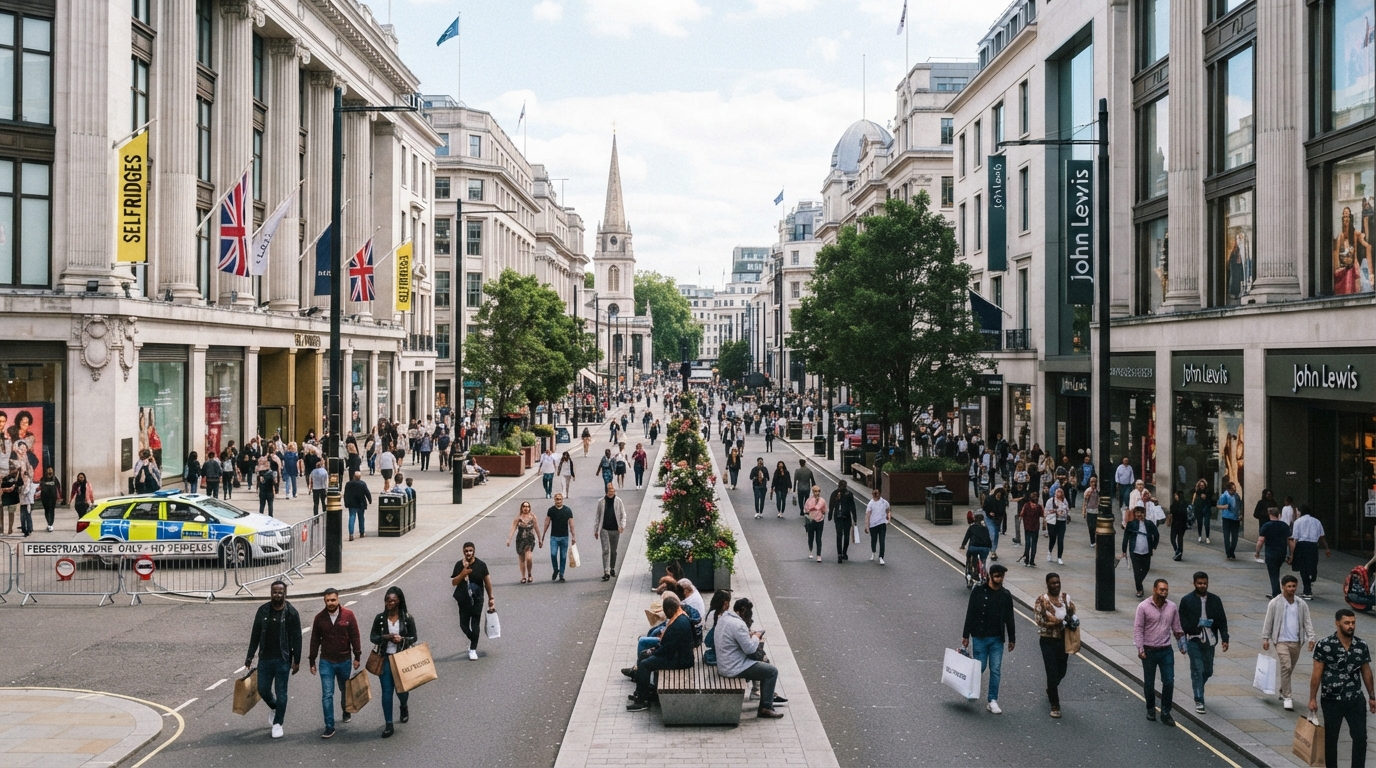
Oxford Street — London's most famous shopping street — has been pedestrianised
Since October 26, a section of Oxford Street — London's main shopping street — has been turned into a pedestrian zone, BBC News and the Guardian report.
Nearly a kilometre of the street — from Orchard Street to Great Portland Street — has been closed to traffic. The restriction applies to cars, buses, taxis, bicycles, and scooters. Access has been left only for pedestrians and emergency services.
Mayor of London Sadiq Khan called the pedestrianisation of Oxford Street a "truly historic moment for the capital." According to him, the street had been experiencing a "managed decline" over the last couple of decades.
"The transformation of Oxford Street will boost jobs and growth in the capital, unlock the full potential of this key part of the West End, and help build a better, greener, and more prosperous London for everyone," Sadiq Khan stated.
According to estimates by the economic team at City Hall, the pedestrianisation of Oxford Street could generate up to £82 million a year for the local economy and help create more than 700 additional jobs.
Major businesses, including Selfridges, John Lewis, and IKEA, supported these changes.
Shoppers surveyed by the Guardian responded positively to the City Hall project. According to them, after the pedestrian space was expanded, Oxford Street became more comfortable to walk along and window-shop, and the pavements felt less crowded.
A large-scale redevelopment of Oxford Street will begin in the spring of 2027. The £150 million project includes planting trees, installing benches, and creating event spaces.