

Nightclubs are disappearing - and it's affecting young people
One young person said with no nightlife in their town they cannot "let loose and mess around".
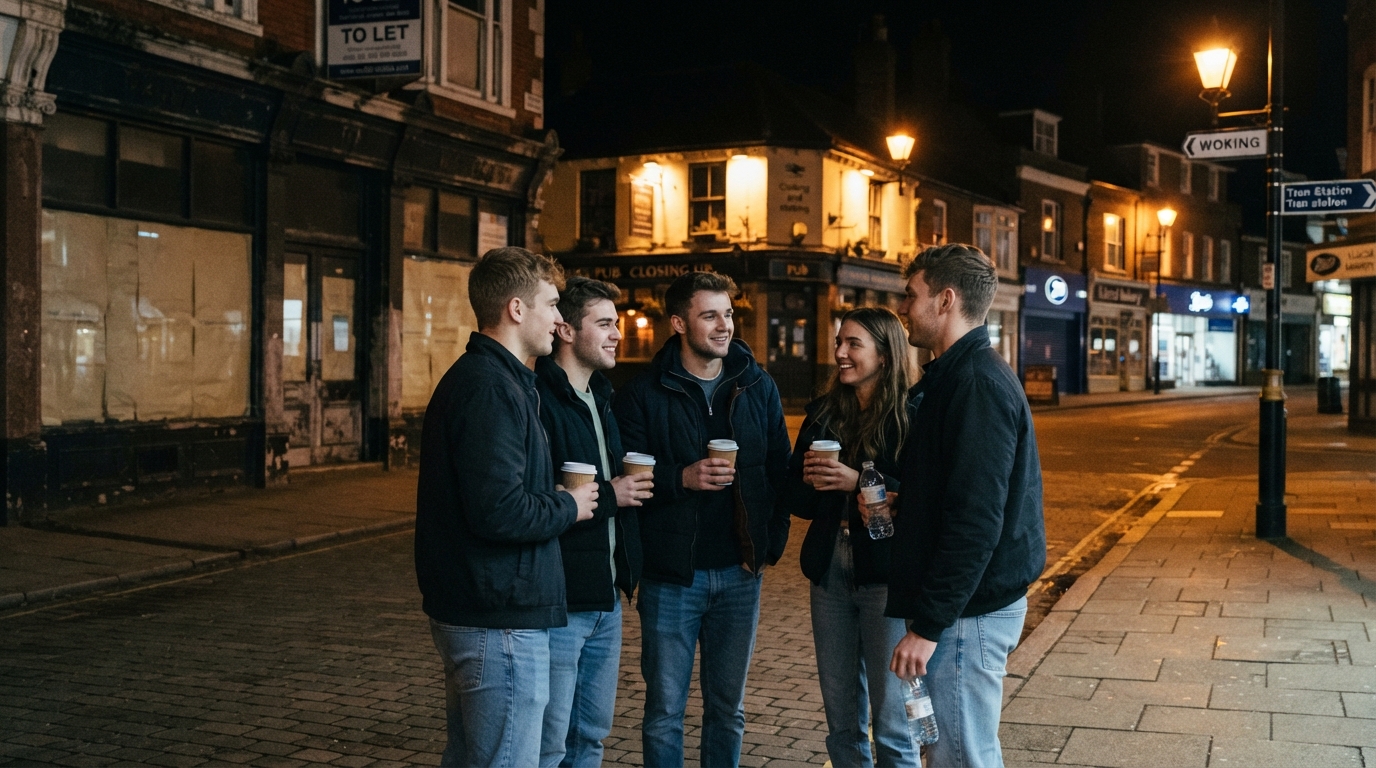
Nightclubs are vanishing - and young people are feeling the impact
One person under 30 told the BBC they would rather live somewhere calm
People under 30 have said they are missing the chance to "let loose and mess around" because nightlife where they live is "bleak" and limited.
Henry Gannon said that while growing up in Woking, he watched places where young people could meet and socialise "die away".
"Communal areas just seem to have vanished," he added.
Woking once had several late-night venues, but it now has no traditional dedicated nightclubs left in the town centre.
Gannon said the cost of living crisis was to blame, arguing that it was "pricing out" people in their 20s from going out and enjoying themselves.
"There isn't really anything to do for younger people who often don't have much expendable income," he said.
Other choices, the 23-year-old said, were "Wetherspoons, sitting in the park or getting a prohibitively expensive taxi back from another town or city".
"I feel like I am missing out on a crucial part of being my age, which is being able to let loose, mess around and enjoy life.
"It's a bit bleak."
The Night Time Industries Association (NTIA) said in 2025 that a quarter of UK towns have lost all their nightclubs.
It also said one in six towns now has no late-night venues at all.
"These figures are a stark warning of the systematic erosion of Britain's nightlife infrastructure," said NTIA CEO Michael Kill.
"We are facing a national cultural crisis.
"The damage, as we see it, is increasingly irreversible. Once these venues disappear, they rarely return."
Adam said the nightlife scene in Tonbridge - where the last club shut several years ago - was "pretty minimal".
"There are some nice pubs and small bars, though most things close around midnight," he said.
But the 29-year-old, who is originally from the US, said he was attracted to the Kent town because it was "quieter and more relaxed".
Even so, Adam said the lack of nightlife pushed younger people to go elsewhere for a night out, hurting the local economy.
"It is definitely a missed opportunity," he added.
While he said nightclubs can be places to meet people, Adam also noted a trend of younger people drinking less when they go out - something he said was better for their health.
The twenty-somethings going out - in the gym
The BBC has previously heard from under-30s who are stepping away from drinking culture and getting their "social fix" from the gym.
They said alcohol-free socialising felt empowering, helped them avoid hangovers and allowed them to meet people with similar interests.
Others have also highlighted a cultural change, with more people choosing sober social events over clubs.
Finn Ashcroft, from Chichester in West Sussex, said that after Covid "people were finding it harder to get out and socialise".
However, he said it was important to stress that many under-30s were "making do" without clubs and instead putting on their own events.
Ashcroft encouraged people to speak out if they wanted more nightlife where they live.
Although Chichester's traditional nightclubs have closed, Ashcroft said the city still has plenty of places that could be used for music and dancing.
He told the BBC he had founded the event companies C-Side Sounds and Strictly Grooves to "push music locally" in those spaces.
"Students were champing at the bit for somewhere to go," he said.
"We've definitely helped nurture nightlife within the city."
The 22-year-old said the "most important thing" for people who want more nightlife where they live is to "be vocal about it".
"They have the power to [get] local councils and governing bodies to make sure there are spaces for people... to make memories together."