

New theory regarding the Starlink fire - a Turkish criminal group may have carried out an assignment from Moscow
Turkey's Daltons criminal group may be involved in the arson attack on a Starlink ground station in Poland. According to Der Spiegel sources, the possibility that the group acted on the instructions of Russian special services is being investigated.
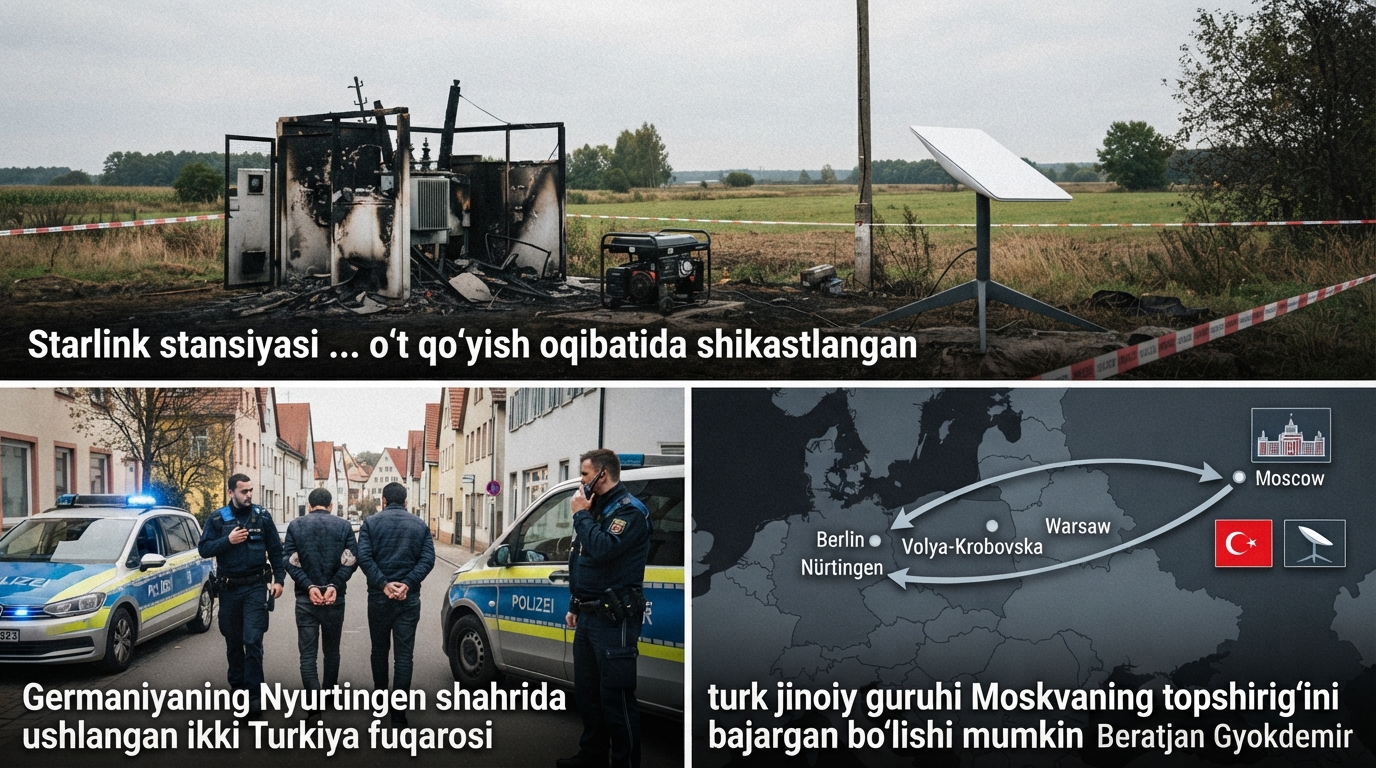
A new hypothesis has emerged regarding the Starlink fire — a Turkish criminal group may have carried out a task for Moscow.
According to DW, citing Der Spiegel, two Turkish citizens arrested on October 12 in the German city of Nürtingen as part of this case — 38-year-old Umit E. and 34-year-old Muslim T. — may be members of the group or may have carried out its instructions.
Representatives of several law enforcement agencies provided information to this effect to the magazine. The Stuttgart Higher Regional Court is expected to consider the extradition of the detainees to Poland.
Der Spiegel also linked the possible Russian connection to the group's alleged leader, Beratjan Gokdemir. He was arrested in Russia in 2024, but despite Turkey's extradition request, he was not handed over to Ankara.
According to the publication, German intelligence services believe that Moscow may have offered him protection in exchange for reciprocal services. Gokdemir's current whereabouts are unknown.
The Starlink station located in the village of Wola Krobowska, about 50 kilometers from Warsaw, was damaged as a result of arson on September 23. The fire swept through an electrical substation and a generator. According to Bild, the station was out of service for a short time before resuming operations. No one was injured in the incident.
Polish authorities reported an attempted sabotage after the fire. However, it was also noted at the time that there was no evidence directly pointing to Russian involvement.
On October 13, two more people, including a woman, were detained as part of the investigation. According to RMF FM radio station, an anti-terrorist operation was conducted in Berlin to arrest the woman. According to the preliminary hypothesis, she may have provided transport and other organizational assistance to the suspects.